
A breast lift in Turkey is rarely about size. It’s about position, shape, and feeling comfortable in your body again. After pregnancy, weight changes, or time, breasts can sit lower or feel less firm even when overall health is good. That’s usually when women start looking into breast lift surgery in Istanbul.
Turkey has become a leading destination for mastopexy thanks to experienced surgeons, hospital-based care, and costs that remain lower than in the US or UK. But price alone doesn’t define “best”.
Results depend on choosing the right lift technique, a surgeon who understands proportion, and a recovery plan that works when you’re healing away from home.
In our guide, we cover breast lift cost in Turkey for 2026, how to choose among top surgeons in Istanbul, and what results realistically look like over time, so you can decide with clarity rather than guesswork.
At a Glance: Breast Lift in Turkey
A breast lift in Turkey is usually chosen when shape, not size, feels off. Pregnancy, breastfeeding, weight changes, and time can pull tissue downward, stretch skin, and shift nipple position.
A lift focuses on restoring balance and projection so breasts sit where they used to, or where they always should have.
What it helps with
Most patients are dealing with sagging after pregnancy or breastfeeding, downward-pointing nipples, stretched areolas, or a flatter upper breast. Some want better symmetry. Others notice loose skin after major weight loss. The goal is support and position, not exaggeration.
Techniques surgeons use
The approach depends on how much lift is needed. Mild sagging may suit a crescent lift. Moderate changes often use a periareolar or lollipop technique to reshape with controlled scarring. Heavier breasts or post–weight-loss cases usually need an anchor lift for full correction.
Some surgeons add auto-augmentation, using your own tissue to restore upper fullness without implants.
Typical costs in Istanbul
A standard lift commonly falls between $3,000 and $4,000. A lift with implants ranges from $4,800 to $6,500. Lift with fat transfer often sits around $3,500 to $5,000.
Revision lifts are usually $4,500 to $6,000. Packages typically include hospital fees, anesthesia, a one-night stay, garments, and transfers.
Time and recovery
Plan to arrive 1–2 days before surgery and stay 7–10 days after for checks. Many return to desk work in 10–14 days. Swelling is mild for the first couple of weeks.
Nipple height settles by 3–4 weeks. Scars fade over 6–12 months with care. Most resume workouts around week 6.
How long results last
With stable weight and mindful skincare, results often hold 10–15 years. The lift ages naturally with you, staying firm and balanced for the long run.
Breast Lift Cost Turkey
It’s usually the first question: how much does a breast lift in Turkey cost? The quick answer is less than in Western Europe or the US. The useful answer is what that price actually includes, and why it’s lower without cutting corners.
For 2026, most reputable clinics quote a breast lift (mastopexy) in Turkey between $3,000 and $5,000 USD, depending on the technique, hospital setting, and whether implants or fat transfer are added.
In practical terms, here’s how pricing usually looks across Istanbul, Ankara, Izmir, and Antalya:
- Standard breast lift: $3,000–$4,000
- Breast lift + implants: $4,800–$6,500
- Breast lift + fat transfer: $3,500–$5,000
- Revision breast lift: $4,500–$6,000
To put that in context, figures published by the American Society of Plastic Surgeons place the average US breast lift at $6,500–$9,000, and that’s before anesthesia, hospital fees, or recovery costs are added. The difference often lands around 50–60%.
That gap isn’t about shortcuts. It comes from lower operating costs, high surgical volume, and favorable currency exchange, not reduced safety standards.
What’s usually included
Most all-inclusive packages cover the essentials: surgeon consultation, anesthesia, hospital operating room fees, one night of inpatient care, pre-op tests, a compression bra, transfers, and follow-up visits.
According to the Republic of Türkiye Ministry of Health, clinics treating international patients are required to include full pre- and post-operative medical support in their pricing.
What can raise the total
Premium implant brands, extra hospital nights, or combining procedures can increase costs. Even then, totals typically stay well below UK or US pricing, where similar combinations often exceed $12,000.
As noted by Forbes Health, Turkey’s medical tourism model works on predictable, bundled pricing, which is why patients report fewer surprise fees and clearer planning.
Breast lift techniques and scar patterns
Every breast lift starts with the same goal but takes a different path. The technique is chosen based on skin quality, nipple position, and how much reshaping is actually needed. A good breast lift in Turkey feels planned, not templated.
Crescent lift (subtle lift)
This option is used when sagging is minimal. The incision follows the upper edge of the areola and gently raises nipple position while tightening a small amount of skin. It works best for smaller breasts or very early sagging. Surgeons often pair it with augmentation rather than using it alone.
According to the American Society of Plastic Surgeons, this approach represents a small share of mastopexies and is reserved for carefully selected cases.
Donut (periareolar) lift
Here, the incision circles the areola. It allows the surgeon to tighten surrounding skin and reduce areola size if it has stretched. This suits mild to moderate sagging, especially after pregnancy. Scar placement blends into the natural areola border.
The Cleveland Clinic notes that controlled tightening can restore youthful proportions when done conservatively.
Lollipop (vertical) lift
This is the most common technique used today. It combines an areolar incision with a vertical line to the breast crease. It gives strong control over shape, especially the lower breast, without adding a horizontal scar. Results tend to age well with stable weight.
ASSOC. PROF. DR. GÜNCEL ÖZTÜRK: “The lollipop lift gives structure without over-scarring. It reshapes the breast rather than just lifting skin.”
Anchor (inverted-T) lift
For heavier breasts or major skin excess, the anchor lift adds a crease incision for maximum correction. Scars are longer but hidden in natural folds. Research published in the Aesthetic Surgery Journal shows this technique offers durable shape in advanced sagging or post–weight-loss cases.
Short-scar and auto-augmentation
Many surgeons in Turkey combine short-scar lifts with auto-augmentation, using your own tissue to rebuild upper fullness. The Mayo Clinic highlights this approach for patients who want firmness without implants.
Scars usually soften over six to twelve months. Most clinics include silicone care or light treatments as part of follow-up.
Breast lift alone or lift with implants (or fat transfer)
This decision shapes everything about the result. The question is not size. It’s whether the issue is position, volume, or both.
When a lift alone is enough
If volume is still there and the breast has simply dropped, a standalone lift can restore shape and nipple height without adding weight. This suits mild to moderate sagging and patients who prefer no foreign material. ASPS guidance supports this approach when tissue quality is good.
When implants make sense
If pregnancy or weight loss has reduced volume, a lift with implants restores fullness and balance. The lift repositions the breast; the implant replaces lost support. Surgeons in Istanbul often use dual-plane placement to protect long-term shape.
ASSOC. PROF. DR. GÜNCEL ÖZTÜRK: “Sagging is not a size problem. Structure comes first. Volume only works when the skin can support it.”
Studies summarized by the American Society for Aesthetic Plastic Surgery show high satisfaction with combined procedures when planning is careful.
What about fat transfer
Fat transfer offers a natural option for subtle fullness, usually up to one cup size. It uses your own fat and avoids implants, but not all transferred fat survives. Clinical data indexed on PubMed shows long-term retention around 60–70 percent. Some surgeons use it to gently fill the upper pole after a lift.
How surgeons help you decide
Most clinics use measurements and 3D imaging to compare lift-only versus combined options. The focus stays on proportion and lifestyle, not cup size. As the Cleveland Clinic advises, results look best when choices fit the body, not a trend.
The takeaway is simple. A breast lift works when the technique matches your anatomy and expectations. That match is what keeps results natural years later.
Top Surgeons for Breast Lift in Istanbul, Turkey
You can find our picks of the best plastic surgeons in Turkey from our below. Our guide provides information based on their procedures, prices, and reviews.
Assoc. Prof. Dr. Guncel Ozturk, FEBOPRAS
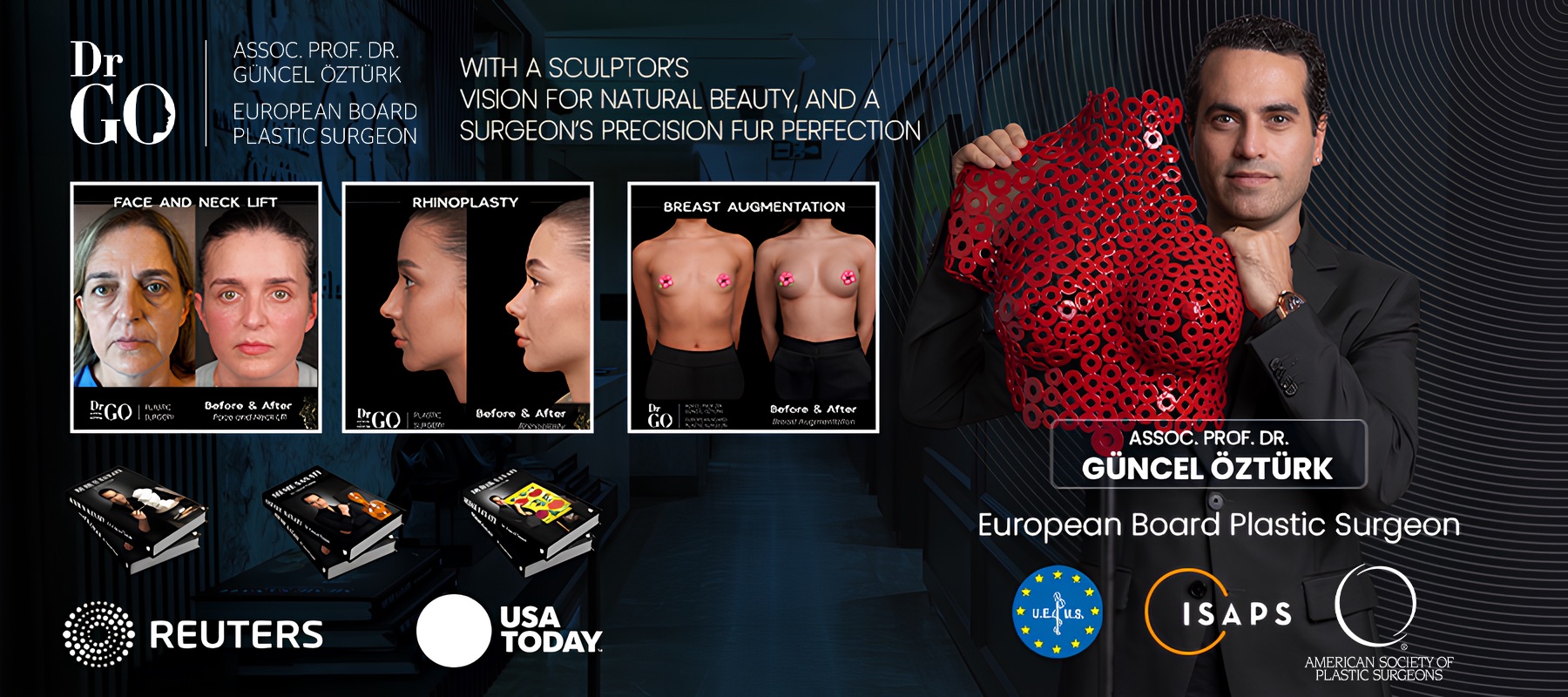
- Website: guncelozturk.com
He trained at Istanbul University Cerrahpaşa Faculty of Medicine, later continuing his development at Yale University and University of Miami/Jackson Memorial Hospital, where he focused on rhinoplasty and facial aesthetic surgery. He holds European Board (EBOPRAS) certification and became an Associate Professor in 2024.
What often stands out about his approach is the artistic background he grew up with. His father was a sculptor, and that early exposure to form and proportion influences how he evaluates facial balance today.
His rhinoplasty results usually show noses that stay true to a person’s natural characte, smoother lines, clearer definition, and harmony with the face rather than dramatic reshaping.
His clinic in Nişantaşı has a calm, organized rhythm. Consultations include careful facial analysis and discussion of how changes interact with expression, profile, and symmetry. He publishes regularly on preservation rhinoplasty and hybrid reshaping techniques, and his case photography reflects consistency in maintaining identity while improving structure.
The cost of rhinoplasty or facial surgery with Dr. Öztürk generally ranges from $4,000 to $16,000, depending on complexity and revision needs.
Note: Please fill out the form at the bottom of the page to reach Dr. Guncel Ozturk to get a quote and consultation, plus special discount.

Op. Dr. Ali Cetinkaya

- Website: dralicetinkaya.com
His clinic in Nişantaşı has a quiet, steady atmosphere that feels comfortable for patients who value privacy and space to talk through their goals. He has international training in microsurgery, which shows in how he handles cartilage structure and fine shaping during rhinoplasty.
His rhinoplasty results lean toward natural refinement. You’ll often see bridges that are smooth without being overly narrow and tips that look clean without sharp definition. This style tends to work well for people who want to look like themselves, just more aligned or balanced.
He also performs reconstructive procedures, including trauma-related nasal corrections and congenital deformity repair. His portfolio includes breast augmentation, liposuction, and fat transfer, where planning focuses on body proportion and long-term comfort, not just the immediate visual outcome.
He is also a member of TPRECD and ISAPS, and many patients come to him for revision cases that require careful correction.
Typical surgery costs start around $2,700 and may extend to $5,100, depending on the procedure and structural complexity.
Note: Please fill out the form at the bottom of the page to reach Dr. Cetinkaya to get a quote and consultation, plus special discount.
Op.Dr. Salih Onur Basat, EBOPRAS

- Website: salihonurbasat.com
His rhinoplasty approach generally aims for balanced facial harmony rather than sharp definition. Many of his patients come with the goal of looking natural, rested, and proportionate, and his before/after results reflect that.
In body procedures, especially BBL and tummy tuck, he is known for shaping the waist, hips, and torso together, so the overall silhouette feels cohesive and comfortable.
Surgeries are performed in accredited hospital settings, and recovery plans are structured around comfort and gradual healing. The clinic works with many international patients, which shows in the clarity of communication and post-operative guidance.
Pricing typically ranges between $3,000 and $6,500, depending on procedure type and case complexity.
Patients often mention that he combines steady hands with a grounded, realistic consultation process, especially appreciated in surgeries where shape and contour matter as much as technical steps.
Note: Please fill out the form at the bottom of the page to reach Dr. Basat to get a quote and consultation, plus special discount.
Asli Tarcan Clinic
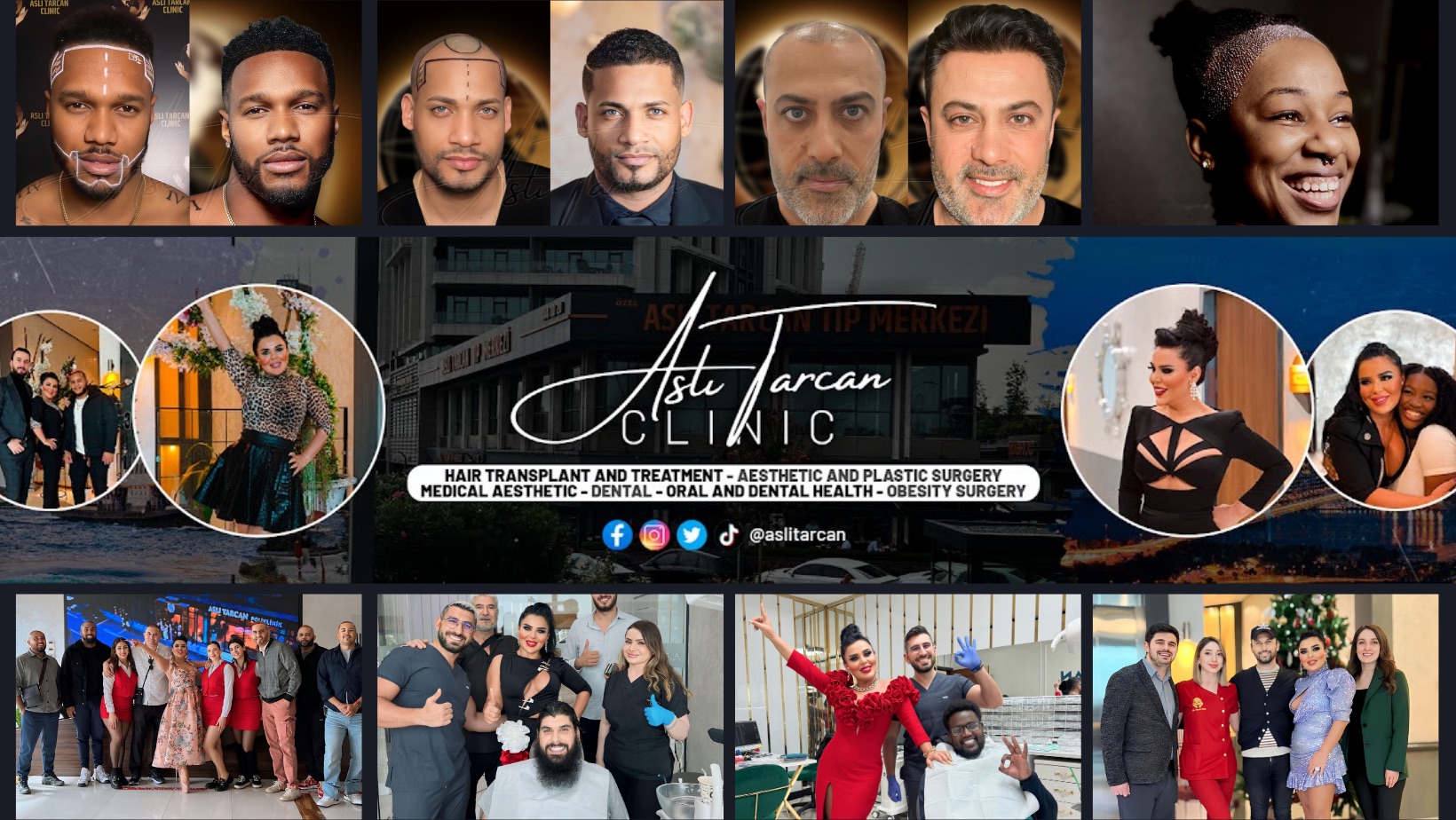
- Website: aslitarcanglobal.com
The clinic serves both local and international patients, offering full coordination that includes hotel accommodation, VIP transfers, translation services, and detailed medical guidance.
This structure allows visitors from Europe, the Middle East, Africa, and the U.S. to receive treatment with clarity and comfort. The environment is clean, well-equipped, and designed for transparency, that patients can observe parts of their procedure and ask questions throughout the process.
Aslı Tarcan Clinic has been featured in international outlets such as the LA Times and listed on trusted healthcare platforms including Yapita Health and MyTripMed, reflecting its credibility in global medical tourism.
The clinic specializes in Afro-textured hair transplantation using Robotic DHI, as well as cosmetic surgeries such as rhinoplasty, liposuction, facelift, and breast operations. Dental treatments include implants, whitening, and cosmetic fillings.
Treatment packages generally start from $3,000, including accommodation, transfers, medications, and post-operative follow-up, making the experience accessible and fully supported.
Note: Please fill out the form at the bottom of the page to reach Asli Tarcan Clinic to get a quote and consultation, plus special discount.
Euro Istanbul Clinic
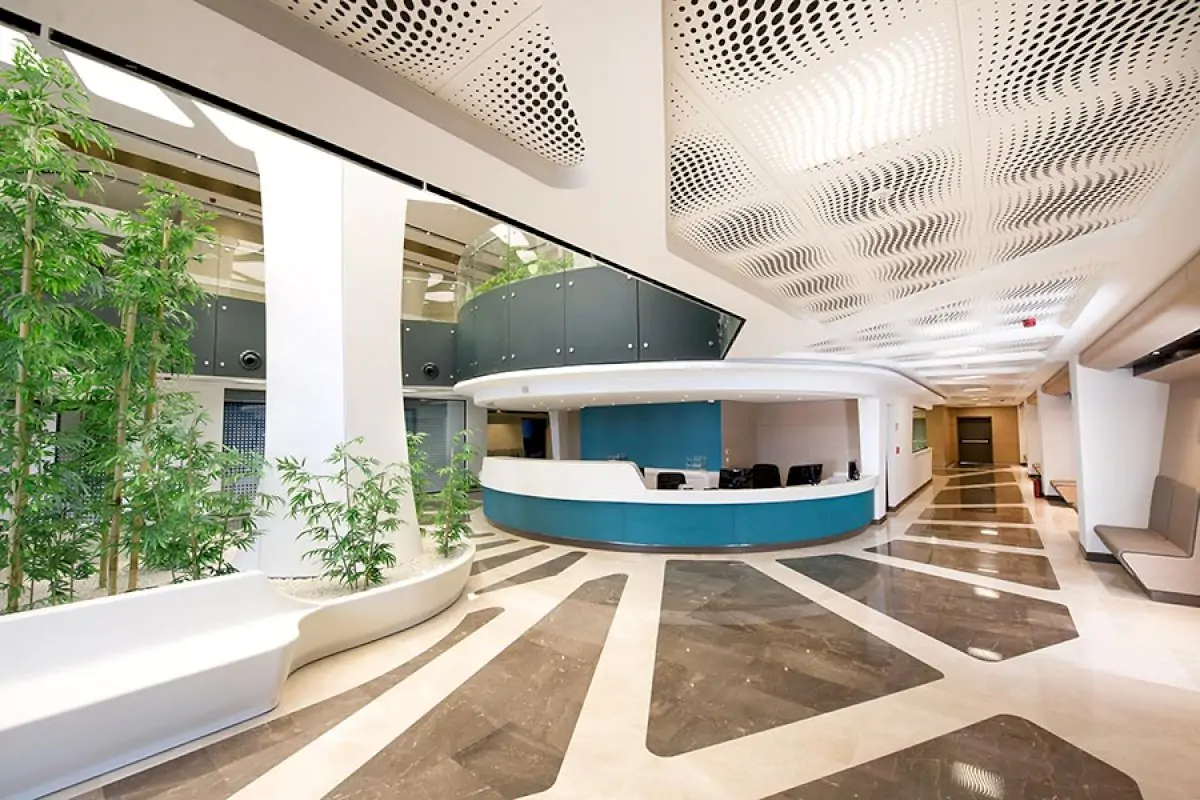
- Website: euroistanbul.com
Their focus is on a 360-degree care model that covers both treatment and travel logistics, so patients can move through the process with clarity.
Plastic surgery options include rhinoplasty, liposuction, breast procedures, and body contouring, carried out by a network of experienced surgeons. Patients are matched with specialists based on their goals and medical needs, with consultations arranged before arrival.
The clinics and hospitals used are internationally accredited, and surgical planning is handled with clear timelines and expectations.
What stands out is the all-inclusive structure. Packages typically include 4 or 5-star hotel accommodation, VIP airport and clinic transfers, translation services, travel insurance, and post-operative follow-up.
Their team also supports patients with flight planning, local guidance, and communication after they return home, including photo check-ins and video consultations when needed.
Their aim is to remove the stress of coordinating treatment abroad so patients can focus on recovery and results.Note: Please fill out the form at the bottom of the page to reach Euro Istanbul Clinic to get a quote and consultation, plus special discount.
Soraca Med
 Founded in 2021, Soraca Med has grown quickly by focusing on international patient care and a guided, step-by-step treatment experience. Their philosophy is “be you as you wish”, comes through in how they shape each patient’s planning process. Instead of offering one standard package, they adjust treatment details based on medical needs, comfort level, and travel expectations.
The clinic works across several specialties, including hair transplantation, cosmetic surgery, dental treatments, bariatric procedures, and urology.
It’s a multidisciplinary setup, but not in a scattered way, patient coordination is centralized, which helps keep communication clear. For many traveling patients, that simplicity is what lowers stress.
Most people who choose Soraca Med mention the full-service approach: airport transfers, hotel stay, clinic transportation, medical follow-ups, and the presence of coordinators who speak the patient’s language. It takes away the guesswork that often comes with planning surgery abroad.
Their all-inclusive packages typically begin around $3,000, and include the procedure, medication, accommodation, VIP transfers, and aftercare appointments. The pricing is upfront, which helps patients understand total costs before deciding.
Note: Please fill out the form at the bottom of the page to reach Soraca Med to get a quote and consultation, plus special discount.
Op. Dr. Ali Riza Oreroglu, EBOPRAS
 Op. Dr. Ali Rıza Oreroğlu has 19 years of experience in plastic and aesthetic surgery. His work centers on rhinoplasty, facial rejuvenation, and breast aesthetics, with a focus on achieving balance and facial harmony. He trained in Istanbul and continued his development in the United States through fellowships with leading surgeons, which shaped his structured approach to planning and surgical precision.
He holds European Board (EBOPRAS) certification and has received multiple awards in aesthetic surgery.
His rhinoplasty results tend to look calm, settled, and well-integrated with surrounding features. He often combines treatments such as eyelid surgery, neck lift, or mid-face lift when needed, building changes that support the face as a whole rather than focusing on a single feature.
The overall style leans toward quiet elegance, staying away from overly sharp contours or dramatic reshaping. The clinic uses 3D imaging and digital planning systems, helping patients understand how different adjustments may look.
Typical surgical pricing ranges from $3,800 to $7,000, based on case details and combined procedures.
Note: Please fill out the form at the bottom of the page to reach Dr. Oreroglu to get a quote and consultation, plus special discount.
Op. Dr. Safa Manav, FEBOPRAS
 Op. Dr. Safa Manav has over 13 years of experience and is known for rhinoplasty that feels natural and proportional. His focus is on adjusting the nose in a way that fits the person’s existing facial structure rather than aiming for a single ideal shape. This approach appeals to patients who want a noticeable improvement without looking like they’ve “had work done”.
He performs both primary and revision rhinoplasty, along with facial rejuvenation and body contouring procedures. His technique prioritizes structure and breathing support, which can matter a lot for patients who are worried about losing function after surgery.
He is a member of ISAPS, and he has been recognized for his contributions in aesthetic surgery over the years.
Surgery costs with Dr. Safa Manav generally range from $3,000 to $5,500, depending on the complexity and method.
Note: Please fill out the form at the bottom of the page to reach Dr. Manav to get a quote and consultation, plus special discount.
How to verify a plastic surgeon and clinic in Turkey
Before photos, prices, or hotel packages, one thing matters more than anything else: verification. Not opinions. Not social media claims. Actual credentials that show who will operate on you, where, and under what authority.
Start with the surgeon’s real identity
Always ask for the surgeon’s full legal name and exact specialty. Not initials. Not “our doctor.” A real plastic surgeon will have no issue sharing this. Then search that name in the Turkish Society of Plastic, Reconstructive and Aesthetic Surgeons (TSPRAS) member database at turkplasticsurgery.org
If they claim (while not necessary) European board status, cross-check on the EBOPRAS Fellows list.
Confirm clinic authorization for international patients
Clinics treating foreign patients must hold an International Health Tourism Authorization Certificate issued by the Turkish Ministry of Health. This isn’t optional. It’s a legal requirement.
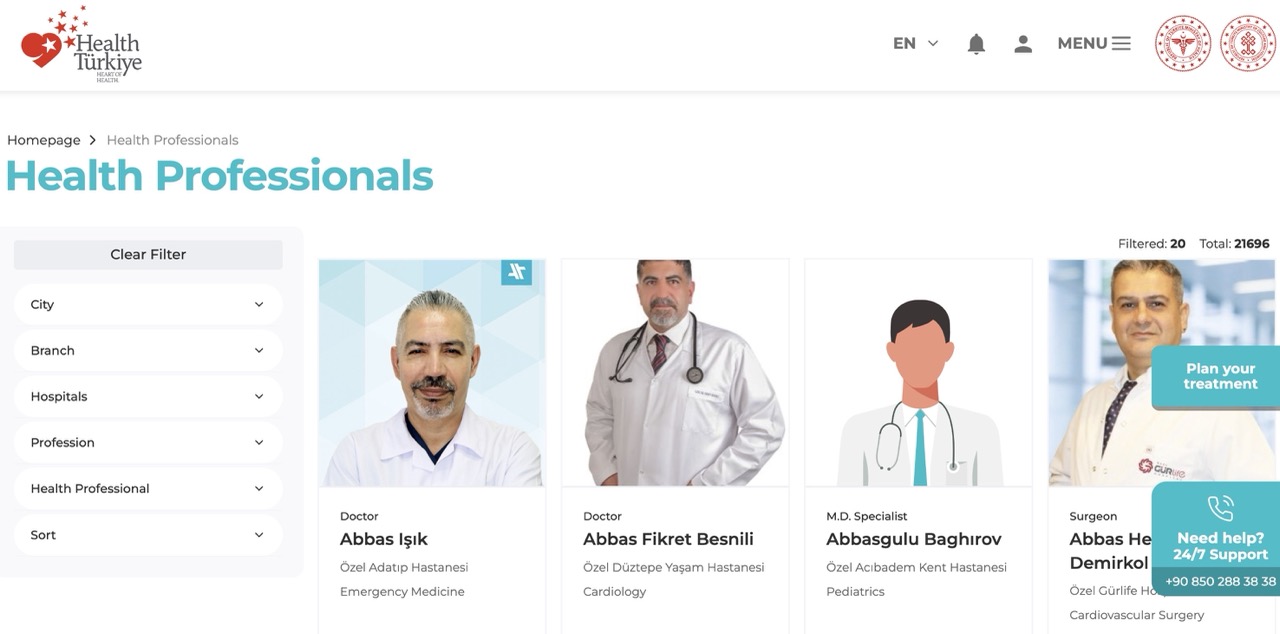
Official guidance explains that providers and facilitators need this authorization. You can check updated official lists via the Ministry’s Health Tourism Department announcements page at healthturkiye.com
If you want a second channel for verification, USHAŞ provides an official document verification page for health tourism intermediary authorization.

You can check it from https://shgmturizmdb.saglik.gov.tr
Check where the surgery actually happens
Plastic surgery in Turkey must be performed in a licensed hospital or approved surgical center, not an office room or beauty clinic. Ask directly for the hospital name. A clear answer is a good sign. Vague language like “our medical floor” is not.
Look at results with intention
Before-and-after photos matter, but only if you read them carefully. Look for patients with similar anatomy, body type, or concerns. Consistency across many cases matters more than one dramatic result.
Natural expressions, relaxed posture, and multiple angles usually indicate thoughtful planning rather than rushed work.
Pay attention to communication style
Good surgeons explain slowly. They ask about your health, lifestyle, and expectations. They encourage time to think. If you feel pushed to decide quickly, that’s not confidence, it’s pressure.
Procedure day in Istanbul
Procedure day is usually calmer than people expect. By the time it arrives, most of the thinking is already done. What’s left is structure and pacing.
You’ll start the day early. A light check-in at the hospital or surgical center, identity confirmation, and final vitals. You’ll meet your surgeon again, often briefly, to confirm markings and answer any last questions. This isn’t a sales moment. It’s a confirmation moment.
An anesthesiologist reviews your medical file and explains what to expect as you fall asleep and wake up. Then things move quickly. Once you’re in the operating room, the focus shifts entirely to safety and precision.
Surgery length depends on the procedure. Single operations may take two to three hours. Combined surgeries take longer, with built-in pauses for safety. When you wake up, you’ll feel groggy, tight, and a little disoriented. That’s normal.
Most patients stay one night in the hospital. Nurses check vitals, manage pain, help you stand briefly, and make sure you’re comfortable. You’re not expected to be “brave” or energetic. Rest is the job.
By the next day, you’re usually cleared to return to your hotel with instructions, medications, and a clear plan for follow-up visits. The day isn’t dramatic. It’s quiet, clinical, and intentionally slow. That’s a good thing.
Recovery timeline
Recovery after a breast lift in Turkey is rarely about pain. It’s more about tightness, patience, and letting the body settle into its new structure. Most patients describe it as a slow recalibration rather than a difficult healing phase. The key is giving your body time to adjust instead of pushing it to “feel normal” too quickly.
Days 1–3: the quiet phase
The first two days are about rest and observation. You usually spend one night in the hospital, then move to your hotel or recovery apartment. Your chest will feel tight and supported by a surgical bra.
Swelling and light bruising are expected. Movement is gentle and deliberate. Short walks are encouraged, but most of your time is spent resting.
Days 4–7: easing into movement
By this point, daily movement feels easier. Many clinics schedule your first follow-up during this window to check incisions and change dressings. You continue wearing the compression bra day and night, removing it only for careful cleaning. Tightness is still present, but it feels more manageable.
Days 8–14: returning to routine
Swelling begins to ease, and many international patients are cleared to fly home after day seven if healing is smooth. The Cleveland Clinic notes that most normal daily activities can resume within 10–14 days, though exercise should still wait.
Weeks 3–4: settling shape
Breast shape starts to look more natural. Scars soften from red to pink. Some numbness or tingling is common as nerves begin to wake up again. Sensation returns gradually over the next few months.
Months 2–3: feeling like yourself again
Light workouts and swimming usually resume. Breasts feel softer and less “surgical.” According to the American Society of Plastic Surgeons, about 90% of swelling resolves by eight weeks.
ASSOC. PROF. DR. GÜNCEL ÖZTÜRK: “What you see at two weeks is not the result. The skin needs time to reorganize. True settling happens over three to six months, and that’s when the lift really holds.”
Scars and long-term healing
Scars continue to fade over six to twelve months. Many Turkish clinics include silicone care or light therapies as part of follow-up. The Mayo Clinic reports that prolonged pain beyond the first month is uncommon after a breast lift.
Most patients notice that around the three-month mark, their breasts stop feeling “new” and simply feel like part of them again. That’s usually when the surgery fades into the background and life moves forward.
Risks, red flags, and when to press pause
No plastic surgery is risk-free, even procedures that look routine online. The difference between a smooth experience and a stressful one usually comes down to preparation and systems. In Turkey, especially in high-volume hospitals, breast lift surgery is approached as a controlled process, not a quick intervention.
Experienced surgeons plan for risk instead of reacting to it. That planning begins before you ever arrive in Istanbul.
Common and manageable risks you should expect
The most frequent issues after a breast lift are temporary and resolve with basic care. According to the American Society of Plastic Surgeons and the Cleveland Clinic, short-term swelling and bruising are normal during the first one to two weeks.
Mild wound healing delays can occur, particularly in smokers, and are usually handled with local care and closer follow-up.
Temporary nipple numbness is also common. Sensation often returns gradually over several months as nerves recover. Mild asymmetry or subtle shape differences can appear early on but tend to settle as swelling resolves, especially when pre-operative measurements were done carefully.
More serious complications like infection or hematoma are uncommon. When they do occur, they are typically identified early and treated under supervision in a hospital setting.
Why hospital-based surgery
In Turkey, international patient surgeries must be performed in licensed hospitals or approved surgical centers. This is not a preference, it’s a regulation enforced by the Ministry of Health. These facilities operate with 24-hour emergency readiness, which means any unexpected issue can be addressed immediately.
This structure alone significantly lowers risk compared to office-based or lightly regulated settings.
How surgeons actively reduce risk
Risk reduction starts well before the operation. Most experienced Turkish surgeons follow a structured pre-operative protocol similar to EU standards. Patients complete blood tests, cardiac screening, and anesthesia evaluations. Imaging may be requested for patients over a certain age or with specific histories.
Markings are done carefully while you are awake so incision placement is precise. Antibiotics are administered before the first incision. An anesthesiologist monitors you continuously throughout the procedure. None of this is optional, it’s built into the process.
Post-operative care
After surgery, follow-up is not passive. During your stay, nurses or coordinators check on swelling, incision condition, pain control, and hydration. Drains, if used, are removed on schedule. Early scar care begins sooner than many patients expect.
Clinical data published through PubMed shows that structured follow-up significantly reduces complication rates in mastopexy, particularly for international patients where coordination matters more.
When you should contact your surgeon immediately
Even with excellent care, you should speak up if something feels wrong. Persistent redness or warmth around the incision, uneven swelling that increases instead of improves, fluid leakage, fever above 38°C, or sudden changes in nipple sensation after initial recovery all deserve attention.
In most accredited Turkish hospitals, early evaluations and minor interventions during the first year are part of aftercare, which is one reason international satisfaction rates remain high.
Good surgery isn’t about pretending risk doesn’t exist. It’s about placing that risk inside a system that’s prepared, responsive, and calm when you need it.
Istanbul logistics
Istanbul has two main airports, Istanbul Airport (IST) on the European side and Sabiha Gökçen (SAW) on the Asian side. Most international patients land at IST. Clinics usually arrange airport pickup, which matters more than it sounds. After surgery, you don’t want to deal with taxis, stairs, or long walks through terminals.
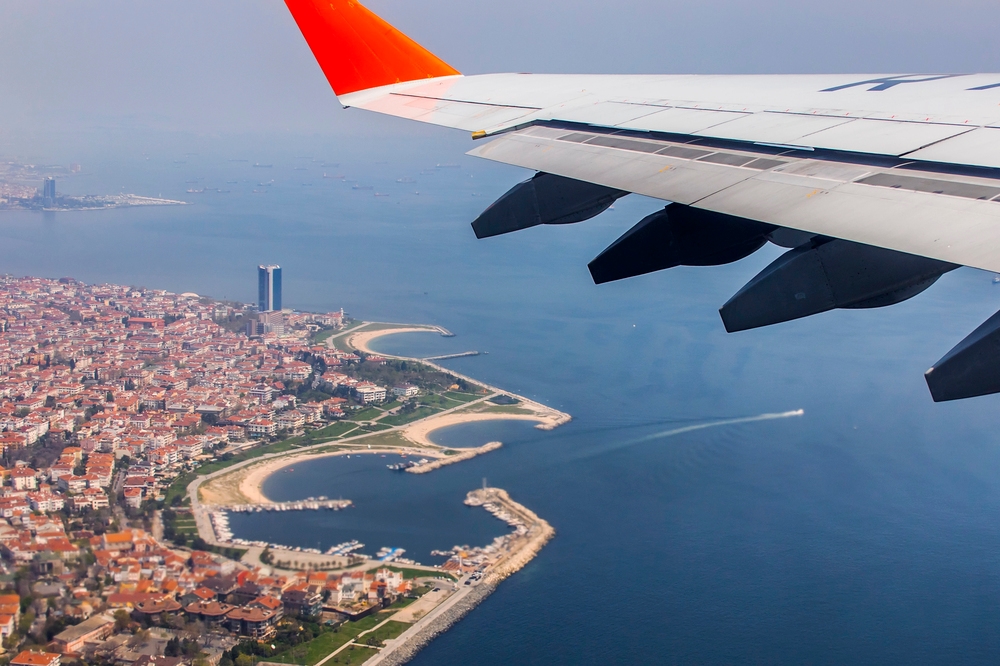
Plan your return flight based on medical clearance, not convenience. Most surgeons approve flying only after key follow-ups are done. Booking flexible tickets reduces pressure if swelling or check-ups take longer than expected.
Where to stay during recovery
Staying close to your hospital or clinic reduces travel time and fatigue during follow-ups. Neighborhoods like Nişantaşı, Şişli, Levent, and parts of Kadıköy are commonly chosen because they’re quieter, walkable, and close to major medical centers.
Many patients prefer hotels or serviced apartments over standard hotels. Elevators, room service, and easy food access make recovery smoother. Silence matters more than views during the first week.
Getting around while healing
For the first few days, you shouldn’t be navigating public transport. Clinics typically provide transfers for post-op visits. When you do move around, short car rides are easier than metro stairs or crowded ferries.
If you feel well enough later, light walks are fine. Flat routes, waterfront paths, and calm cafés work better than hills or busy tourist zones.
Food, pharmacies, and daily basics
Istanbul is very recovery-friendly. Pharmacies are everywhere and many are open late. Hotel staff are used to post-op guests and can help with meals, ice packs, or extra pillows.
Stick to simple food early on. Soups, grilled proteins, yogurt, and plenty of fluids help healing. Heavy, salty, or spicy meals can increase swelling, especially in the first week.
Timing your stay realistically
Most procedures require 7 to 14 days in Istanbul, depending on surgery type. Trying to shorten this usually increases stress, not savings. Extra days give room for swelling checks, stitch removal, and peace of mind.
Honest patient reviews
When people research plastic surgery in Turkey, they usually end up on platforms like Google Reviews, RealSelf, Trustpilot, and Reddit threads. Each tells a slightly different story. Google Reviews often reflect the overall clinic experience.
RealSelf is more procedure-focused and timeline-driven. Forums and Reddit tend to surface emotional highs and lows that polished testimonials leave out. Taken together, they give a fuller picture than any single source.
What positive reviews consistently mention
Across platforms, satisfied patients rarely focus on luxury. They talk about predictability. Clear schedules. Knowing who to contact when swelling feels strange at 2 a.m. Many mention that recovery felt calmer than expected, largely because someone checked on them daily or answered questions without delay.
Another common theme is surgeon communication. Patients value feeling listened to, especially when expectations are adjusted gently rather than sold aggressively.
When reviews mention names, it’s often because the surgeon explained limits clearly and didn’t promise extremes.
Where negative reviews usually come from
Critical reviews tend to cluster around the same issues. Feeling rushed. Not knowing the surgeon’s name until late. Confusion about what was included in the price. Or recovery plans that felt vague once the patient returned home.
Importantly, many negative experiences are not about surgical skill alone. They are about coordination gaps. Missed expectations. Or pressure to decide quickly.
That distinction matters. It means many problems are avoidable with better vetting, not luck.
One dramatic review should never outweigh consistent patterns. Look for timelines. Look for balance. Pay attention to how clinics respond to criticism. Calm, detailed replies usually signal accountability. Defensive or dismissive ones don’t.
Reviews work best when you read them as behavior signals, not verdicts.
Is it worth getting plastic surgery in Turkey?
For many international patients, surgery in Turkey is worth it when three things align. You choose the right surgeon, not just a clinic. Your procedure fits your anatomy and recovery capacity. And you give yourself enough time, mentally and physically, to heal properly.
When those conditions are met, patients often describe the experience as smoother than expected. Not because it’s easy, but because it feels structured. Costs are lower, yes, but what people value most is predictability. Fewer surprises. Fewer financial add-ons. Clear recovery pacing.
When it may not be worth it
If your primary driver is speed or the lowest possible price, Turkey may disappoint you. Good outcomes here still require patience, planning, and personal responsibility. Surgery combined with travel magnifies small mistakes. Rushing decisions or ignoring red flags tends to show up later, not immediately.
It’s also not ideal if you can’t arrange downtime, support at home, or follow-up communication once you return.
The real value equation
What makes surgery in Turkey worthwhile is not transformation. It’s balance. Skilled surgeons who perform the same procedures daily. Hospitals set up for international care. And a system where most costs are known upfront.
Patients who report the highest satisfaction usually say the same thing afterward. They felt informed. They felt supported. And nothing felt rushed.
That’s usually the best indicator you made the right call.
Common Patient Questions About Breast Lift in Turkey
How much does a breast lift cost in Turkey?
Most breast lifts in Turkey cost between $3,000 and $5,000, depending on the surgeon, hospital, and whether you add implants or fat transfer. Packages usually include anesthesia, accommodation, transfers, and post-op garments.
Is a breast lift in Turkey safe?
Yes, when performed in Ministry of Health–licensed and JCI-accredited hospitals by board-certified plastic surgeons. According to ISAPS 2024, Turkey’s complication rate for mastopexy procedures remains below 2%, comparable to Western Europe.
How long do breast lift results last?
Typically 10–15 years, depending on your skin elasticity, age, and lifestyle. Maintaining stable weight and good posture extends longevity.
What’s the difference between a breast lift and breast augmentation?
A lift (mastopexy) repositions and reshapes sagging tissue. Augmentation adds volume using implants or fat. They can be done separately or together depending on your goals.
Will I have visible scars after a breast lift?
Scars fade significantly within 6–12 months. Turkish surgeons often use short-scar or vertical techniques and provide silicone-based aftercare to minimize marks.
Can I combine a breast lift with other surgeries?
Yes. Many women pair it with tummy tuck, liposuction, or mommy makeover procedures. Turkish clinics are known for multi-procedure efficiency under a single anesthesia session.
How long should I stay in Turkey after surgery?
Plan to stay 7–10 days. This allows for follow-up visits, dressing changes, and surgeon clearance before flying home safely.
When can I return to normal activities?
Light activities resume after 7–10 days, while gym workouts and lifting wait until week 6. You’ll wear a compression bra for the first month.
Can I breastfeed after a breast lift?
In most cases, yes. Modern nipple-preserving techniques protect milk ducts, especially when done by experienced surgeons. Discuss this in your consultation if future breastfeeding matters to you.
Can I get a breast lift without implants?
Absolutely. Many women choose lift-only mastopexy to restore firmness and symmetry without added volume. Surgeons may suggest fat transfer for a softer, natural enhancement instead.