You’d think finding the best hair transplant clinics in Turkey for repair cases is just about choosing a “top clinic” again. It isn’t. Repair work is a different game entirely. Most patients who search hair transplant repair Turkey or failed hair transplant Turkey aren’t starting fresh.
They’re dealing with something that already went wrong. An unnatural hairline. Patchy growth. Or worse, an overharvested donor area that limits future options.
And here’s the uncomfortable part. Not every bad transplant can be fully reversed. According to the International Society of Hair Restoration Surgery (ISHRS), corrective procedures often focus on improvement, not perfection. That shift in expectation is where good decisions begin.
We’ve seen this firsthand. One patient came to Istanbul after a dense but poorly angled transplant abroad. The issue wasn’t coverage. It was direction. The hair didn’t move naturally. Fixing it required partial graft removal, redistribution, and a second session. Slower process. Better outcome.
Another patient had a different problem. Overharvesting. The donor looked thin even at a distance. In that case, the goal changed completely. It became about camouflage, balance, and preserving what was left.
Two repair cases. Two completely different strategies.
You’ll still find the best hair transplant repair clinics in Turkey here. But more importantly, you’ll learn how to identify your case type, understand what’s realistically fixable, and choose a clinic that doesn’t treat repair work like a standard FUE hair transplant Turkey procedure.
“Repair cases require patience, not promises. The best clinics will slow things down and explain limits before talking about results.”
— Dr. Güncel Öztürk
If you’re here, you’re not just looking for a clinic. You’re looking for a way forward.
The best hair transplant clinics in Turkey for repair cases are not the same as standard clinics. Repair requires surgeon-led planning, not volume.
Hair transplant repair Turkey focuses on improvement, not perfection. Results depend on donor condition and previous work.
Common problems include unnatural hairline repair, patchy density, wrong angles, and overharvested donor repair. Each needs a different strategy.
Techniques like FUE repair Turkey and DHI repair Turkey are tools. Planning and execution matter more than the method itself.
Repair often involves graft removal, redistribution, scar revision, or even beard/body hair support.
Most repair hair transplant Turkey cases require staged procedures, not one-session fixes.
Costs are higher than standard procedures, typically $3,000 to $7,000 depending on complexity.
Verification is very important. Check authorization via HealthTürkiye and ask who performs each step.
The best clinic is the one that fits your repair type and sets realistic expectations, not the one promising the fastest or densest result.
What Counts as a Hair Transplant Repair Case?
Not every bad result looks dramatic at first. That’s what makes hair transplant repair Turkey decisions tricky. Some issues show up months later. Others only become obvious under certain lighting or as your hair grows out.
So before choosing from the best hair transplant clinics in Turkey for repair cases, you need to understand one thing clearly. What kind of problem are you actually dealing with?
Unnatural Hairline and Pluggy Results
This is one of the most common bad hair transplant repair Turkey cases. Hairlines that are too low, too straight, or built with thick grafts can look artificial. Especially in daylight. Older plug-style work is even more visible.
According to the ISHRS, corrective work here often involves softening the hairline, redistributing grafts, or removing poorly placed follicles.
Wrong Angles and Direction
This one is subtle, but it affects how hair behaves. Hair grows. But it doesn’t fall naturally. It sticks out. Or moves in the wrong direction.
We’ve seen patients with good density but poor angle control. The result looks “off” even if coverage is technically strong.
Fixing this usually requires partial graft removal and reimplantation. It’s delicate work.
Patchy Growth and Low Density
This shows up in many failed hair transplant Turkey cases. Uneven coverage, gaps, or thin zones can result from poor graft survival or rushed implantation.
Sometimes it’s fixable with additional grafts. Sometimes donor limitations change the plan.
Overharvested Donor Area
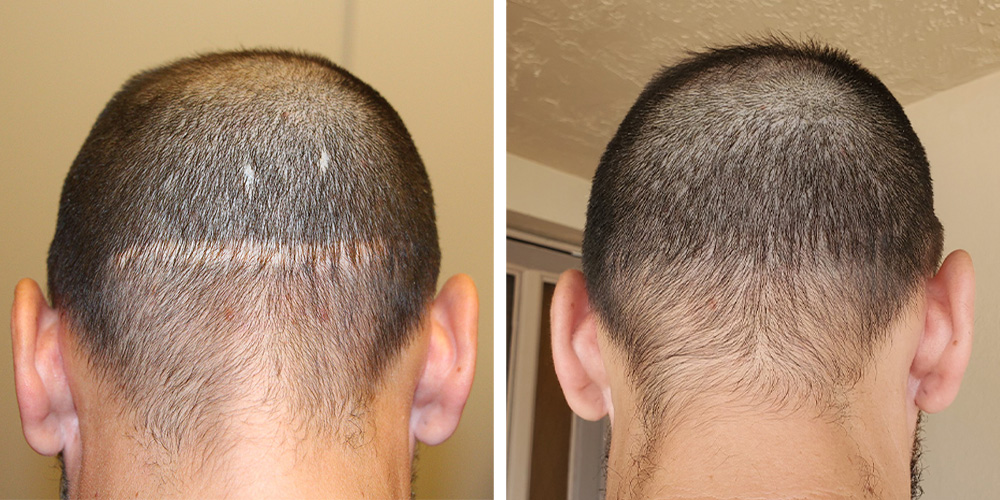
This is the hardest type. When too many grafts are taken, the donor area looks thin or scarred. And more importantly, future procedures become limited.
Repair here is often about camouflage rather than full restoration.
Scarring and FUT Lines
Linear scars from older FUT procedures or visible FUE scarring can affect confidence even if the frontal area looks fine.
Repair options include scar revision, graft placement into scar tissue, or combining with SMP.
A Quick Reality Check
You might be wondering. Can everything be fixed?
Not exactly.
Some cases improve significantly. Others require compromise.
But identifying your repair type early helps you choose the right clinic. And more importantly, the right approach.
That’s where the real difference starts.
How We Ranked the Clinics for Repair Work
Repair cases have less margin for error. The donor area may already be limited. Old grafts may need removal or repositioning. And expectations must be managed carefully.
Surgeon Involvement in Critical Steps
This is non-negotiable in revision hair transplant Turkey. Repair often involves graft removal, angle correction, and delicate redistribution. These are not routine steps.
According to the ISHRS, corrective procedures require careful surgical planning and precise execution, especially when dealing with previously altered donor areas.
If a clinic cannot clearly explain who performs these steps, we don’t rank it highly for repair.
Experience With Failed Cases
Not every clinic that performs transplants handles failed hair transplant Turkey cases regularly. We look for clinics that openly discuss repair work. That show real cases. That explain limitations.
Because repair is not just about adding grafts. It’s about fixing what already exists.
Conservative Donor Management
This becomes very important in overharvested donor repair Turkey cases. Some clinics still promise high graft numbers even when donor supply is already compromised. That’s a red flag.
Good clinics step back. They protect what’s left.
Willingness to Say “You Are Not a Good Candidate”
This is one of the strongest signals. We’ve seen experienced surgeons decline cases. Not because they can’t operate. But because the outcome would not meet expectations.
That honesty matters more than any ranking.
Repair Tools and Techniques Available
A clinic handling corrective hair transplant Turkey cases should be comfortable with:
Graft removal and redistribution
Scar revision
Body or beard hair usage
SMP as a complementary option
Staged procedures
If the only solution offered is “more grafts”, that’s a limited approach.
International Follow-Up
Repair patients often need closer monitoring.
According to guidance from the NHS, aftercare access is a key factor in medical travel outcomes. This becomes even more important when dealing with corrective procedures.
“In repair cases, saying less and planning more is usually the right approach.”
— Dr. Güncel Öztürk
Best Hair Transplant Clinics in Turkey for Repair Cases
We’ve seen patients choose a strong clinic, just not the right one for their case. That mismatch is where results fall short.
So let’s break this down properly.
Best for Unnatural Hairline Repair
If your issue is a straight, low, or pluggy hairline, you need design correction first. Not more density. Look for clinics tend to perform well here. They focus on softening the hairline, adjusting angles, and restoring a natural frame.
This type of hair transplant correction Turkey often requires removing or redistributing existing grafts before adding new ones.
“Hairline repair is about shape and direction, not just coverage.”
— Dr. Güncel Öztürk
Best for Overharvested Donor Repair
This is one of the hardest failed hair transplant Turkey cases. When the donor area is depleted, options become limited. Look for clinics that typically take a conservative approach. They focus on protecting remaining grafts and using them strategically.
Sometimes the goal shifts from density to balance.
According to the ISHRS, donor preservation is very important in revision cases, as further extraction may worsen visible thinning.
Best for FUT Scar Revision
Patients with visible FUT scars often need a mix of techniques. Look for hair clinics that can handle hair transplant scar repair Turkey using graft placement into scar tissue or combining with camouflage strategies.
This is slower work. Scar tissue behaves differently.
Best for Pluggy Old Transplants
Older procedures using large grafts create a very distinct look. Repair here often involves graft removal, splitting, and careful redistribution.
Look for clinics with strong surgical control, that are better suited for this type of revision hair transplant Turkey.
Best for Patchy or Low-Density Correction
This is one of the more straightforward repair hair transplant Turkey cases. Look for clinics that can handle these well through structured graft placement and density balancing.
The goal is evenness, not maximum density.
Best for Patients Needing a Staged Plan
Some repair cases cannot be fixed in one session. Patients with limited donor supply or complex corrections benefit from clinics that are willing to plan in stages. Look for clinics that tend to follow this approach.
So, you should know that not all repair cases are equal.
Some need redesign.
Some need camouflage.
Some need restraint.
And the best clinic is the one that understands which one you need.
Can a Failed Hair Transplant Really Be Fixed?
This is usually the first question behind every failed hair transplant Turkey search. And it deserves a straight answer. Yes. Many cases can be improved.
But not always in the way people expect.
What Can Usually Be Improved
Most hair transplant repair Turkey cases fall into patterns that can be addressed with the right approach.
Unnatural hairlines can be softened.
Wrong angles can be corrected or blended.
Patchy density can be evened out.
Visible scars can be reduced or camouflaged.
According to the ISHRS, corrective procedures often involve a combination of techniques such as graft redistribution, additional transplantation, or scar revision.
We’ve seen patients go from obvious, distracting results to something that looks natural in daily life. Not perfect. But believable.
That’s often the goal.
What May Be Limited Forever
If the donor area is heavily overharvested, full restoration may not be possible. The same applies to certain scarring patterns or aggressive first procedures.
In these cases, corrective hair transplant Turkey becomes about managing contrast rather than restoring density.
We’ve seen patients shift their expectations here. From “I want it thick again” to “I want it to look normal”. That shift changes the outcome.
Why Expectations Matter More in Repair Work
Repair is not a reset button. It’s more like working with a limited budget. Every graft counts. Every decision has a trade-off.
One patient we followed wanted a full, dense frontal line after a failed transplant. The clinic advised a softer, more natural approach instead. Less density. Better balance. The result worked.
That’s where experienced clinics stand out. They don’t just say what’s possible. They explain what’s realistic.
“In repair cases, success is measured by improvement, not perfection.”
— Dr. Güncel Öztürk
So, you might be wondering. Is it worth doing at all? For most patients, yes. Because even partial correction can make a big difference in confidence and appearance.
But only if you approach it with the right expectations.
The Best Repair Strategy for Each Failed-Case Scenario
Once you understand your problem type, the next step becomes clearer. In hair transplant repair Turkey, there is no single solution. Each failed case requires a different strategy.
And this is where many clinics get it wrong. They treat repair like a normal transplant. It isn’t.
Hairline Softening and Redesign
For unnatural hairline repair Turkey, the goal is to break the pattern that makes the result look artificial.
This may involve removing some grafts, repositioning others, and rebuilding the front line with finer, single-hair grafts.
We’ve seen patients with straight, dense hairlines transition to softer, slightly irregular ones. The change is subtle. But it makes a huge difference in how natural the result looks.
Graft Removal and Redistribution
This is one of the more technical parts of revision hair transplant Turkey.
Poorly placed grafts can be extracted and reused in better positions. But this requires precision. Not every graft survives re-extraction.
According to the ISHRS, careful handling is essential to preserve viability in corrective procedures.
Donor Camouflage
In overharvested donor repair Turkey, the focus shifts.
Instead of adding density to the front, the goal becomes reducing contrast in the donor area. Strategic placement of remaining grafts can help blend thinning zones.
Sometimes the improvement is subtle. But visually, it can make the donor look more balanced.
Scar Revision
For patients with visible scars, especially from FUT, repair can include placing grafts into scar tissue or softening the scar edges.
This type of hair transplant scar repair Turkey takes longer and often requires multiple sessions.
Scar tissue behaves differently. Blood supply is lower. Growth can be less predictable.
SMP as a Complement, Not a Replacement
Scalp micropigmentation is often used alongside corrective hair transplant Turkey.
It doesn’t replace hair. But it can reduce contrast, especially in donor areas or thin zones.
We’ve seen patients combine light graft placement with SMP to achieve a more uniform look.
When Body or Beard Hair Becomes Useful
In cases where scalp donor is limited, beard or body hair can be used to support repair.
This is more common in advanced failed hair transplant Turkey cases. It requires experience, as hair characteristics differ.
So, each repair strategy solves a different problem. Design. Density. Direction. Donor balance.
How to Tell If a Clinic Truly Understands Repair Work
Here’s the part most patients skip. They compare clinics. Prices. Techniques. But they don’t test how the clinic thinks. And in hair transplant repair Turkey, that mindset matters more than anything else.
We’ve seen clinics that look impressive on paper struggle with repair cases. And smaller, quieter clinics handle them carefully. The difference is not branding. It’s how they approach the problem.
Do They Review Your Past Work in Detail?
A proper revision hair transplant Turkey consultation should start with your history. Photos from multiple angles. Previous graft counts if available. Donor condition. Hair characteristics.
If a clinic jumps straight to “we can fix it” without analyzing what was done before, that’s a red flag.
According to the ISHRS, understanding prior procedures is essential for planning safe corrective work.
Do They Talk About Limitations First?
This one feels uncomfortable. But it’s important. Good clinics don’t start with promises. They start with limits. What cannot be fully reversed. What can only be improved. What will require compromise.
We’ve seen patients feel disappointed during honest consultations. Then later realize that honesty saved them from unrealistic expectations.
Do They Suggest a Staged Plan?
Repair rarely happens in one session. If a clinic immediately suggests a single large procedure for a complex failed hair transplant Turkey case, pause.
Careful clinics often break repair into stages. First correction. Then refinement.
It takes longer. But it reduces risk.
Can They Show Similar Repair Cases?
Not just before and after photos. Actual cases similar to yours. Unnatural hairline correction. Donor repair. Scar work.
This is where many clinics fall short. They show primary transplants, not repair work.
Do They Avoid Overpromising?
This might be the simplest test. If everything sounds easy, it probably isn’t.
Repair is complex. Trade-offs are real.
“A clinic that explains what they can’t do is often the one you can trust.”
— Dr. Güncel Öztürk
Red Flags in Repair Consultations
When you’re dealing with hair transplant repair Turkey, the consultation is important more than the procedure itself. That’s where the direction is set. And honestly, most mistakes happen right there.
We’ve seen patients walk into consultations hoping for reassurance. What they actually need is clarity. Sometimes uncomfortable clarity.
They Treat Repair Like a Normal First Transplant
This is the most common issue.
If a clinic talks about your case the same way they would a first-time FUE hair transplant Turkey, something is off. Repair is not just about adding grafts. It’s about correcting what already exists.
According to the ISHRS, revision procedures require different planning, especially when previous work has altered the scalp and donor area.
They Promise Full Density in One Session
This sounds appealing. Especially if your first transplant underdelivered.
But in most failed hair transplant Turkey cases, donor supply is already limited. Trying to fix everything in one session can make things worse.
We’ve seen patients go through a second aggressive procedure, only to end up needing a third.
They Ignore Donor Limitations
If your donor area has been overused, this should be the first topic discussed. Not the last.
Clinics that avoid this conversation or downplay it are missing the core issue in overharvested donor repair Turkey cases.
They Don’t Mention Graft Removal or Redistribution
Some problems cannot be fixed by adding more hair. Unnatural angles. Pluggy hairlines. These often require removing or repositioning existing grafts.
If a clinic doesn’t bring this up, it may indicate a limited repair strategy.
They Avoid Talking About Trade-Offs
Every repair decision involves compromise. More density may mean less donor flexibility later. Softening a hairline may require sacrificing some existing grafts.
If the consultation feels too easy, something is missing.
So, you might be thinking. Shouldn’t a good clinic make me feel confident? Yes. But confidence should come from understanding the situation, not from hearing what you want to hear.
That difference is subtle. But it changes everything.
Why Repair Cases Need a Different Kind of Surgeon
Most people assume a good hair transplant surgeon can handle anything. That’s not always true. Repair cases demand a different mindset.
When you’re dealing with hair transplant repair Turkey, the challenge is not just creating something new. It’s working around what already exists. And sometimes, what already exists is the problem.
Primary Cases vs Repair Cases
In a first-time procedure, the surgeon works with a clean canvas. Healthy donor area. No previous scarring. No misplaced grafts. In revision hair transplant Turkey, none of that is guaranteed.
You might have:
irregular graft angles
uneven density
scar tissue
limited donor supply
That changes everything. According to the ISHRS, revision procedures require careful planning, as previous surgeries can significantly alter both donor and recipient areas.
Why Restraint Matters More Than Speed
In standard cases, speed can be an advantage. Efficient extraction. Faster sessions. In repair, speed becomes a risk. We’ve seen surgeons slow the process down deliberately. Fewer grafts. More precision. More time spent evaluating each step.
It feels counterintuitive at first. But it’s necessary.
Repair Is a Design Problem and a Donor Problem
Most people think repair is about density. It isn’t.
It’s about:
correcting visual balance
aligning hair direction
managing contrast between donor and recipient areas
One patient we’ve seen had enough grafts left for more density. But the clinic chose to soften the hairline instead. The result looked more natural without increasing graft count.
That’s design.
Why Experience Shows Differently in Repair
Experience in repair is not about volume. It’s about judgment. Knowing when to remove grafts. When to stop. When to stage the procedure.
“In repair work, knowing what not to do is just as important as knowing what to do.”
— Dr. Güncel Öztürk
So, you might be wondering. How do you recognize this kind of surgeon? It’s usually simple.
They talk more about limits than possibilities. They ask more questions than they answer. And they don’t rush the plan. That’s the difference.
Cost of Hair Transplant Repair in Turkey
If you’ve already had a bad result, this question hits differently. You’re not just asking about hair transplant Turkey cost anymore. You’re asking what it takes to fix something that already used part of your donor.
And that changes everything.
Why Repair Usually Costs More
Most patients expect repair to cost the same or less than the first procedure. In reality, hair transplant repair Turkey often costs more. Not because clinics charge extra randomly. But because the work is slower, more complex, and less predictable.
You’re not placing grafts into a clean scalp. You’re working around:
existing grafts
scar tissue
altered blood supply
limited donor capacity
According to the ISHRS, corrective procedures require more careful planning and execution, which naturally increases time and complexity.
Typical Price Range for Repair Cases
Most repair hair transplant Turkey procedures fall between $3,000 and $7,000.
Mild corrections like density improvement or small hairline adjustments sit on the lower end.
More advanced cases like overharvested donor repair Turkey, scar revision, or graft removal can move higher, especially if staged sessions are required.
We’ve seen patients spend less initially, then more over time when corrections were needed. That’s a common pattern.
What Affects the Final Cost
Repair pricing depends on several factors:
Severity of the previous result
Remaining donor capacity
Need for graft removal or redistribution
Use of beard or body hair
Number of sessions required
A patient needing simple density improvement might complete treatment in one session. Another with multiple issues may need two or three stages.
Why Cheap Repair Can Cost More Later
This is where things get risky. If a clinic approaches failed hair transplant Turkey cases the same way as primary procedures, problems can compound.
We’ve seen patients go through a second low-cost procedure, only to reduce donor options further. At that point, choices become limited.
According to NHS guidance on cosmetic procedures abroad, patients should consider long-term outcomes, not just upfront cost.
So, instead of asking “how much will this cost”, try this. How many chances do I have left? That question puts everything into perspective.
How to Verify a Turkish Clinic Before You Book (Repair Cases)
When you’re dealing with hair transplant repair Turkey, verification is not optional. It’s the difference between improvement and making things worse.
We’ve seen patients treat repair like a second chance. It isn’t always. Sometimes it’s the last chance to use your donor wisely.
So the way you check a clinic needs to be stricter than a normal hair transplant Turkey search.
Check Official Authorization First
Start with the basics. Look for clinics listed under the HealthTürkiye system or registered through the Turkish Ministry of Health. You can verify this through on healthturkiye.gov.tr or shgmturizmdb.saglik.gov.tr.
This confirms that the clinic is authorized to treat international patients and follows regulated standards.
Sample authorization certificate
It doesn’t guarantee quality. But it filters out risky options.
Ask Who Performs Repair Steps
This question matters more in revision hair transplant Turkey than anywhere else.
Ask clearly:
Who removes old grafts?
Who creates new incisions?
Who handles redistribution?
According to the ISHRS, corrective work requires precise surgical involvement, especially when working with previously altered areas.
If answers feel vague, don’t ignore that.
Ask How Many Repair Cases They Handle
Not just how many total procedures. Repair cases are a small percentage of most clinics’ work. If a clinic handles them regularly, they should be able to explain different case types confidently.
Unnatural hairline. Donor damage. Scar work. Each requires a different approach.
Review Real Repair Results
This is very important. Ask for before and after cases similar to yours. Not general transplants.
A clinic that understands failed hair transplant Turkey cases should be able to show real examples of corrections, including timelines.
Check How They Talk About Limitations
This is the strongest signal. If a clinic openly discusses what cannot be fully fixed, that’s a good sign.
If everything sounds easy, pause.
Look Beyond Google Reviews
High ratings help, but they don’t tell the full story.
Platforms like Reddit and Tripadvisor often highlight patterns around repair cases, especially complaints about rushed second procedures or weak follow-up.
Use them as supporting context.
Travel Planning for Repair Patients
Planning a trip for hair transplant repair Turkey feels different from a first procedure. You’re not just traveling for surgery. You’re traveling with a bit of hesitation.
That’s normal. We’ve seen patients arrive more cautious the second time. More questions. Less trust. And honestly, that mindset helps.
Why You May Need More Time in Turkey
For standard procedures, 3 to 4 days is often enough.
Repair cases? Give yourself more space.
You may need:
longer consultations
additional in-person evaluation
time to confirm the plan before surgery
Some clinics adjust the strategy after seeing your scalp in person. That’s a good thing. But it requires flexibility.
Why Repair Requires Slower Decisions
In revision hair transplant Turkey, rushing is the biggest mistake. We’ve seen patients book quickly after one consultation, just to “fix it and move on”. That urgency can lead to repeating the same problem.
According to the NHS, patients traveling abroad for cosmetic procedures should allow time for proper assessment and recovery, especially in complex cases.
That applies even more here.
Why Pre-Travel Photos Matter More
Before traveling, clinics will ask for detailed photos. Top view. Side view. Donor area. Close-ups.
In failed hair transplant Turkey cases, these images are critical. They help the clinic assess donor capacity and plan the approach.
But here’s what we’ve noticed. Photos only tell part of the story. Lighting, angles, and hair length can hide or exaggerate issues.
That’s why final decisions often happen in person.
Practical Tips
Bring comfortable, loose clothing. Plan extra days if possible. Avoid tight schedules after surgery.
Small things. Big impact.
“Repair trips feel different. Give yourself time to think, not just to act.”
— Istanbeautiful Team
So when you plan your trip, don’t treat it like a quick fix. Treat it like a second chance.
And give it the time it deserves.
Our Best Tips: Which Clinic Style Fits Your Repair Case?
There is no single “best” option in hair transplant repair Turkey. There are different clinic styles. And each one fits a different type of failed case. That’s where most people go wrong. They pick based on reputation, not fit.
Let’s simplify this.
If your issue is unnatural hairline or poor design, choose a clinic that focuses on aesthetics and restraint. Look for the ones who tend to work carefully on shape, angles, and natural flow. Less aggressive. More precise.
If you’re dealing with overharvested donor repair Turkey, you need a conservative approach. Look for the ones that focus on protecting what’s left and planning staged improvements.
If your case is low density hair transplant repair Turkey, look for structured clinics that can help rebuild coverage in a controlled way.
If you want clarity, slower planning, and strong communication, you can check boutique-style clinics that offer a more guided experience.
And if your goal is balanced, long-term correction without rushing.
None of these are better in absolute terms. But one will fit your situation better than the others. According to the ISHRS, revision procedures should be tailored to the individual case, especially when donor supply is limited and previous work has altered the scalp.
So, ask yourself:
Is my main issue design, density, or donor damage?
Do I want fast correction or careful staging?
Am I okay with compromise, or expecting a full reset?
Your answers will guide you more than any ranking.
Repair work is different. It requires patience. It requires honesty. And sometimes, it requires accepting less to get something that finally looks right.
If you approach it that way, you’re already ahead of most patients.
Common Patient Questions
Who is the best candidate for hair transplant repair?
The best candidates are patients with realistic expectations and enough remaining donor hair. If your previous procedure caused mild to moderate issues like uneven density or unnatural hairline, results can improve significantly. Patients with severe donor depletion can still benefit, but the goal shifts to balance rather than full restoration.
What is the most common reason for a failed hair transplant result?
The most common causes include poor planning, incorrect graft angles, overharvesting, and high patient volume procedures. In many cases, technicians perform most of the work instead of surgeons. Improper technique and lack of planning are key contributors to unsatisfactory outcomes.
How do clinics fix an unnatural hairline repair case?
Clinics typically soften the hairline by removing or redistributing thick grafts and placing finer single-hair grafts in the front. The goal is to break the straight or pluggy appearance. This process may require multiple sessions depending on severity and donor availability.
How many sessions are needed for revision hair transplant Turkey?
It depends on the complexity of the case. Minor corrections may be completed in one session. More advanced cases like donor damage or scar repair often require two or more sessions. Clinics that suggest staged planning usually aim to protect remaining donor supply and improve long-term outcomes.
Can an overharvested donor repair case be fully restored?
Full restoration is rare in severe cases. However, improvement is often possible. Clinics may use redistribution, camouflage techniques, or body and beard hair to reduce visible thinning. The goal is to create a balanced and natural appearance rather than full density.
How long should you wait before doing a repair hair transplant procedure?
Most clinics recommend waiting at least 9 to 12 months after the initial transplant. This allows full healing and helps evaluate final results. Acting too early can lead to unnecessary procedures or poor planning, especially if the first transplant has not fully matured.
Will a corrective hair transplant procedure hurt more than the first one?
In most cases, discomfort is similar to the first procedure. However, areas with scar tissue or previous trauma may feel slightly more sensitive. Clinics that focus on controlled pacing and patient comfort tend to manage this well.
What are the risks of choosing the wrong clinic for hair transplant repair Turkey?
The biggest risk is further donor damage. Since repair cases often have limited graft availability, mistakes can reduce future options permanently. Poor planning can also worsen unnatural appearance instead of improving it.
How do you choose the best hair transplant repair clinic Turkey?
Focus on clinics with experience in revision cases, strong surgeon involvement, and realistic consultations. Ask for similar case examples and detailed planning explanations. Avoid clinics that treat repair cases the same as first-time procedures.
Get a Free Quote, Consultation
Know before you plan your hair transplant
A hair transplant does not promise a dense hair.
If you have any disease that will constitute a contraindication to an operation to be performed under local anesthesia, you should first get treated with your disease and then start your hair loss treatment.
If you have unrealistic expectations and your donor area is insufficient, you are not a good candidate and you should not take this treatment.
If you have active skin disease, it should be treated before.
Your B12, B6, and zinc levels should be normal.
If you have any thyroid issues, it should be treated before.
Your blood sugar levels should be at the normal levels especially for those who have diabetic,
If you have psychological disorders such as trichotillomania, obsessive-compulsive disorder, depression, and body dysmorphic syndrome, you should be aware and all those should be investigated.
Ali Çağlayan is the founder and content writer of Istanbeautiful, combining 40+ years of local Istanbul experience with travel and medical-tourism publishing since 2011. He leads the site's provider research, clinic visits, and editorial assessments.
This article was written with the highest medical and editorial standards and reviewed by certified experts. Learn more about our quality assurance.
Disclamier
Istanbeautiful reviews medical-tourism providers from an editorial perspective and aims to distinguish independently checked information from provider-reported claims and patient-reported experiences.
Medical information on this page is educational and isn't a substitute for individualized diagnosis or medical advice. A hair transplant is a medical procedure. Patients should discuss suitability, risks, alternatives, expected outcomes and the responsibilities of their surgical team with appropriately qualified medical professionals before proceeding.