
Perched above the point where the Bosphorus opens into the Black Sea, Yoros Castle feels like the edge of Istanbul in the best possible way. This is where the city loosens its grip. Ferries slow down, hills get steeper, and the air shifts from urban to coastal.
For many visitors, Yoros Castle is a weekend ritual. A ferry ride up the Bosphorus. A short uphill walk. Then suddenly, the view breaks open. Ships lining up for the strait. The Black Sea stretching outward. Istanbul behind you, quieter than expected.
What makes Yoros Castle special is not just its history, but the rhythm of the visit. You explore weathered walls without crowds pressing in. You pause often, not because there is signage pulling your attention, but because the scenery keeps interrupting your steps. Time feels generous here.
Most people pair the castle with breakfast or lunch at the café just below the ruins, turning the visit into an unhurried half day rather than a checklist stop. That combination of history, landscape, and simple pleasure is what keeps people coming back.
If you are curious about a side of Istanbul that feels calmer, older, and more open to the horizon, Yoros Castle is one of the city’s most rewarding escapes.
Yoros Castle at a Glance
From this hilltop in Anadolu Kavağı, the view stretches in two directions at once: south toward the Bosphorus and north toward the open Black Sea. Few places in Istanbul give you both in a single frame.

Often called the Genoese Castle, Yoros has roots that go back to the Byzantine period. Its role was simple and serious: control the entrance to the Bosphorus. Ships passed below. Decisions were made from above.
Today, that strategic position translates into something far gentler. The castle has become a favorite weekend stop for locals who come for the air, the views, and a long breakfast with the water far below.
Walking around the ruins feels unhurried. Stone walls frame the horizon. Seabirds drift past at eye level. On clear days, the line between the Bosphorus and the Black Sea is easy to spot, and that alone makes the climb worth it. There’s a small café area nearby, which turns a short visit into a lingering one, especially in the morning.
Yoros Castle works on two levels. It gives you a sense of Istanbul’s defensive past, and at the same time, it offers one of the calmest viewpoints in the city. History stays in the background here. The view does the talking.
No Regrets Booking Advice
History
Rising above the Bosphorus on a long, narrow ridge, Yoros Castle stretches roughly 500 meters in length, with a width that shifts between 60 and 130 meters depending on the terrain. Its exact construction date is still unclear, yet most historians link its origins to the late Byzantine period, likely during the reign of the Palaiologos dynasty.
The castle was built with one clear purpose: control. Together with Imros Castle on the Rumeli Kavağı side, Yoros formed a defensive pair guarding the northern entrance of the Bosphorus. Any ship moving between the Black Sea and Istanbul passed under watch from these hills.
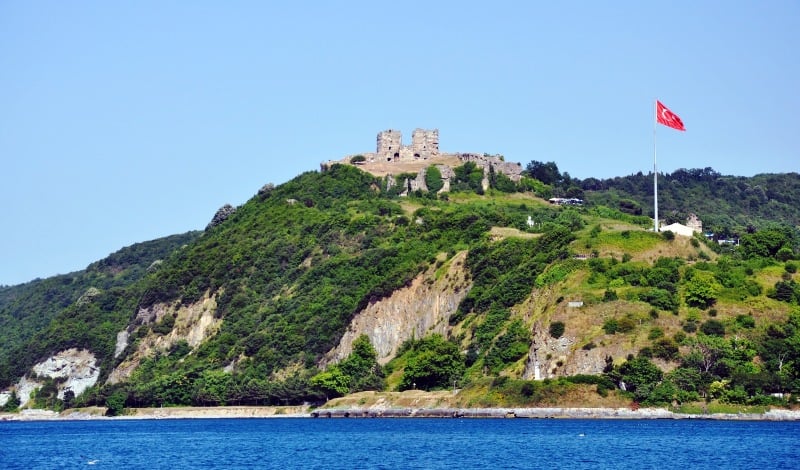
Although often labeled a Genoese castle, Yoros was originally Byzantine. The Genoese took control in 1352, drawn by its strategic value. That chapter ended in 1452, when Fatih Sultan Mehmed reclaimed the fortress during his preparations for the conquest of Constantinople.
After the Ottoman takeover, the castle did not fade into irrelevance. Sultan Bayezid II ordered repairs and added a small mosque inside the complex. In later years, the castle’s guardian, Mehmed Ağa, commissioned a hammam, turning the site into a lived-in military outpost rather than a forgotten ruin.
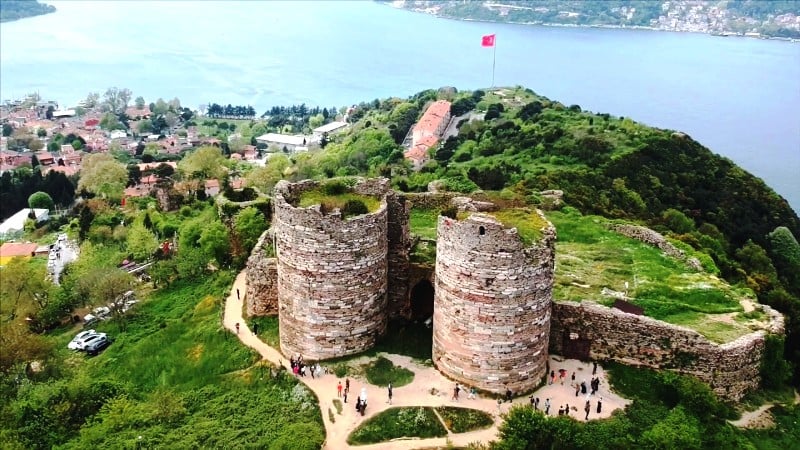
Near the summit, between two semicircular towers, a main gate still opens toward the view. On the outer walls, carved crosses and Greek inscriptions remain visible, bearing references to Jesus Christ and hinting at the castle’s Byzantine past.
Much has been lost to time, yet archaeological work and restoration efforts since 2010 continue to reveal layers of its story. Even in fragments, Yoros Castle carries the weight of centuries, quietly holding its place above the water.
Yoros Castle Cafe & Restaurant
Just below Yoros Castle, the café and restaurant make the climb feel rewarded. People usually pause here after exploring the walls, letting the view do most of the talking. The Bosphorus stretches wide, the Black Sea feels close, and Istanbul suddenly slows down.
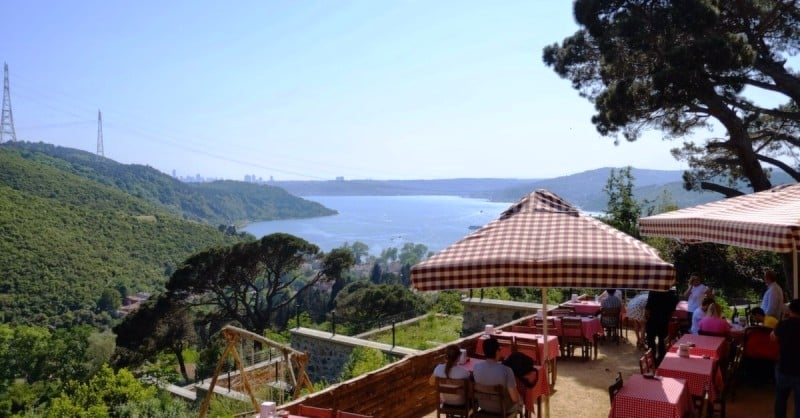
Breakfast is the main draw, especially on weekends. Long tables fill with menemen, cheeses, olives, fresh bread, and endless tea. Later in the day, the menu shifts toward grilled meats and fresh fish. Nothing fancy. Just solid, comforting food paired with a view that keeps you seated longer than planned.
The café stays open most of the day, usually from early morning until late evening, so timing rarely feels rushed. Families linger, hikers cool down, and couples stretch one tea into two.
Phone: +90 (216) 320 20 56
A small note from us: sit facing the water, not the castle walls. The real show is the traffic of ships sliding between seas.
How to Get to Yoros Castle
Getting to Yoros Castle starts with reaching Anadolu Kavagi. Once you arrive, the rest is a straightforward walk uphill.
By ferry, the route is part of the experience. Boats on the Bosphorus line and the Anadolu Kavağı–Üsküdar route drop you at Anadolu Kavagi Ferry Pier. From the pier, the walk to the castle takes about 10–15 minutes and gradually opens to wider views as you climb.
By bus, head first to Üsküdar, then take IETT bus 15A toward Anadolu Kavağı. The ride follows the shoreline through Beylerbeyi, Kanlıca, and Beykoz, which makes the journey feel scenic rather than practical.
By car, two options work well. You can follow the coastal road from Üsküdar through Beylerbeyi and Beykoz, or use the TEM highway and exit at Kavacık, then continue toward Beykoz and Anadolu Kavağı. Free roadside parking is usually available near the path leading up to the castle.