
Visiting Beylerbeyi Palace usually starts with a question we hear a lot. Is it really worth the trip when Istanbul already has Topkapı and Dolmabahçe? Here’s the honest answer. Beylerbeyi isn’t about scale or spectacle. It’s about atmosphere.
The palace was built as a summer residence, not a center of power. That single detail changes everything. Rooms feel lighter. Corridors breathe. The palace opens itself to the Bosphorus instead of turning inward toward ceremony. You notice how water, wind, and shade were part of daily life here, not decoration.
We often suggest Beylerbeyi to travelers who want something calmer. Fewer crowds. Fewer ropes. More time to actually look around. You walk through rooms once used by sultans and foreign guests, then step straight into gardens where the Bosphorus passes a few meters away. No rush. No noise pushing you forward.
If you’re curious about Ottoman life beyond ceremony, enjoy waterfront settings, or simply want a palace visit that doesn’t exhaust you, Beylerbeyi fits beautifully. Our guide will explore what to expect, how to plan your visit, and how to decide if it belongs on your Istanbul itinerary.
Fast facts about Beylerbeyi Palace
Beylerbeyi Palace was completed in 1865 during the reign of Sultan Abdülaziz and was planned as a summer residence rather than a formal seat of power. That intention shows up everywhere. Rooms are airy, ceilings feel higher than necessary, and the layout favors comfort over ceremony.
The palace also worked as a guesthouse for visiting royalty. European figures such as Empress Eugénie of France and Emperor Franz Joseph of Austria stayed here, which explains the balance you’ll notice between European order and Ottoman restraint. It needed to impress without overwhelming.
Architecturally, Beylerbeyi blends neoclassical structure with Ottoman interior sensibility. From the outside, it feels symmetrical and confident. Inside, decoration stays measured. Cool marble floors, subtle ornamentation, and water elements were chosen with Istanbul summers in mind.
The gardens matter just as much as the building. Terraced paths, small pavilions, and fountains open directly toward the Bosphorus, creating pauses rather than viewpoints. This was a place for walking slowly, not making entrances.
There is also a lesser-known detail beneath your feet. A tunnel runs under the palace, once used by the sultan to reach the waterfront privately. It adds a quiet layer of intrigue to an already personal space.
After his dethronement in 1909, Sultan Abdülhamid II spent his final years here. Knowing this changes how the palace feels. Less celebratory. More reflective.
Istanbeautiful Team tip:
Late afternoon visits bring softer light across the Bosphorus-facing gardens, and the palace feels calmer as the day winds down.
History of Beylerbeyi Palace
Long before the current palace took shape, this stretch of the Bosphorus was already a favored retreat. Known historically as the Garden of the Cross, the area hosted various structures during the Byzantine period. Its position across from the Historic Peninsula made it valuable, quiet, and desirable long before the Ottomans arrived.
No Regrets Booking Advice
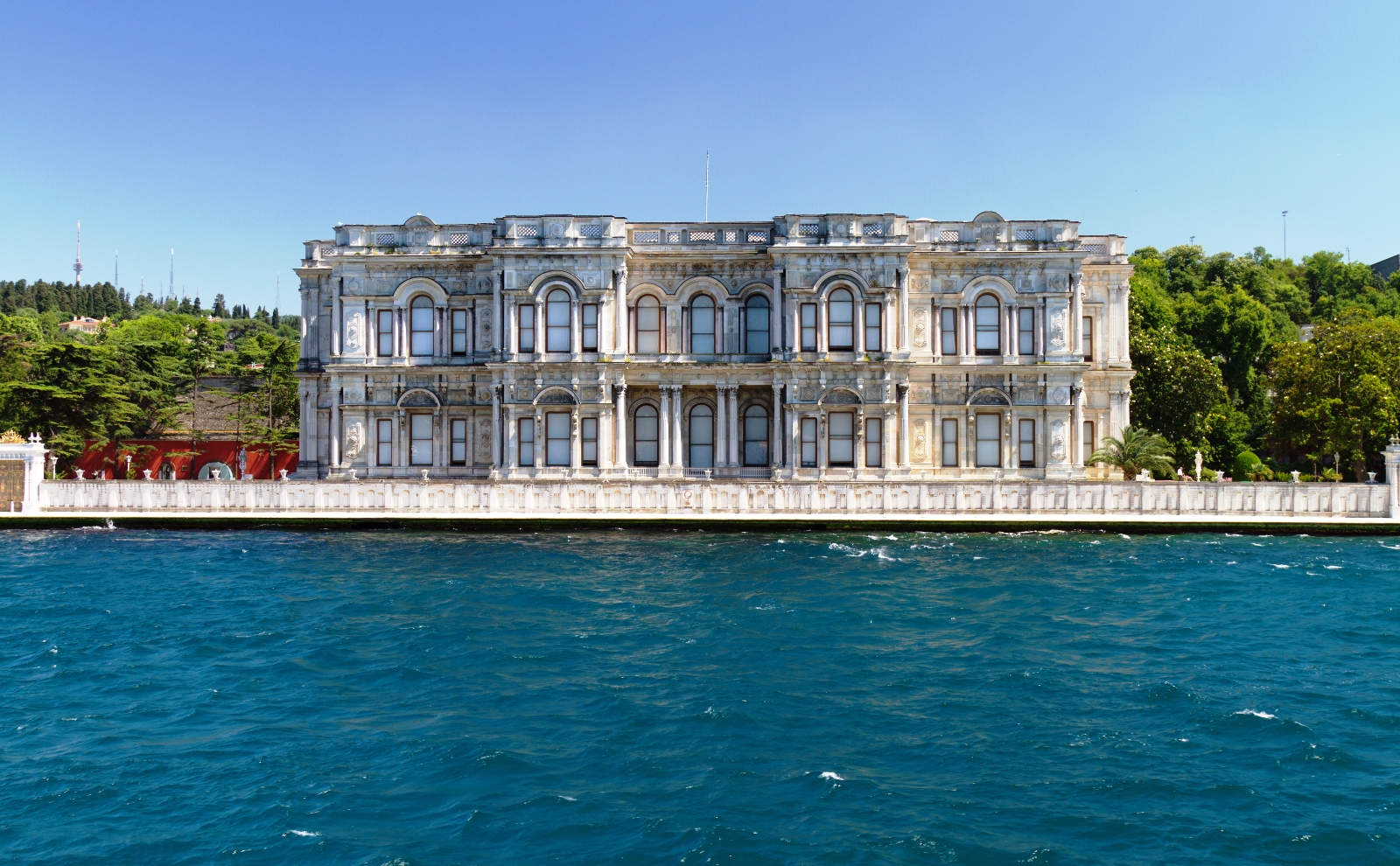
Ottoman sultans later leaned into that advantage. Over time, the imperial estate filled with country houses and small pavilions designed for rest rather than rule. In 1829, Sultan Mahmud II added a wooden waterfront palace here, continuing the tradition of seasonal living along the Bosphorus.
The building you see today came later, and not without interruption. During the 19th century, a new palace was ordered under Sultan Mahmud II. That structure suffered serious damage in a major fire. Sultan Abdülaziz chose not to repair it. He had it completely demolished and rebuilt from the ground up.
Between 1863 and 1865, the palace gained its present form. The main building, along with its auxiliary structures, spread across roughly 3,000 square meters. The design reflected the priorities of the period. Comfortable reception spaces. Clear separation between official and private life. Strong visual connection to the water.
Today, visitors can walk through the Mabeyn and Harem sections of the main palace. Other elements of the estate still shape the site. Sea pavilions, the historic tunnel linking Üsküdar and Beylerbeyi, the Yellow Pavilion, the Marble Pavilion, and the former stables all remain part of the complex, each carrying a quieter piece of the palace’s long timeline.
Our Beylerbeyi Palace Experience
Visiting Beylerbeyi Palace feels like stepping into a quieter chapter of Ottoman life. It sits right on the Asian shore of the Bosphorus, removed from the scale and crowds of Topkapi and Dolmabahce. That difference shapes the whole visit.
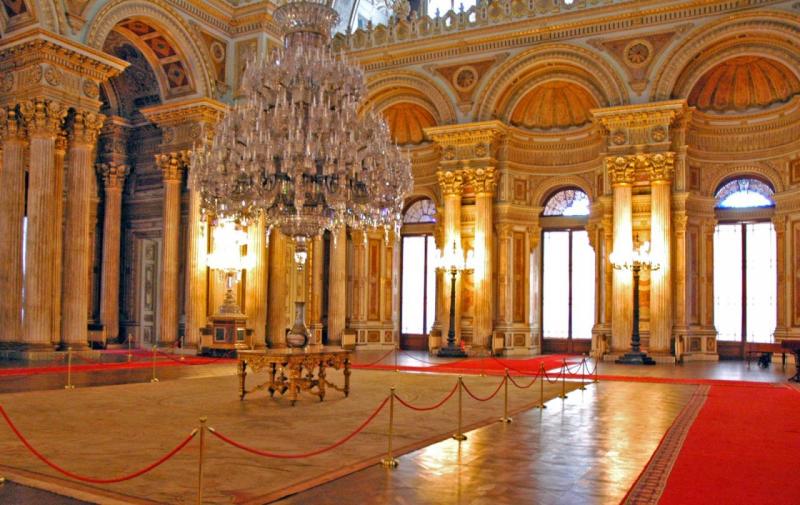
Built in the 1860s as a summer residence for Sultan Abdülaziz, the palace blends Ottoman planning with Baroque and Rococo touches. Nothing feels oversized. Spaces feel lived in. You move through the building at an unforced pace, with time to notice details rather than manage foot traffic.
Istanbeautiful Team note:
If larger palaces felt impressive but exhausting, Beylerbeyi usually feels like relief.
Getting into the palace
Entry follows the same pattern as other imperial sites. There is a security check before access. Online tickets help, but even with standard tickets, lines tend to move steadily. Photography is not allowed indoors, which shifts your attention back to the rooms themselves. Outside, the palace and gardens are very photogenic.
Early morning or late afternoon visits work best, both for light and calm.
Inside Beylerbeyi Palace
The interior leans toward comfort rather than ceremony. Rooms feel generous but personal, designed for retreat instead of rule.
The Grand Hall anchors the palace. High ceilings, carved details, a large crystal chandelier, and a gold-toned fireplace frame the space where foreign guests were received.

Standing in the center and looking upward reveals how mirrors and light were used to soften scale rather than amplify it.
The Harem section tells a quieter story. Smaller than Topkapı’s, it feels more domestic. Family rooms, marble baths, and delicately finished ceilings reflect daily life rather than state ritual. Crowds thin out here, which makes the experience more focused.
The gardens
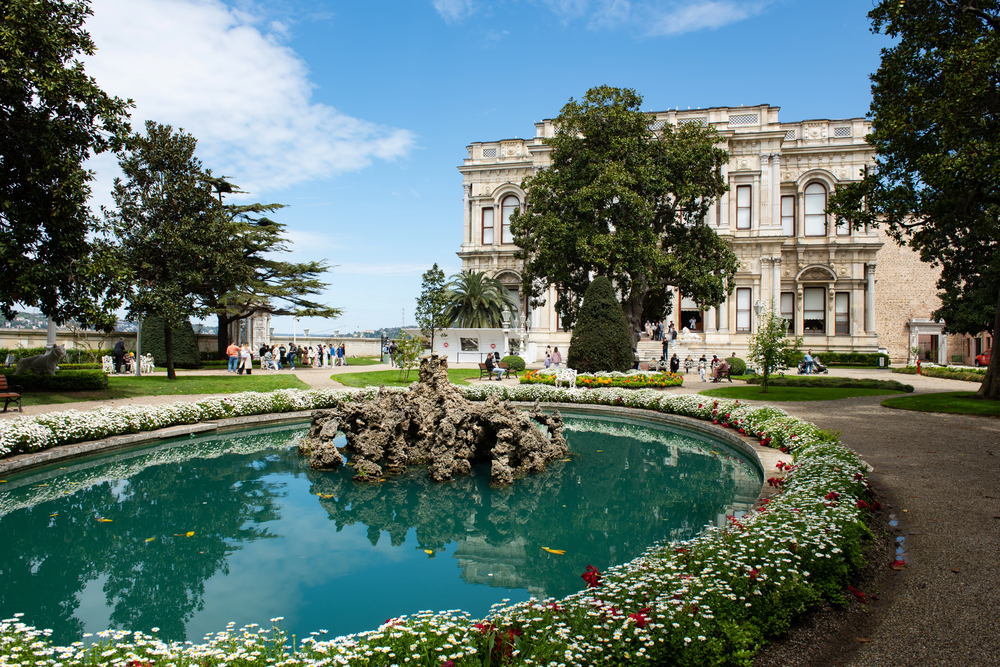
The gardens complete the visit. Paths move through cypress, magnolia, and palm trees toward terraces facing the Bosphorus. Fountains slow your pace naturally. The waterfront terrace, in particular, invites lingering rather than checking the time.
Visiting with kids
Beylerbeyi works well for families. Children under six enter free. Strollers are welcome in the gardens, though not inside the palace. Guided tours often help younger visitors stay engaged with stories of sultans, guests, and palace life.
Visitor Information & Tips
Location
The palace is easy to spot along the coastal road between Üsküdar and Çengelköy. If you are coming from the European side, ferries to Üsküdar followed by a short bus or taxi ride usually feel simpler than driving.
Opening hours
Beylerbeyi Palace is open Tuesday through Sunday from 9:00 to 17:00. Mondays are closed. The last entry is at 16:30, and that cut-off matters. Arriving too late compresses the visit.
Late afternoon works well for softer light in the gardens. Early mornings feel calmer inside.
Istanbeautiful Team tip:
If you care about photos and breathing room, aim for the first or last hour of the day.
Tickets
Please cross check hours and admissions from millisaraylar.gov.tr
Visiting Tips
Slow down inside. The chandeliers, gilded details, and ceiling work reward patience. The Harem section deserves attention, not as an add-on but as part of daily palace life. Outside, the gardens stretch wide. Walking them fully changes how the palace feels.
Photography is not allowed indoors, which can feel frustrating at first. Then it becomes freeing. Outside, the façades, terraces, and Bosphorus views more than compensate.
Comfortable shoes help. Some garden paths are uneven and cobbled.
Accessibility
Parts of the palace are accessible, especially outdoors. Garden paths are wide and manageable. Interior sections include stairs that limit access to upper rooms.
Parking notes
There is no dedicated parking lot. Street parking near Beylerbeyi Pier is possible, and nearby ISPARK areas offer paid options. On weekends, spaces disappear quickly.
Nearby attractions around Beylerbeyi Palace
One of the best parts about visiting Beylerbeyi Palace is what sits just beyond its gates. Üsküdar is layered, walkable, and full of places that still feel lived in.

A short ride uphill brings you to Çamlıca Hill, one of the highest points in the city. The view opens wide. Bosphorus. Bridges. Minarets fading into distance. Sunset here slows people down in a way few places do.
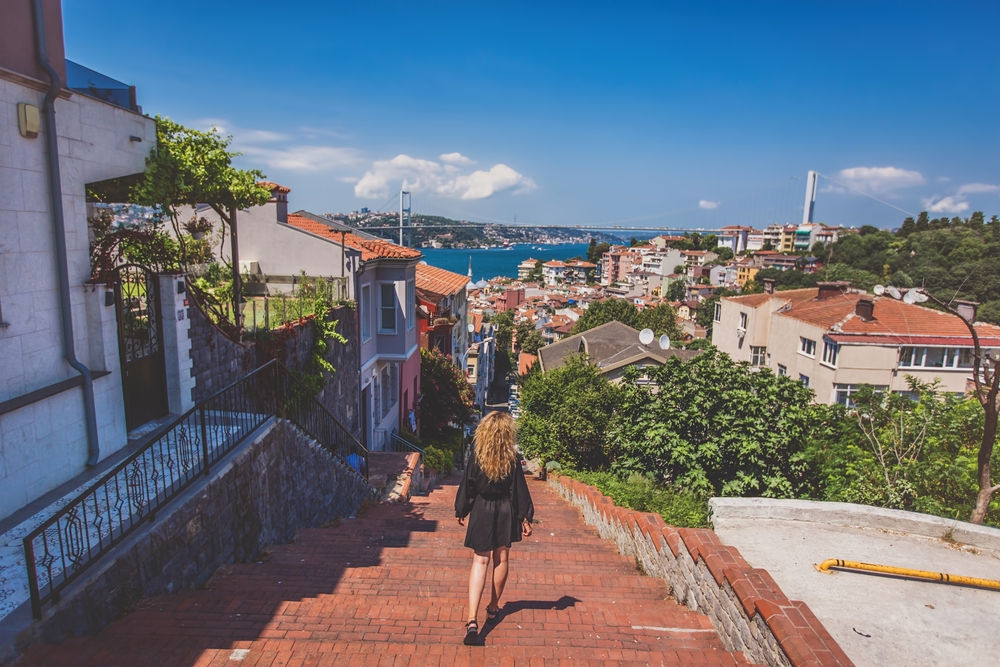
Back at street level, Kuzguncuk feels like a village tucked inside the city. Wooden houses lean close. Cafés stay small and personal. Artists and locals share the same sidewalks. Even a short walk here changes the rhythm of the day.
Near the ferry pier, Mihrimah Sultan Mosque stands quietly. Designed by Mimar Sinan, it catches light differently depending on the hour. It works well as a pause rather than a checklist stop.
If hunger kicks in, Üsküdar Market and the fish bazaar deliver quickly. Produce stalls. Bakeries. Sweet shops. Everyday Istanbul, without polish.
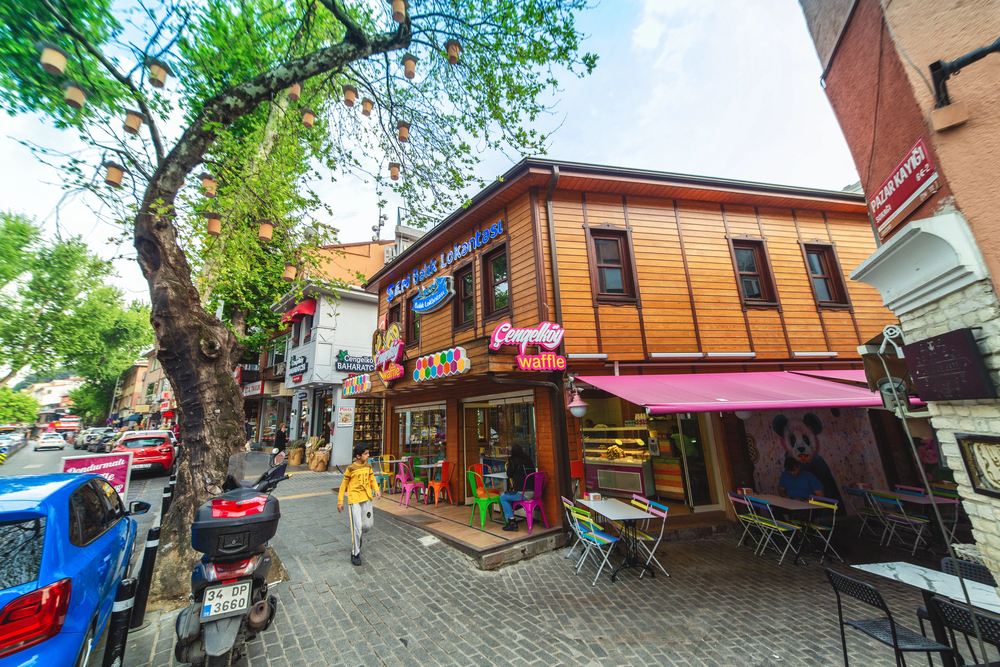
For something slower, Çengelköy stretches along the water with tea gardens and breakfast spots that locals actually use.
How to Get There?
Getting to Beylerbeyi is easy, especially by public transport. From Üsküdar Ferry Port, the palace sits about 3.4 kilometers away. Local buses along the Bosphorus coast are the most practical option.
Reaching Üsküdar itself is easy. From Kadıköy, buses and shared taxis run frequently. From Beşiktaş, ferries offer a calm and scenic crossing. From Sultanahmet or Eminönü, take the T1 tram to Sirkeci, then continue with Marmaray to Üsküdar. Ferries from Eminönü also work well.
Once in Üsküdar, the final stretch along the Bosphorus sets the tone. You see the palace before you enter it.