
Most people walk past this museum without realizing what they’re missing. They hear “mosaics” and picture a quick stop. Decorative. Optional. That’s the wrong frame. The Great Palace Mosaics Museum isn’t about emperors posing for glory. It’s about everyday life frozen underfoot. Animals misbehaving. Children working. Hunters struggling. Nature doing what it always does.
That’s why this place feels different from almost every other museum around Sultanahmet. The mosaics date to 450–550 AD, from the Eastern Roman Great Palace. They once covered a vast courtyard floor. Today, only 180 square metres survive. That sounds small. It isn’t. The density of detail keeps people longer than expected.
According to visitor comments on Tripadvisor, many travelers rank this museum higher than expected, especially when paired with nearby landmarks. The surprise factor does a lot of the work.
Istanbeautiful Team insight:
“This museum works best when you’re already tired of monuments. It brings history back to human scale.”
If big imperial narratives feel heavy, this place feels grounding. It’s one of the rare stops in Sultanahmet where curiosity replaces obligation.
Fascinating Facts About the Great Palace Mosaics Museum
This museum doesn’t shout its importance. It waits for you to notice.
The floor mosaics you see here once covered the courtyards of the Great Palace of Constantinople. Not walls. Floors. These were surfaces people actually walked across. That detail alone changes how you look at them.
They date back to the 5th and 6th centuries, deep in the Byzantine era. What survives isn’t ceremonial propaganda. It’s daily rhythm. Hunting scenes. Animals in motion. Mythology woven into ordinary life. The range is what surprises most visitors.
The mosaics were rediscovered in the 1930s, buried for centuries beneath Sultanahmet. Their survival wasn’t planned. They lasted because they were forgotten, then carefully uncovered piece by piece.
Only part of the original pavement remains today, but it’s still substantial. Roughly 250 square meters of mosaic work, dense with detail. That makes this one of the most extensive surviving Byzantine floor mosaic collections anywhere.
Look closely and patterns emerge. Griffins chasing prey. Elephants and lions locked in tension. Peacocks, goats, children, shepherds. Nature isn’t decorative here. It’s active. Alive.
And then there’s the location. The museum sits just steps from the Blue Mosque. Most people walk past without realizing what’s behind the bazaar walls.
Istanbeautiful Team tip:
“This pairs beautifully with Hagia Sophia and the Basilica Cistern. Three very different ways of seeing Byzantine life, all within walking distance.”
No Regrets Booking Advice
Exploring the Byzantine mosaics
The moment you step inside, the noise drops. That’s intentional.
These mosaics were created by multiple master artists working together, likely under lead designers of the era. The tesserae are tiny. Around 5 millimetres each. Limestone, terracotta, and colored stones placed with control that still feels modern.
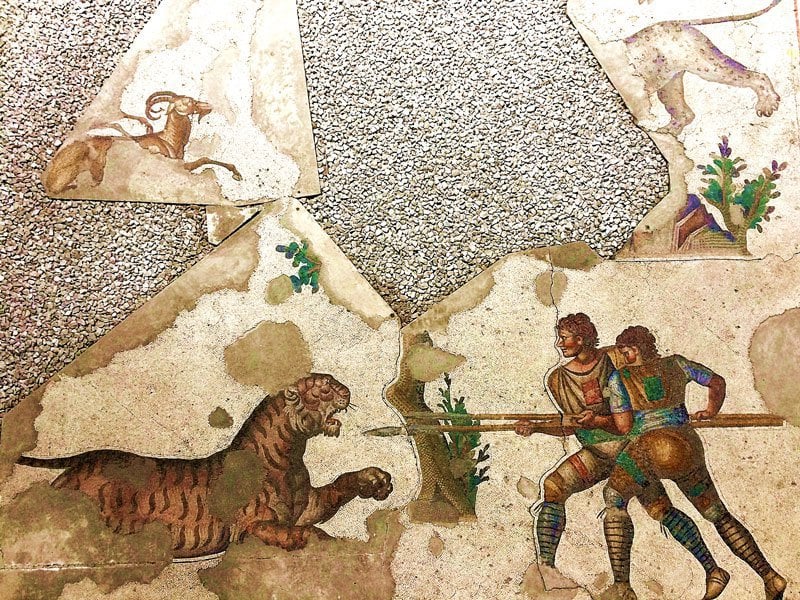
The background marble is arranged in a herringbone pattern. Figures appear in Opus Vermiculatum style, outlined carefully so movement feels real. Muscles flex. Animals react. Scenes breathe.
This isn’t symbolic art meant only for elites. It shows daily life. Children herding geese. A man milking a goat. A boy feeding his donkey. Bears stealing apples. A griffin eating a lizard.
In total, you’ll see 150 human and animal figures across 90 different themes. That variety explains why people linger. Your eye keeps finding new moments.
Istanbeautiful Team advice:
“Step back first. Then move closer. The mosaics reward both distances.”
You don’t need prior knowledge. Curiosity does the work.
Standout scenes you shouldn’t rush past
Some mosaics stop people instinctively.
The griffin eating a lizard feels playful and unsettling at once. Mythology collides with everyday observation. Nearby, an elephant and lion locked in combat show tension and motion rarely seen in floor art.

More grounded scenes often hit harder. A mare nursing her foal. Children herding geese. A young girl carrying a jug. These moments feel familiar across centuries.

What surprises many visitors is how non-heroic the scenes are. No emperors. No gods on pedestals. Just life.
According to patterns in Tripadvisor reviews, visitors often mention how relatable the scenes feel compared to grand imperial art elsewhere in the city.
Istanbeautiful Team takeaway:
“This is Byzantine life without ceremony. That’s why it sticks.”
Look closely at shading and depth. These artists understood three-dimensional illusion long before modern perspective theory.
About the Great Palace context
The mosaics once covered the courtyard floors of the Great Palace of Constantinople, the seat of Byzantine emperors for centuries. That palace is mostly gone now. Buried. Rebuilt over. Forgotten.
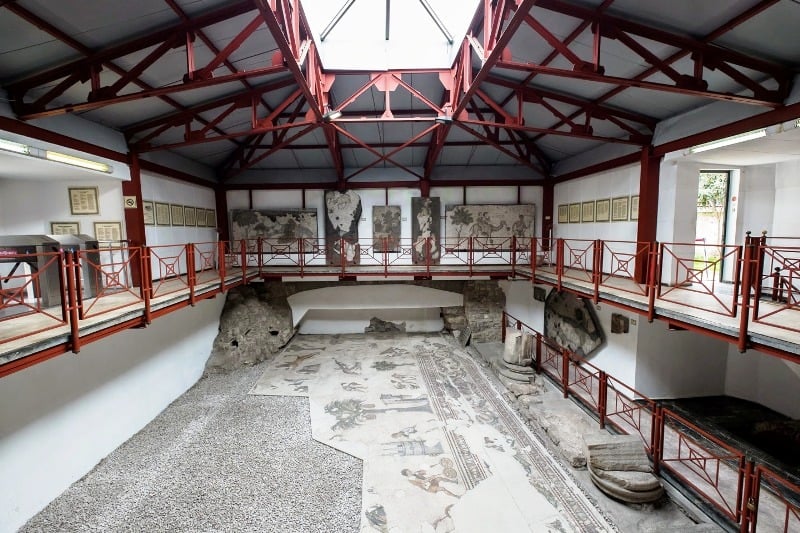
These mosaics survived because they were covered, not preserved.
Exhibits here explain how the palace functioned. Ceremonies. Processions. Daily routines. You’ll see maps and models that help place what you’re standing on.
If you’ve visited Hagia Sophia or Chora Church, the comparison is useful. Those places aim upward. This one looks down.
Tickets & opening hours
This visit is simple. No layers. No hidden catches.
Opening hours and ticket price
The Great Palace Mosaics Museum opens at 09:00 and closes at 19:00. Entry costs 10€. Lines are usually short, even during peak season.
Because it’s smaller and slightly tucked away, crowd pressure stays low. According to patterns we see echoed on Reddit travel threads, many visitors stumble in by accident and are glad they did.
Where it’s located
The museum sits inside Arasta Bazaar, right behind the Blue Mosque. You don’t need extra planning. If you’re already in Sultanahmet, you’re basically there.
The location is intentional. The mosaics remain where part of the Great Palace once stood. You’re not just looking at art. You’re standing on history.
What surprises people
Size. People expect a large museum and instead find something focused. That’s a feature, not a flaw. You see everything without rushing.