
Most people come to Sultanahmet thinking they already know the story of Hagia Sophia. Big dome. Long lines. Layers of empires. Then they step inside the monument and realize how much context is missing. That gap is exactly where the Hagia Sophia History & Experience Museum fits.
This is not a classic museum. There are no artifacts behind glass. No panels you skim while checking your phone. Instead, the experience is built as a short, focused journey that places you inside key moments of the building’s past. Roman ambition. Byzantine ceremony. Ottoman transformation. All compressed into about 30 minutes, without feeling rushed.
The museum sits just a few minutes from Hagia Sophia itself, which makes the order important. Many visitors choose to come here first. Others use it as a reset after the main monument. Both approaches work, but the purpose stays the same. Context, fast and clear.
We’ve seen travelers walk out saying the same thing. “I finally understood what I was looking at”.
Istanbeautiful Team insight:
“This museum doesn’t compete with Hagia Sophia. It prepares you for it.”
If you’re short on time, overwhelmed by history, or simply want the story told cleanly before facing the crowds, this place makes sense. It turns 1,700 years of change into something you can follow, feel, and remember.
That’s what this guide is about. What to expect. How it works. And whether it belongs in your Sultanahmet day at all.
At a Glance
Tucked into a quiet brick building in Sultanahmet, about a two-minute walk from Hagia Sophia, there’s a museum that doesn’t behave like a museum. The Hagia Sophia History & Experience Museum skips glass cases and long labels and goes straight for immersion.
The visit is designed as a 30-minute, guided journey through time. Big screens. Carefully timed sound. Controlled lighting. The kind of setup where you don’t wander freely, but move forward with intention. It works because it’s focused.

You pass through 10 distinct rooms, each built around a specific era. The story begins in the Eastern Roman period (532–537 AD), when Hagia Sophia was first rising over Constantinople, and moves step by step toward the Ottoman conquest and the city’s transformation into Istanbul. No jumping around. No overload.

No Regrets Booking Advice
What stays with most visitors is the pacing. Scenes unfold gradually. Massive visuals wrap around you. Sound cues pull attention where it needs to go. It doesn’t feel like reading history. It feels like being placed inside it.
What to expect inside
The Hagia Sophia History & Experience Museum is built for people who want context fast, without losing emotional weight.
From the moment you enter, the environment narrows your focus. Corridors guide you forward. Each room resets the mood. You’re not expected to study objects. You’re asked to observe, listen, and connect.
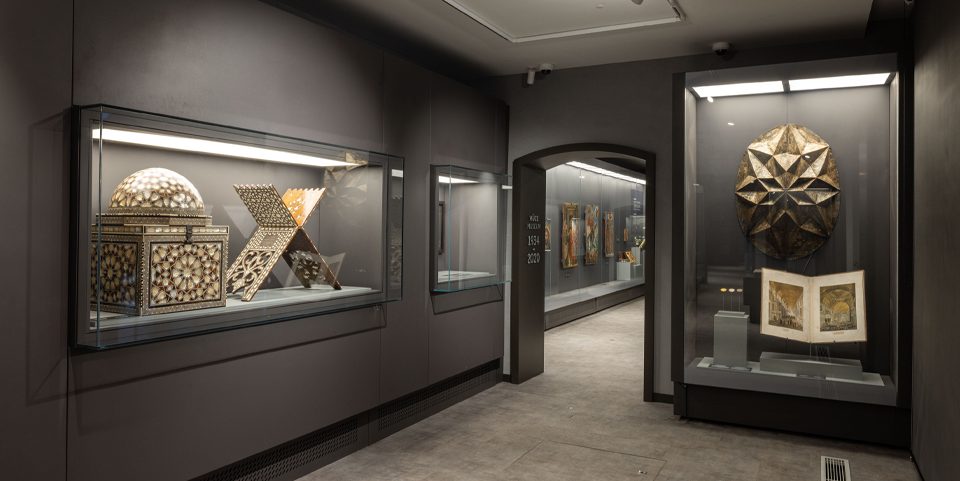
This is not a static exhibition. There are no artifacts to inspect up close. Instead, large-scale projections, layered sound effects, and spatial design do the work. Battles, ceremonies, architectural shifts, and turning points are shown rather than explained.
The result feels surprisingly intimate. Even with groups moving through together, the experience stays personal. You absorb the scale of Hagia Sophia’s story without needing prior knowledge.
Immersive galleries
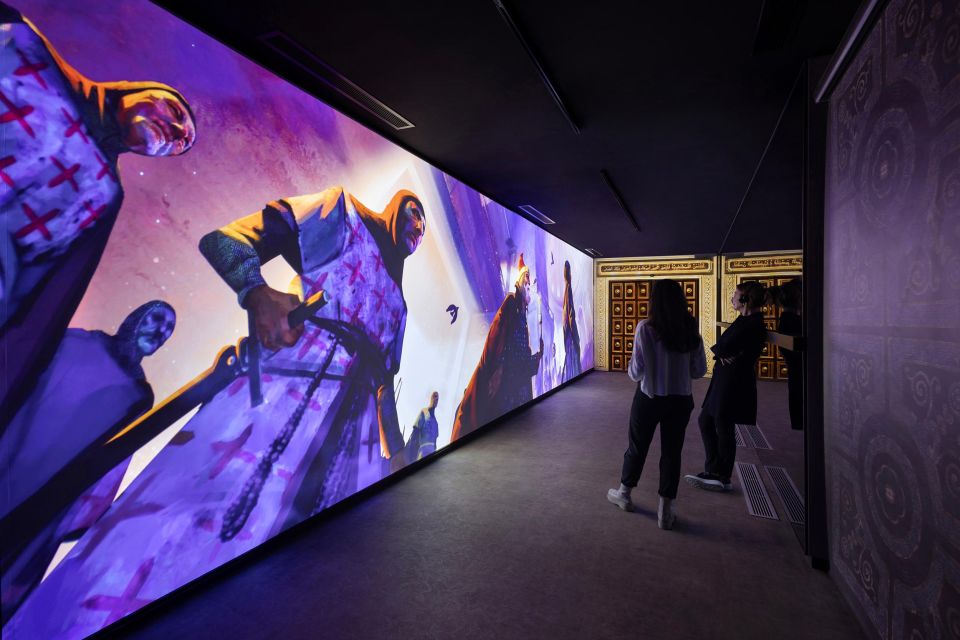
The rooms are dark, controlled, and cinematic. Each one introduces a new chapter, then lets it breathe before moving on.
Sensory exploration
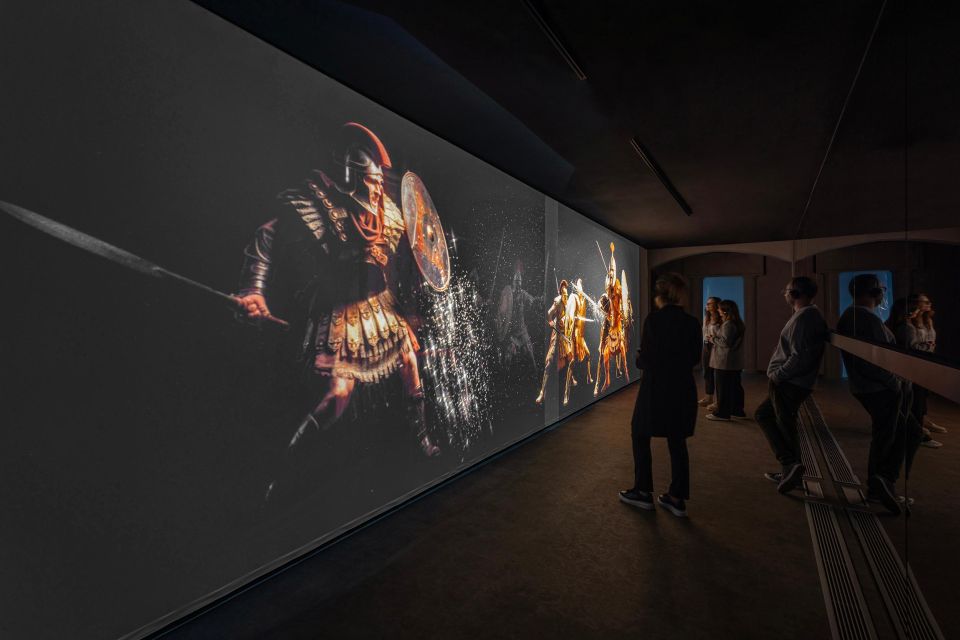
Sound, movement, and visuals work together. Nothing flashes for attention. The effect builds quietly.
This is a good stop if you want fast entry, clear storytelling, and a modern way to frame Hagia Sophia’s past before or after seeing the monument itself.
Visiting hours and admissions
The Hagia Sophia History & Experience Museum is run by DEM Museums, a group known for building immersive, technology-led cultural spaces rather than traditional display halls. Their background shows in how this museum flows. Tight timing. Clear storytelling. No wasted moments.
Opening hours
The museum is open every day from 08:00 to 18:00. Morning visits feel calmer. Late afternoons work, but the experience lands better when you’re not watching the clock.
Istanbeautiful Team note:
“This is a good first stop in Sultanahmet. It frames what you’re about to see outside.”
Online tickets and fast entry
Tickets can be purchased online in advance, which often comes with small discounts and, more importantly, skip-the-line access. Entry slots move smoothly, but busy days still form queues. Pre-booking removes that friction.
If you’re pairing this with a visit to Hagia Sophia, online tickets help keep the day balanced.
How to get there
Location
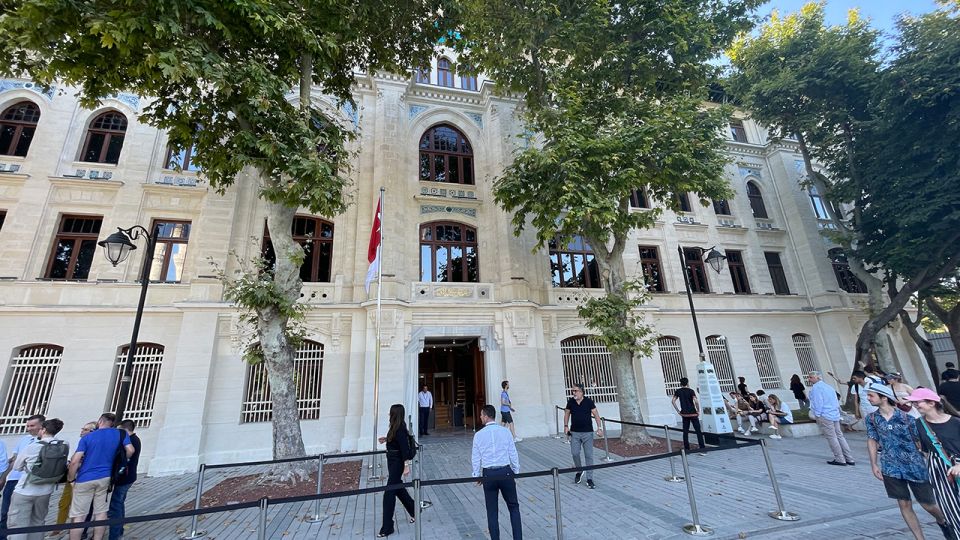
The museum sits in Sultanahmet, just a few minutes’ walk from Hagia Sophia and close to the Museum of Turkish and Islamic Arts. It’s tucked slightly off the main flow, which helps the transition inside feel calmer.
Public transport
The easiest route is the T1 Tram running between Bağcılar and Kabataş. Get off at Sultanahmet Tram Stop. From there, it’s a short walk.
Vehicle access in Sultanahmet is limited. Most surrounding roads are closed to regular traffic, aside from trams and tour buses.
From Taksim Square, take the funicular down to Kabataş or Karaköy, then continue by tram.
If you’re staying in Sultanahmet, walking is easiest. The area is compact, and the museum is well signed once you’re close.
Honest visitor reviews
Reviews around the Hagia Sophia History & Experience Museum are surprisingly consistent. Not glowing hype. Not harsh criticism. Mostly relief.
On Tripadvisor, visitors often mention clarity as the biggest win. People say the experience helped them make sense of Hagia Sophia’s layers before or after seeing the monument itself. Many describe it as “short but effective”, which is exactly how it’s designed to be.
A common theme shows up in Google Maps reviews too. Travelers appreciate the pacing. Thirty minutes feels manageable, even on a packed Sultanahmet day. Several reviews mention that they expected something gimmicky and left pleasantly surprised.
There’s also honest pushback. Some visitors on Reddit point out that this is not a museum for artifact lovers. If you want objects, manuscripts, or long explanations, this won’t replace a traditional visit.
Others mention that it works best if you’re already curious about Hagia Sophia, not if you’re wandering in randomly.
Families tend to rate it well. Kids stay engaged. Adults don’t feel talked down to.
This place doesn’t try to impress everyone. It helps the right visitors understand something big, quickly. And for many, that’s exactly what was missing.