
Some museums explain history. The Panorama 1453 Museum of History puts you inside it. Most visitors arrive expecting another historical stop. Panels. Dates. A quick walk-through. That expectation usually disappears the moment you step into the main hall.
The museum is built around a single event, the conquest of Constantinople in 1453, and it doesn’t dilute that focus. It slows you down. It narrows your attention. Then it pulls you all the way in.
The location matters. You’re standing near the old city walls, not far from where the final breach happened. That proximity changes how the story lands. This isn’t abstract history. It’s geography you can still trace with your eyes.
If you’re planning to visit the Panorama 1453 Museum during your time in Istanbul, this guide is here to help you know what to expect before you walk in. We’ll cover what you’ll actually see inside, how the experience unfolds, how long to plan, and why timing and mindset matter more here than in most museums.
At a glance: Panorama 1453 Museum of History
The Panorama 1453 Museum of History doesn’t try to cover centuries. It focuses on one moment. And it commits to it fully.
Opened in 2009, the museum was inaugurated with the participation of Recep Tayyip Erdoğan and brought to the city by Istanbul Metropolitan Municipality. Since then, it’s become one of those places people recommend quietly, usually with a pause before they explain why.
The location is the first clue. The museum sits along the historic Topkapı–Edirnekapı city walls, right where the final phase of the 1453 siege unfolded. This isn’t symbolic placement. This is ground that witnessed entry, movement, and collapse. You’re standing where history actually happened.
Operated by Kültür AŞ, the museum captures a single turning point and holds it still. The conquest of Constantinople isn’t presented as a timeline. It’s presented as an environment you step into.
From inside, the view matters. To one side, Edirnekapı’s walls. Straight ahead, the Topkapı section where Ottoman soldiers first entered the city. To the other side, Silivrikapı. The geography lines up with the story, which changes how it lands.
What surprises many visitors is distance. Or the lack of it. You’re never far from the walls. Three to five steps, at most. That proximity makes the scale real, even for visitors who don’t usually gravitate toward history museums.
Outside, Topkapı Culture Park softens the experience. Fresh air. Open space. A chance to sit with what you just saw.
Istanbeautiful Team note:
“This isn’t a museum you rush. Give yourself a quiet moment afterward in the park. The experience settles there.”
No Regrets Booking Advice
It’s history presented without distraction. Focused. Grounded. And hard to forget once you’ve stood inside it.
What to See Inside?
The visit unfolds in layers. You don’t walk straight into the main scene. You’re eased into it.
The first section guides you from the entrance toward the panoramic hall through a permanent exhibition called Panorama 1453. This part sets the context.

Modern miniature works trace the founding of Istanbul, the siege, and the conquest, then widen out to daily life under Fatih Sultan Mehmed. Laws, arts, culture, and early construction appear alongside engravings and battle images. It feels curated with intent rather than overloaded with dates.
What stands out is balance. You’re given enough background to understand what’s coming, without draining the impact of the main moment.
Then the transition happens.
You pass through a short, dim corridor. Sound drops. Light narrows. And suddenly, it’s dawn on May 29, 1453.
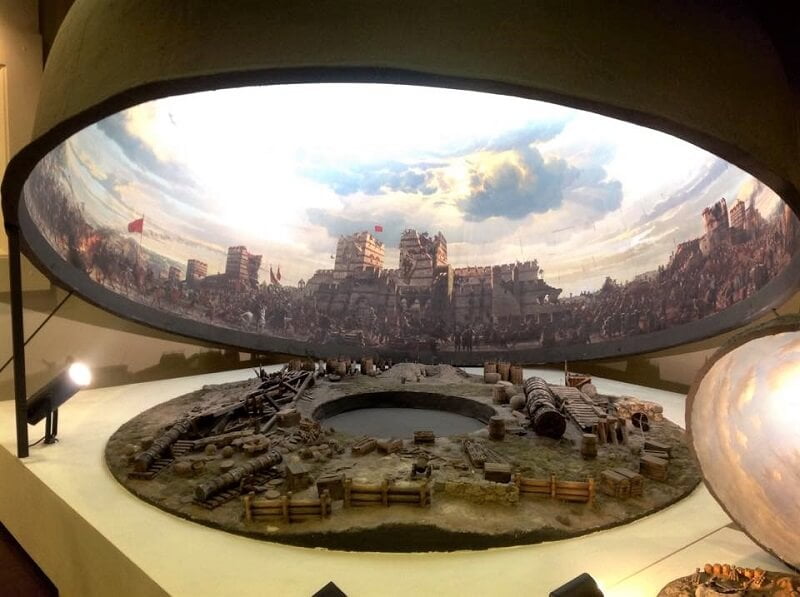
You step onto the central platform beneath a vast hemispherical dome. The panoramic painting wraps around you completely. No frame. No edge. No visual cue telling your brain where the artwork ends and the space begins.
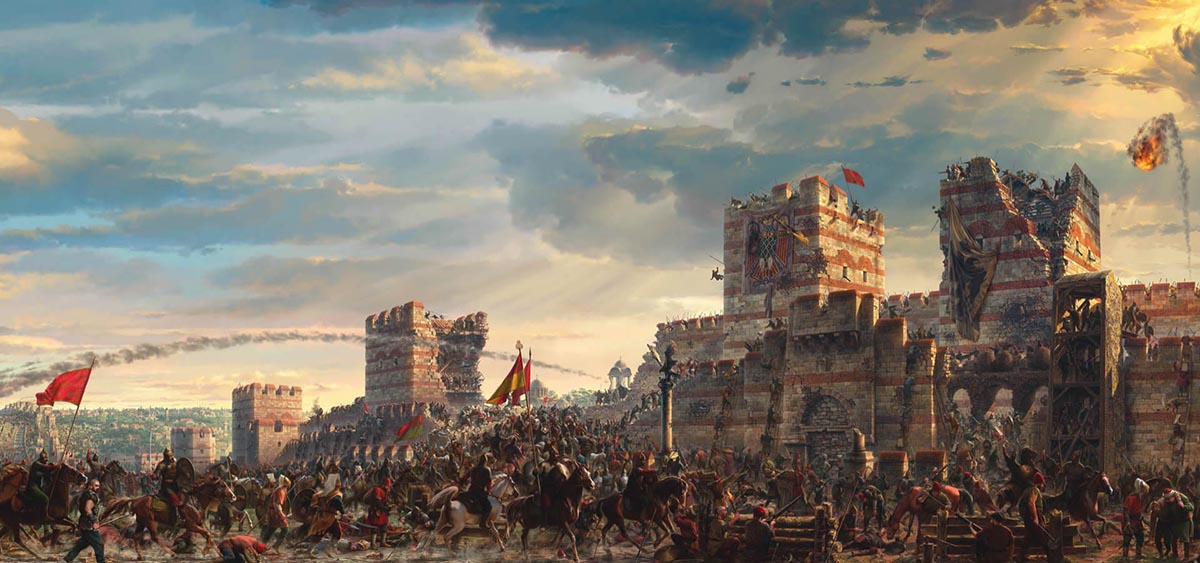
The painting, created under the lead of Haşim Vatandaş with a large team of artists, covers a 38-meter diameter dome. It fills the entire interior surface. Over 10,000 figures populate the scene. Soldiers, movement, smoke, tension. The scale is immediate.
This is where people pause.
Your eyes search for depth markers and don’t find them. The ground blends into the painting. The horizon dissolves. For a few seconds, your balance adjusts as if you’ve stepped outdoors.
Istanbeautiful Team insight:
“Everyone has a moment of disorientation here. That’s the point. Stay still. Let your eyes settle.”
Unlike traditional panoramic museums, there’s no visible boundary to pull you back into observer mode. You’re not looking at history. You’re standing inside it.
The experience isn’t loud. It’s immersive. And it stays with you long after you step back into daylight.
Visiting Information
This is one of those museums where practical details really help. Knowing them ahead of time keeps the visit calm and focused.
Opening hours
The Panorama 1453 Museum of History is open every day.
Visiting hours run from 08:00 to 18:30.
Morning visits feel quieter and more reflective. Later in the day, school groups and tour buses are more common. If you want space to stand still inside the panorama, earlier is better.
Istanbeautiful Team tip:
“Arriving before midday gives you time to absorb the scene without feeling rushed or crowded.”
Tickets and entry details
Tickets are sold on-site and in cash only. Foreign currency is not accepted, so having Turkish lira matters here.
If you’re curious but short on time, the museum also offers a 360-degree virtual tour, which gives a good sense of the scale. Still, it doesn’t replace standing inside the dome.
Accessibility notes
The museum is fully wheelchair accessible, but visitors need to bring their own wheelchair. There is no on-site rental.
Ramps are available at both the entrance and exit. An elevator provides access to the main viewing platform, and the panoramic area itself is designed to allow comfortable movement.
Disabled visitors enter free of charge, and one companion is also admitted free.
Location and getting oriented
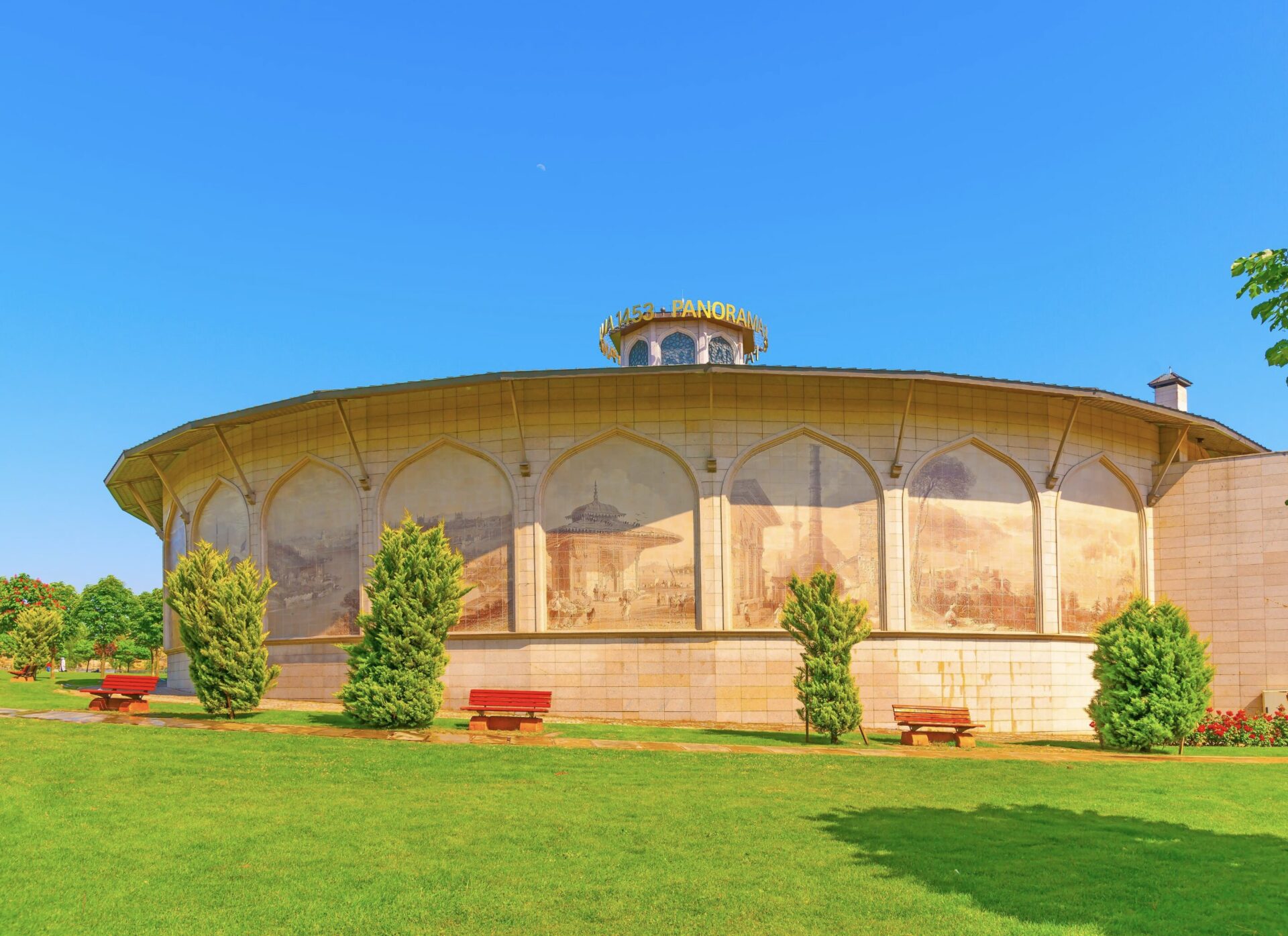
The museum sits inside Topkapı Culture Park, surrounded by open space and greenery. Once you arrive at the park, signage makes the museum easy to spot.
Plan a few extra minutes afterward. Stepping back into daylight after the panorama usually invites a short walk or quiet pause before moving on.