
Istiklal Street rarely slows down. Music spills from doorways. Trams ring their bells. Crowds move with purpose. Then, almost without warning, a red-brick façade opens into silence. That moment is what draws people into Saint Antoine Catholic Church.
For many first-time visitors, this is their first encounter with a Catholic church in Istanbul that is both fully active and openly welcoming to visitors. Not a museum. Not a relic behind ropes. A living parish that shares space with one of the city’s busiest pedestrian streets.
Most guides list it quickly. A line or two. Address. Mass times. Then they move on. That misses the point.
Visiting Saint Antoine Catholic Church Istanbul is less about what you see and more about the contrast you feel. You step in from noise and motion into stillness. Candles flicker. People sit quietly, some praying, some just breathing. The shift is immediate.
Our guide exists because many travelers walk past unsure if they’re allowed inside. Others enter at the wrong moment and feel uncomfortable. Some stay too briefly and don’t quite understand why locals keep coming back.
We’ll cover opening hours, mass times, what to see inside, visitor etiquette, and how long you actually need. We’ll also explain how to fit St Anthony Church Istiklal naturally into your walk without breaking your rhythm or stepping on a service.
Istanbeautiful Team note:
“Saint Antoine works best when you don’t rush it. Five quiet minutes here can reset a whole afternoon.”
If you’re curious about sacred spaces that still function as intended, and if you like moments of calm tucked inside busy cities, this visit deserves more than a passing glance.
What is Saint Antoine Catholic Church?
It’s easy to miss the significance of Saint Antoine Catholic Church if you only see it as a building on Istiklal. In reality, this is the largest and most active Catholic church in Istanbul, serving a multilingual congregation in a city where Catholic spaces are relatively rare.
Officially known as St. Anthony of Padua Church Istanbul, it was completed in 1912 and has remained in continuous use ever since. That detail matters. Many historic churches in Istanbul shifted roles over time. Saint Antoine did not. It has always functioned as a place of worship, adapting quietly to the city changing around it.
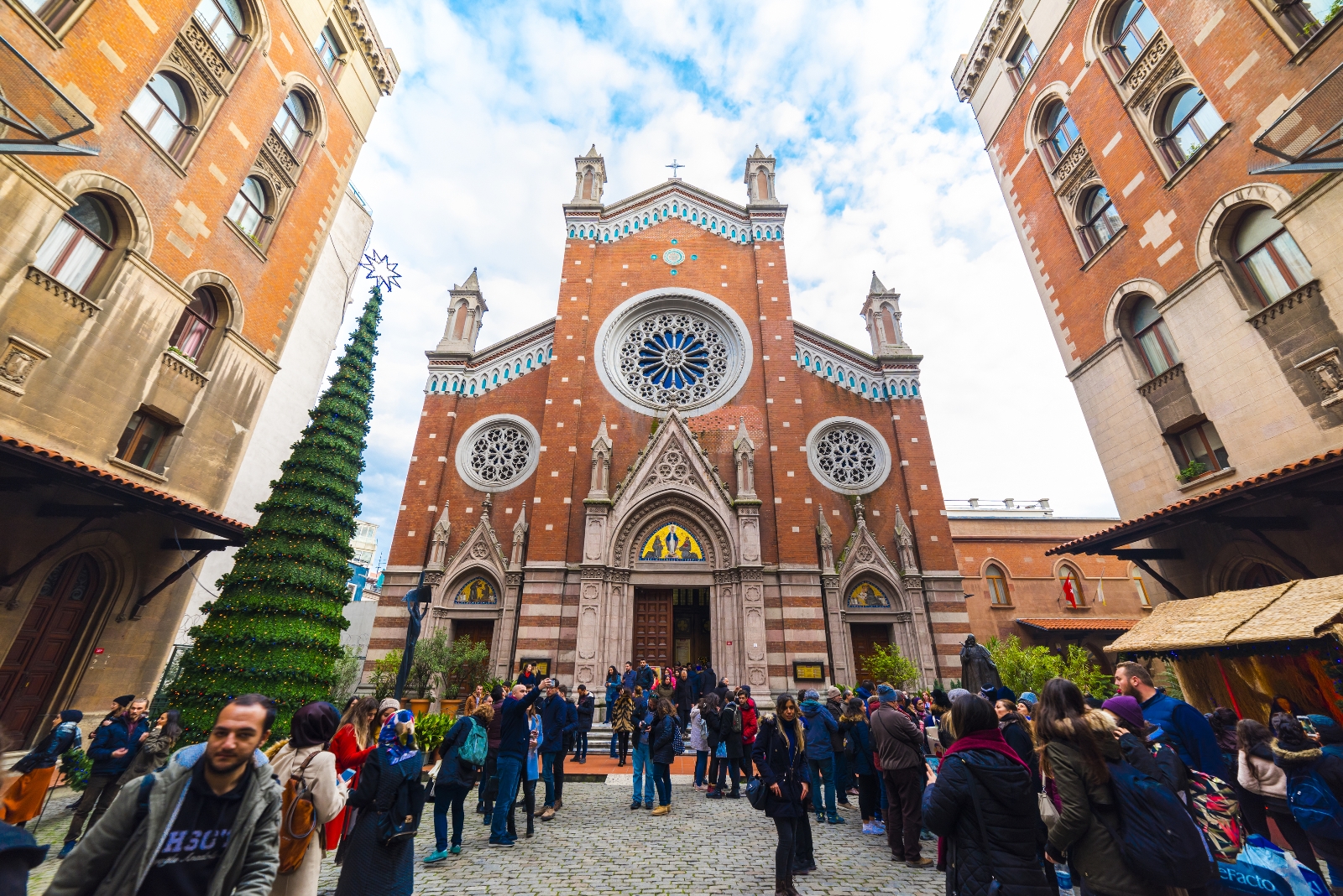
The church serves Catholics from many backgrounds. Local Latin Catholics. Long-term residents. Diplomats. Visitors passing through. According to parish notices and Archdiocese listings, masses are still held regularly in multiple languages, including Turkish, Italian, English, and Polish. That international rhythm gives the space its character.
No Regrets Booking Advice
What surprises first-time visitors most is scale. From the street, the entrance feels modest. Step inside, and the interior opens wide. High ceilings. Long central nave. Soft light filtering through stained glass. The space feels intentionally calm, designed to absorb sound rather than amplify it.
This is not a sightseeing stop built for crowds. It’s a functioning parish that happens to sit on one of Europe’s busiest pedestrian streets. That tension is what makes it compelling.
Istanbeautiful Team insight:
“Saint Antoine isn’t hidden. It’s just easy to overlook if you’re moving too fast.”
If you’re interested in churches in Beyoğlu, or curious about how different faiths coexist in everyday Istanbul, this church offers a genuine, unfiltered example.
About Saint Antoine
Saint Antoine was a Portuguese Catholic priest who lived in between the years 1195 and 1231 under the disciple of St. Francis of Assisi. He was known for his being a miracle worker, as well as the patron saint of finding people and things.
What to expect when you step inside
Walking into Saint Antoine Church Istanbul feels like changing channels mid-sentence. Outside, Istiklal runs at full volume. Inside, everything drops to a low, steady hum. People sit quietly. Candles burn without ceremony. No one rushes you, and no one performs for visitors.
This is where expectations matter. You are not entering a museum with labels and routes. You are stepping into an active Catholic church in Istanbul, and the mood follows that purpose.
Atmosphere during the day vs during mass
Outside of mass times, the church is calm and loosely structured. Visitors sit in the pews, walk slowly along the side aisles, or pause near the altar. Some stay for two minutes. Others stay for twenty. Both are fine.
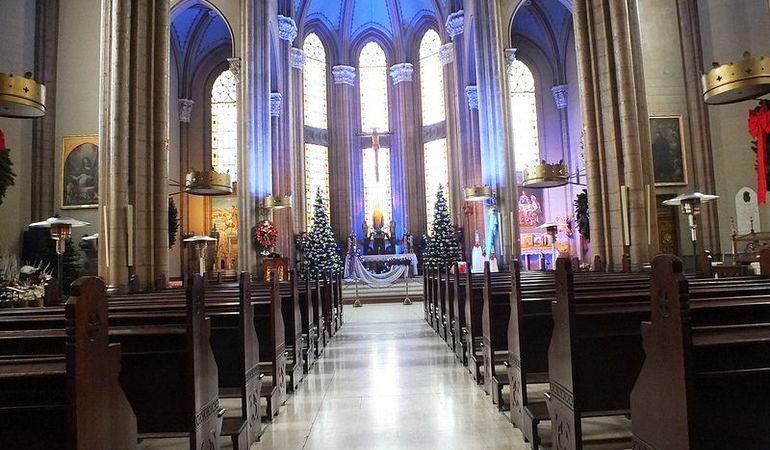
During mass, the tone changes completely. The space becomes focused and communal. If a service is underway, sightseeing stops. You can stay only if you intend to participate quietly. Otherwise, it’s better to return later.
According to visitor patterns shared on Tripadvisor and Catholic travel forums, most uncomfortable moments happen when tourists walk in mid-service without realizing it.
What visitors usually notice first
Most people notice the light. Stained glass softens the space, especially in the afternoon. Then the scale. The nave feels longer than expected. Finally, the stillness. Even when half full, the church feels contained.
Photography is where people hesitate. There are no loud warnings, but restraint is expected. A quick photo when the church is empty is usually tolerated. During prayer, phones stay away.
Istanbeautiful Team advice:
“If you’re unsure what to do, sit down. Stillness is always acceptable here.”
Plan to spend 15 to 30 minutes inside. That’s enough to feel the shift without overstaying. This visit works best when you let the space lead, not when you try to manage it.
Opening hours, mass times, and the best time to visit
This is the part most first-time visitors get wrong. Saint Antoine Catholic Church does not follow a classic tourist schedule. It opens around religious life, not sightseeing convenience. Understanding that changes the experience completely.
On most days, the church is open from morning until early evening (09:00 – 19:00). Exact hours can shift slightly depending on services, special events, or religious holidays. Entry is free, and there is no ticket desk or formal checkpoint. You simply walk in from Istiklal Street.
Mass times are the real divider. Services are held daily, often in multiple languages. Sundays are the busiest, with several masses spread across the day. On those mornings, the church fills quickly and stays active for hours. That is not the right moment for casual sightseeing.
If your goal is to visit quietly, sit for a few minutes, and take in the space, late morning or mid-afternoon on a weekday works best. The church is open, calm, and welcoming to visitors who move respectfully.
Evenings are more unpredictable. Some days feel peaceful. Others coincide with services or rehearsals. When in doubt, step inside briefly and read the room. If people are standing, singing, or clergy are active, it’s better to return later.
According to patterns frequently mentioned in Tripadvisor reviews, visitors who check mass times in advance enjoy the visit far more. It removes uncertainty and avoids awkward moments.
What to see inside Saint Antoine Church
The interior is intentionally restrained, and that restraint is what makes details stand out once you slow down.
Architecture and interior details
The first thing most visitors register is the height. The nave pulls your gaze upward, with clean lines and a symmetry that feels almost calming after Istiklal’s visual noise. Red brick gives way to pale stone. Light filters in through stained glass windows rather than flooding the space, which keeps the atmosphere soft and contained.
The layout follows a classic basilica plan. Central aisle. Side aisles that allow quiet movement. Pews arranged for prayer, not observation. Nothing here is staged for photos. Everything is positioned for use.
Altars, statues, and symbolism explained simply
At the main altar, you’ll find a statue of Saint Anthony of Padua, the church’s namesake. Locals often pause here to light candles. The gesture is simple and repetitive, and that repetition is part of the church’s rhythm.
Along the side chapels, you’ll notice smaller statues and devotional spaces. They aren’t labeled with long explanations. This isn’t meant to be interpreted academically in the moment. The symbolism is meant to be felt rather than decoded.
One detail visitors often overlook is sound. The church absorbs it. Footsteps don’t echo. Voices soften naturally. That acoustic calm is intentional and shapes how people behave without being told.
According to observations commonly shared in visitor reviews, people who sit for a few minutes notice far more than those who walk the perimeter.
Istanbeautiful Team insight:
“Saint Antoine reveals itself when you stop trying to see everything.”
You don’t need to understand Catholic iconography to appreciate the space. Presence is enough.
Visitor rules, dress code, and etiquette
This is where a small bit of awareness makes a big difference. Saint Antoine Catholic Church Istanbul is welcoming, but it is not casual in the way a café or gallery is. The rules are mostly unspoken, and that’s intentional.
Dress is the first signal. You don’t need formal clothing, but modesty matters. Covered shoulders and knee-length bottoms help you blend in rather than stand out. On hot summer days, this catches people off guard. If you’re walking Istiklal in beachwear, consider looping back later.
Behavior matters more than posture. Voices stay low. Phones stay silent. If someone is praying, give them space. If a service begins while you’re inside, either sit quietly and stay or step out. Hovering with a camera makes everyone uncomfortable.
Photography is allowed only in a very limited, informal way. There are no signs shouting “no photos”, but restraint is expected. A single, quick photo when the church is empty usually passes without issue. During prayer or mass, phones should stay away. This is one of those places where reading the room matters more than reading rules.
Lighting candles is common and open to visitors. It’s done quietly, without instruction. If you’re unsure how, watch someone else first. No one rushes this ritual.
According to patterns frequently mentioned in Tripadvisor reviews, visitors who approach Saint Antoine as an active church rather than a sightseeing stop report far more positive experiences.
How to get there
The church sits directly on Istiklal Street, set back slightly from the flow, which is why so many people walk past without noticing it. If you’re already in Taksim, Galatasaray Square, or Beyoğlu, you’re likely minutes away on foot.

Most visitors arrive by public transport without realizing it. Take the metro to Taksim, step onto Istiklal, and walk downhill. The entrance appears on your left after a few minutes, marked by its red-brick façade and iron gate. If you reach Galatasaray High School, you’ve gone a bit too far.
If you’re coming from elsewhere, the T1 tram plus a short walk works well. Get off near Karaköy or Kabataş, then head uphill toward Istiklal via the funicular or on foot. Taxis can drop you nearby, but traffic around Istiklal is unpredictable and often slower than walking.
What matters more than transport is timing. Saint Antoine works best as a pause, not a destination. Walk Istiklal. Let the street do its thing. When it starts to feel loud or rushed, step inside. Five quiet minutes here often changes the pace of the whole walk.
Many travelers pair the visit with a coffee nearby or continue toward side streets afterward. That flow feels natural. Enter. Sit. Leave when ready. No pressure to justify the stop.