
The Sakıp Sabancı Museum sits along the Bosphorus in Emirgan, away from the city’s constant push. Many visitors arrive curious, a bit unsure if it’s “worth the detour,” then slow down almost immediately. That reaction isn’t accidental. The building was a home long before it became a museum, and it still carries that pace.
Our guide is for visitors who want clarity before going. Opening hours, free entry days, how long to stay, and what actually deserves your attention once you’re inside. No filler. No pressure to see everything.
What makes this museum different isn’t just the collection, although the Ottoman calligraphy and manuscripts are among the strongest in Istanbul. It’s the balance. Historic rooms that feel intimate. Contemporary exhibitions that rotate often enough to keep the place alive. Gardens and Bosphorus views that quietly shape the visit without asking for your attention.
We’ve noticed a pattern over the years. People who enjoy this museum aren’t trying to “do Istanbul” efficiently. They’re looking for a pause that still feels meaningful.
If you’re building a Bosphorus day, exploring Emirgan, or simply want a calmer cultural stop, the Sakıp Sabancı Museum fits naturally.
Fast Facts About Sakip Sabanci Museum
You don’t arrive at this museum the same way you arrive at most others. You approach it slowly, along the Bosphorus, with water on one side and trees on the other. That already tells you something.
The museum sits inside a 19th-century waterfront mansion in Emirgan. Long before it held exhibitions, this was a private home built for Bosphorus life. That scale still shapes the visit. Nothing feels oversized or rushed.
The space was opened to the public in 2002 by Sakıp Sabancı, whose personal collection forms the backbone of the museum. His focus shows. This is one of the strongest places in Istanbul to see Ottoman calligraphy, manuscripts, and imperial documents in a setting that respects silence and detail.
At the same time, the museum doesn’t stay frozen in the past. Temporary exhibitions regularly bring in modern and contemporary art, often from international collections. One visit might feel classical and restrained. The next might be bold and experimental.
What ties it together is the setting. The gardens and Bosphorus views aren’t decorative extras. They’re part of the experience. Many visitors spend as much time outside as they do inside.
Istanbeautiful Team note:
“This is one of the few museums where taking a break is part of the visit, not a distraction.”
The Sakıp Sabancı Museum works because it balances things carefully. Private scale with public access. Ottoman tradition with modern interpretation. Art that asks for attention, and a setting that gives you space to slow down.
No Regrets Booking Advice
Is Sakıp Sabancı Museum worth visiting?
This isn’t a museum you visit because it’s famous. You visit it because it feels right once you’re here. Many first-time visitors tell us the same thing: after a few crowded indoor museums, the Sakıp Sabancı Museum feels like a calm reset.
What makes it worth your time isn’t just what’s on the walls. It’s how the place invites you to slow down and really see things. Ottoman calligraphy, illuminated manuscripts, İznik ceramics, these are excellent, but they don’t shout. They ask you to lean in.
The setting helps. A historic mansion on the Bosphorus with gardens that frame the art makes the whole experience richer.
According to feedback on Tripadvisor and Google Maps, visitors often say they enjoyed this museum most when they paired it with a walk in Emirgan Park or a Bosphorus ferry ride afterward. The museum doesn’t feel like a stand-alone stop so much as part of a story you’re living today.
Even if you’ve seen Ottoman art elsewhere, the collection here has depth and personality. Contemporary and rotating exhibitions add freshness too. You might go for the calligraphy and leave thinking about a modern installation that surprised you.
Istanbeautiful Team takeaway:
“This place works best when you give it time. It rewards presence more than checklist ticking.”
If time is tight and you want only headline monuments, you could skip it without regret. But if you’re building a thoughtful day around the Bosphorus and local culture, this museum adds context, beauty, and a surprising sense of calm to the city’s mosaic.
About the Museum
The Sakıp Sabancı Museum sits in Emirgan, one of the oldest Bosphorus settlements, and that sense of continuity matters. This was never built as a museum. It was built to be lived in. You still feel that.
The main building began life in 1925 as a summer mansion commissioned by Mehmed Ali Hasan. The architect, Edoardo De Nari, designed it with the Bosphorus in mind. Long lines. Open views. Rooms that breathe. Members of the Khedive family used it as a seasonal residence, not a showpiece.

verything changed in 1951, when the property was acquired by Hacı Ömer Sabancı. The mansion soon earned the nickname Atlı Köşk, the Equestrian Mansion, thanks to the striking horse sculptures placed on the grounds. After his passing in 1966, the house became home to Sakıp Sabancı and his growing collection of calligraphy and paintings.
The turning point came in 1998, when the Sabancı family donated the mansion and its collections to Sabancı University. Four years later, in 2002, it opened to the public as a museum.
Expansions followed in 2005, including a modern gallery that didn’t try to imitate the old house. It complemented it. That balance still defines the visit.
Istanbeautiful Team insight:
“You can feel the difference when a museum grows out of a real home. The pace stays human.”
Today, the museum operates at an international level, yet it keeps its domestic scale. History upstairs. Contemporary exhibitions next door. And the Bosphorus holding it all together.
Our Sakıp Sabancı Fine Arts Museum Experience
Visiting the Sakıp Sabancı Museum feels less like entering a formal institution and more like stepping into a lived-in story. The setting does half the work. The rest comes quietly, room by room.
Set along the Bosphorus in Emirgan, the museum occupies the historic Atlı Köşk, a 1920s waterfront mansion whose proportions still guide the pace. High ceilings. Natural light. Windows that pull your attention outside, then back in. The building never competes with the art. It frames it.

What stands out is the balance. You move between centuries without friction. Ottoman calligraphy in one gallery. Contemporary work in another. The transition feels natural rather than curated for effect.
Istanbeautiful Team reflection:
“This is one of the rare places where slowing down isn’t optional. The space asks for it.”
Getting inside the museum
The entrance experience stays calm, even on busy days. Tickets are available both online and on-site, and guided tours are offered if you want structured context. Most visitors do well on their own, letting the rooms set the rhythm.
The museum is divided into multiple galleries, each focused on a specific collection or exhibition. Navigation is intuitive. You never feel lost.
A quiet tip. Natural light matters here. Late morning or late afternoon gives the galleries a softer tone and makes the Bosphorus views part of the visit.
Ottoman calligraphy and manuscripts

This is the core of the museum’s identity. The Ottoman calligraphy and manuscript collection is one of the strongest in Istanbul.
Illuminated Qur’ans. Imperial decrees. Large-scale calligraphic panels. You see how script functioned as both devotion and authority. Interactive displays help explain styles and context without overwhelming the work.
Istanbeautiful Team note:
“If Islamic art interests you at all, this section alone justifies the visit.”
Turkish ceramics and İznik tiles
The ceramics galleries extend that story visually. İznik tiles, Seljuk-era pottery, and Ottoman decorative pieces trace how utility slowly turned into art. Colors stay vivid. Patterns feel intentional, not ornamental.
Visitors often connect this section with what they’ve seen at Topkapı or the Tiled Kiosk. Here, the craftsmanship gets room to breathe.
Contemporary and temporary exhibitions
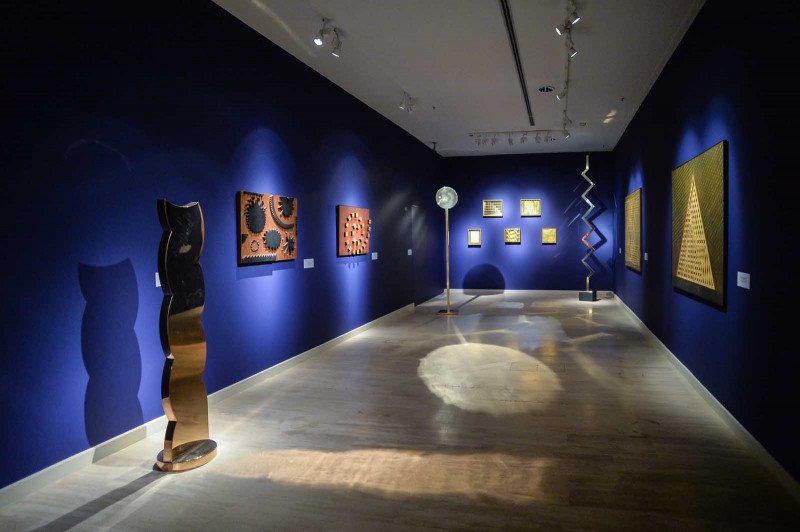
The museum’s modern side keeps it alive. Rotating exhibitions regularly feature major names, including Pablo Picasso, Joan Miró, Ai Weiwei, alongside leading Turkish artists.
Each visit can feel different. Checking the current exhibition before arriving helps shape expectations.
Visiting with kids
Children under six enter free. Gardens offer space to move. Workshops appear seasonally. The café is relaxed and family-friendly.
Family tip from Istanbeautiful Team:
“Let kids explore the gardens first. The galleries work better after.”
Visiting information
Planning this visit well makes a real difference. The Sakıp Sabancı Museum rewards unrushed time, and knowing the rules ahead keeps the day smooth.
Opening days and hours
The museum is closed on Mondays. From Tuesday to Sunday, it’s open 10:00 to 18:00.
There’s one detail many visitors miss. Admission is free on Tuesdays, all day between 10:00 and 18:00. It’s popular, but not chaotic. The space handles it well if you arrive earlier in the day.
The ticket office closes at 17:30, and the last entry is also at 17:30. Arriving after that usually leads to disappointment. This is not a museum you want to rush through in the final half hour.
The museum is closed on January 1st, and on the first days of Ramadan and Eid al-Adha. If you’re visiting during religious holidays, double-check before heading out.
Istanbeautiful Team reminder:
“Aim to arrive at least 90 minutes before closing. Less than that feels tight here.”
Tickets
Please double check hours and admissions from sakipsabancimuzesi.org
Accessibility and comfort
The Sakıp Sabancı Museum is one of the easier museums in Istanbul to move through, especially if mobility or pacing matters.
Wheelchair access is well thought out. Ramps and elevators connect all main gallery levels, and transitions between the historic mansion and modern extensions are smooth. You don’t feel routed through back corridors or side entrances. Everything stays part of the main flow.
Inside the galleries, seating and rest areas are placed where people actually pause, not hidden in corners. This makes a real difference for visitors who prefer shorter bursts of walking with breaks in between.
Guide dogs are allowed, which is still not a given everywhere in Istanbul. Staff are generally attentive without hovering, and they’re used to helping when needed.
Getting there
By bus
The closest stop is Emirgan Çınaraltı, right on the Bosphorus coast. Several bus lines stop here regularly, including routes from Kabataş, Taksim, Şişli, and Sarıyer. From the stop, it’s a short, flat walk to the museum entrance.
This is the most reliable option if you’re already on the European side.
By ferry
Arriving by water is one of the nicest ways to do this visit. Ferries stop at Emirgan Pier, connecting to places like İstinye, Bebek, Arnavutköy, Kanlıca, Kandilli, and Çengelköy. From İstinye, sea buses also connect to Beşiktaş and Kadıköy.
Parking options
Parking here is limited but manageable. The museum has an on-site parking lot for around 30 vehicles. It fills up quickly on weekends and free-entry Tuesdays, especially late morning.
If the lot is full, the fallback option is straightforward. ISPARK parking areas along the Bosphorus coastal road usually have space, and the walk back to the museum is flat and scenic.
Nearby attractions
One of the pleasures of visiting the Sakıp Sabancı Museum is how well it sits within its neighborhood. You don’t need to force the rest of the day. Good options are already around you.
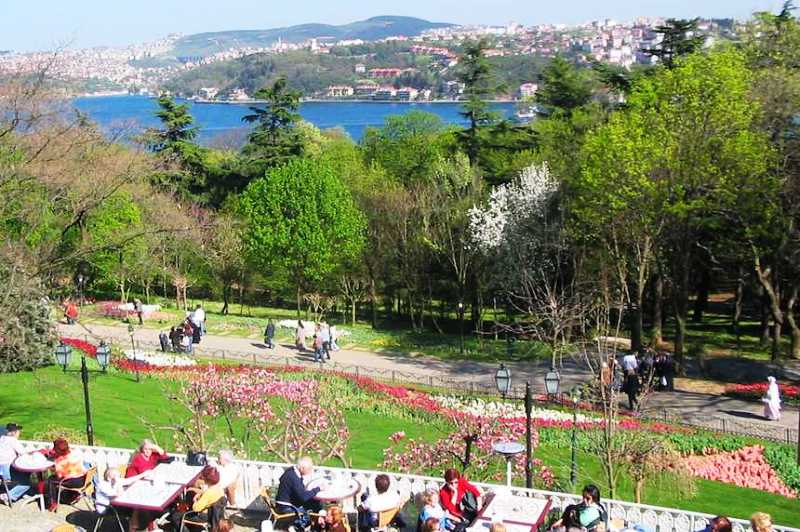
Just next door, Emirgan Park is the obvious follow-up. It’s one of the city’s largest green spaces, known for long walking paths, Bosphorus viewpoints, and the spring tulip displays that quietly take over the park each year. Many visitors step outside the museum and head straight into the trees without planning to. It works.
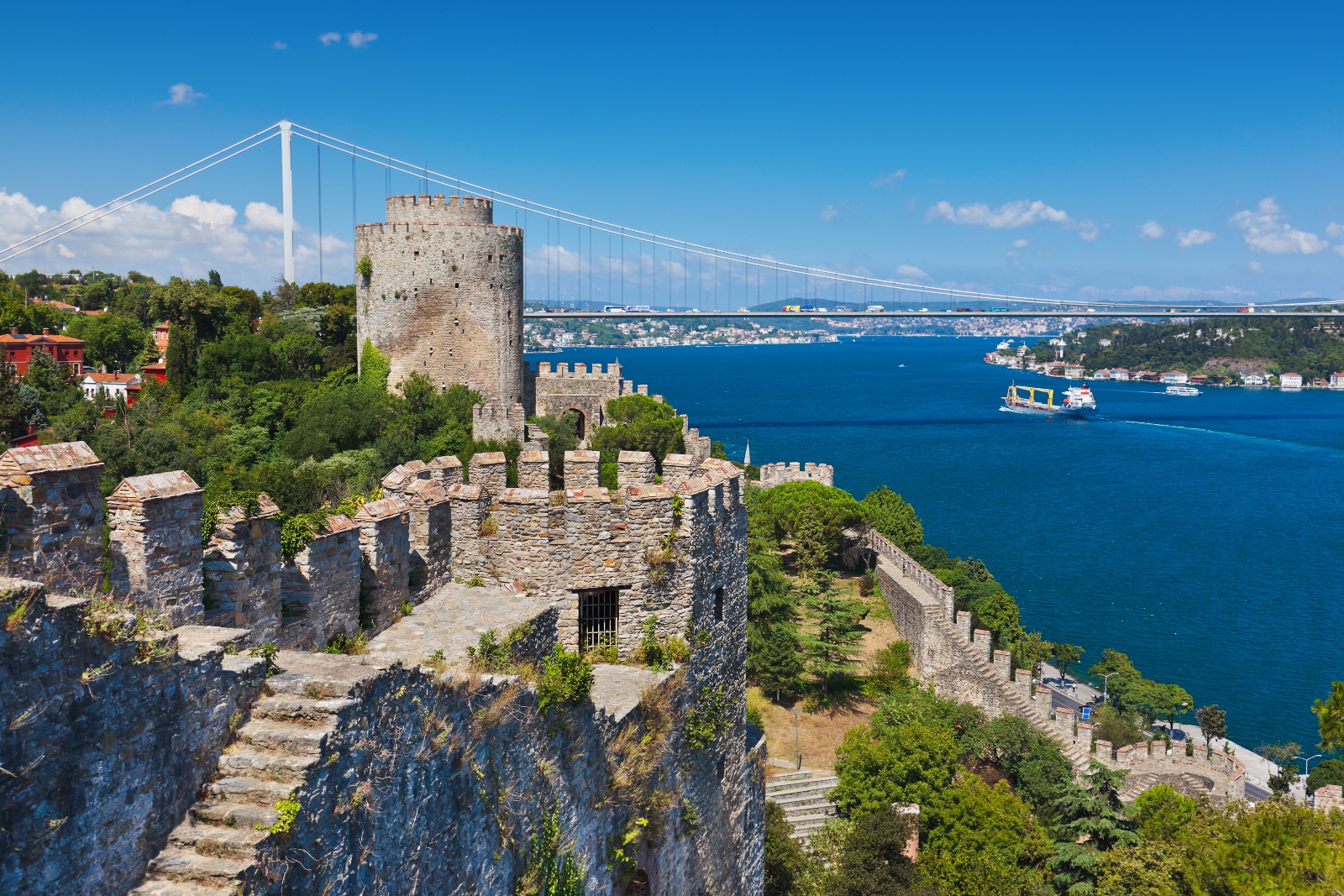
A short ride away stands Rumeli Fortress, built by Sultan Mehmed II before the conquest of Constantinople. The climb is steeper, the energy stronger, and the views wide open. It pairs well if you want history with a bit more physical movement.

If you’re ready to slow down again, Bebek sits along the water nearby. Cafés, bakeries, and relaxed waterfront tables make it an easy place to decompress after galleries and gardens.

For another private collection, Sadberk Hanım Museum offers a quieter, more intimate look at Ottoman textiles, ceramics, and Anatolian artifacts inside a historic mansion. It’s smaller, focused, and thoughtful.
Those in the mood for something modern often head to İstinye Park, where waterfront dining and open-air spaces soften the shopping experience.