
Tucked beside the ancient city walls, Tekfur Palace Museum feels like a quiet pause in Istanbul’s long story. Many visitors walk past this area without realizing they’re standing next to the last surviving Byzantine palace in the city. We think that’s what makes it special.
This is not a grand palace filled with glittering halls. It’s a layered place. Byzantine ambition, Latin destruction, Ottoman reuse, and careful modern restoration all sit in the same space. You see stonework instead of gold. Traces instead of spectacle. And that makes the experience surprisingly personal.
If you enjoy places that explain themselves slowly, Tekfur Palace rewards your attention. You move through rooms that once served emperors, later craftsmen, then archaeologists. Outside, the city walls frame the view and remind you how close imperial power and everyday life once stood.
Our guide will explore what to expect, how to plan your visit, and why Tekfur Palace fits perfectly into a deeper look at Byzantine Istanbul.
Fast Facts About Tekfur Palace Museum
Tekfur Palace sits quietly near the old city walls, yet its story is anything but small.
It’s one of the very few Byzantine palaces still standing in Istanbul today. Built in the 13th century, it belongs to the late Byzantine period, when the city’s power was already shifting but imperial life was still unfolding behind fortified walls.
The palace was part of the wider Blachernae complex, used by emperors as a residence close to the land walls. Its position wasn’t accidental. This area offered protection, distance from unrest, and quick access to the city’s defenses.
Time changed its role many times. Under Ottoman rule, Tekfur Palace stopped being a royal home and took on new lives. It became a glass workshop, later a tile production site, and at one point even served as a menagerie. Each era left marks behind.
After long years of neglect, careful restoration brought the building back into focus. Today, as a museum, it presents Byzantine ceramics, glassware, and architectural fragments that hint at daily life inside palace walls.
Head upstairs if you can. The view across the Theodosian Walls gives real context to why this location mattered.
Tekfur Palace at a glance
Located near Edirnekapı on Istanbul’s historic peninsula, Tekfur Palace Museum stands as the only surviving Byzantine palace structure in the city today. Known historically as part of the Blachernae Palace complex, it’s now operated as a museum by the Istanbul Metropolitan Municipality.
No Regrets Booking Advice

During the later centuries of the Byzantine Empire, emperors favored this area for its fortified setting. The palace functioned less as a ceremonial center and more as a secure imperial residence, especially during unstable periods.
Much of its original splendor didn’t survive intact. The palace and nearby buildings suffered heavy damage during the Latin occupation, which lasted nearly six decades. Fires and destruction erased large sections of the complex.
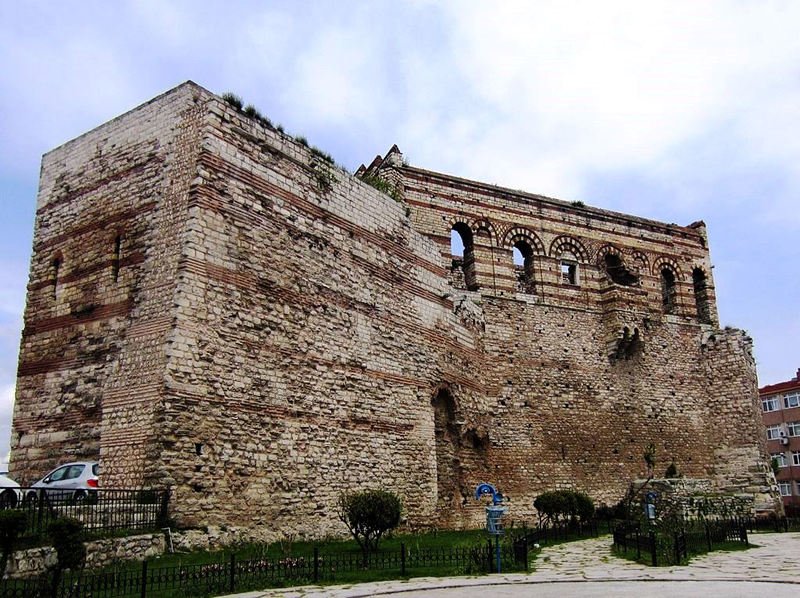
Restoration efforts carried out between the 1950s and 1970s saved what remained. During that time, Tekfur Palace gained a new identity as one of Istanbul’s notable glass production centers, linking Byzantine foundations with Ottoman craftsmanship.
There’s even a local legend tied to the site. Some believe the famous Spoonmaker’s Diamond, now displayed in Topkapı Palace, once passed through Tekfur Palace.
What’s left today isn’t a grand palace in the classic sense. It’s something quieter. A layered place. Stone, brick, glass, and memory sharing the same walls.
Our Tekfur Palace Museum Experience
Visiting Tekfur Palace feels like peeling back layers rather than walking through rooms. Byzantine ambition. Ottoman pragmatism. Modern restoration. All in one place, without crowds pushing you forward.
Set beside the Walls of Constantinople, this rarely visited palace is one of the last physical traces of the imperial world that once ruled the city. It seeps into the visit. You don’t need much imagination here. The setting does the work.
Unlike Istanbul’s headline palaces, Tekfur Palace offers space to think. You hear your own footsteps. You stop where you want. And that quiet makes the history feel closer.
Istanbeautiful Team insight:
“This is a museum for people who like details more than spectacle.”
Getting inside the museum
Entry is usually quick. No lines. No rush. The restoration keeps a careful balance, showing original Byzantine fabric alongside modern interventions without hiding either.
The layout unfolds across three main sections, each focused on a different chapter of the palace’s life. Going earlier in the day helps if you want uninterrupted time on the upper levels and the terrace.
Exploring the History & Collections

The First Floor: History & Architecture of Tekfur Palace
This level sets the scene. Tekfur Palace was built as a residence linked to the Blachernae Palace complex, used during the later Byzantine period.
You’ll see surviving stonework, fragments of frescoes, and architectural details that explain how the building once functioned. Some of the carved elements are among the better-preserved examples of Byzantine craftsmanship still visible in the city.
Istanbeautiful Team tip:
“Slow down near the walls. The texture tells its own story.”
The Second Floor: Daily Life in the Byzantine & Ottoman Eras
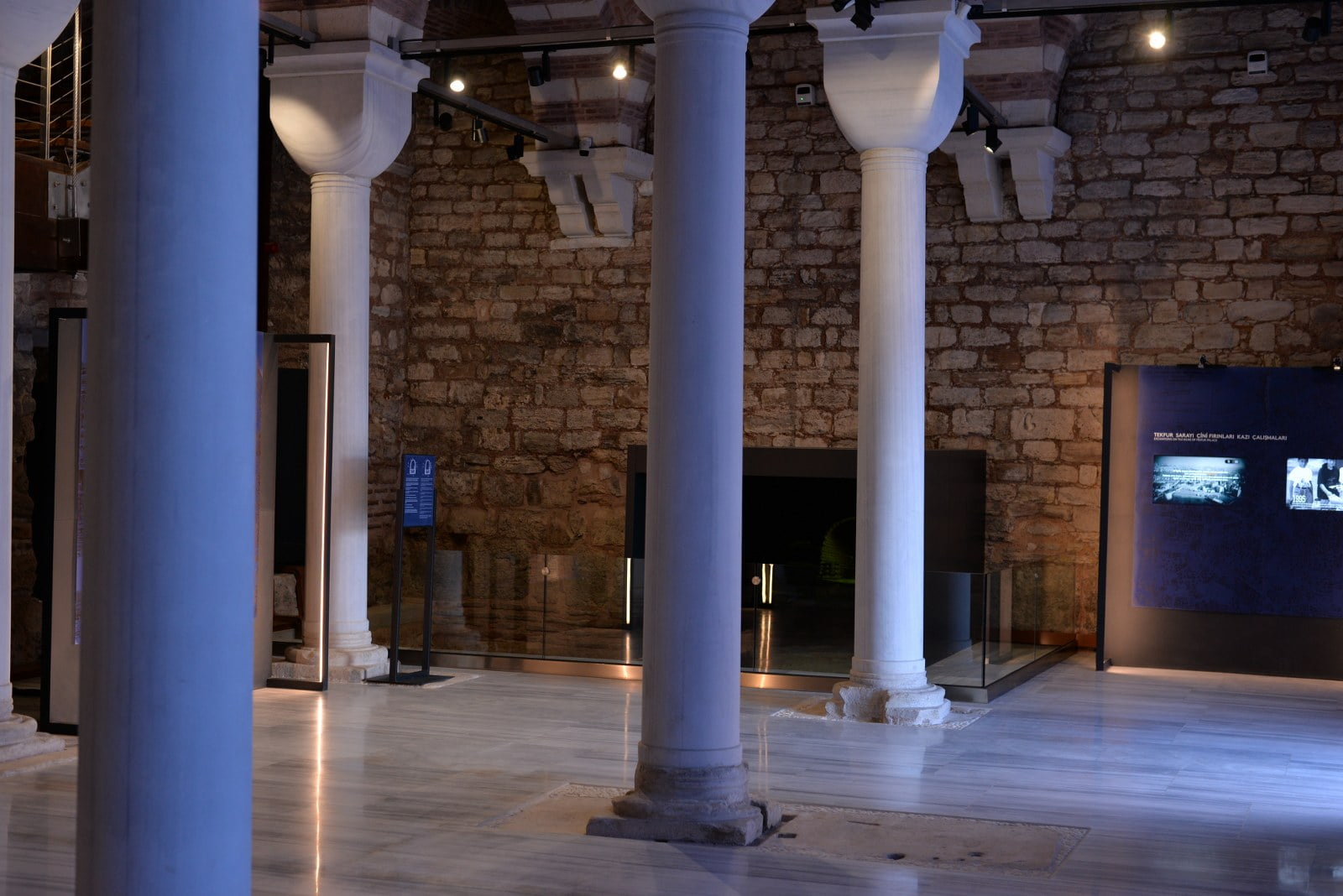
This floor shifts perspective. Ceramics, coins, and personal objects show how life continued here long after emperors were gone.
Ottoman-era additions stand out. Chimneys. Ovens. Traces of industrial use from periods when the palace became a soap factory and production site. It’s a reminder that buildings in Istanbul rarely keep just one identity.
This section grounds the visit. Less myth. More routine.
The Third Floor: Excavations & Restoration Discoveries
Here, archaeology takes center stage. Artifacts uncovered during restoration sit alongside explanations of how the site was studied and rebuilt.
Byzantine pottery, tiles, and domestic objects appear next to digital reconstructions that show how the palace may have looked at its height. If you’re curious about how history is recovered, not just displayed, this level rewards attention.
Panoramic Views from the Palace Terrace
The terrace is the pause button. From here, the Theodosian Walls stretch across the skyline, linking ancient Constantinople with modern Istanbul.
Light changes everything. Late afternoon casts a warm glow over brick, stone, and rooftops. It’s one of those views that stays with you longer than expected.
Istanbeautiful Team note:
“This is one of the calmest viewpoints in the city. Don’t rush it.”
Visitor Information & Tips
Location
The Tekfur Palace Museum sits in Fatih, right beside the historic city walls. It’s one of the few places where you can still feel medieval Istanbul without stepping into a crowded complex. If you’re already exploring the old land walls, this stop fits naturally into the route.
Opening hours
- Tuesday to Sunday: 09:00 – 17:00
- Closed on Mondays
- Last ticket sale: 16:30
Early mornings work best here. The space feels calmer, and you’ll have more time to linger on the upper levels and terrace without interruption.
Visiting Tips
Give yourself time. This isn’t a place to rush through. The restored walls, architectural fragments, and layered displays make more sense when you move slowly.
The terrace deserves attention. It offers a rare angle over the city walls and the surrounding neighborhoods. Bring your camera. The textures, brickwork, and light are worth it.
Look closely for contrasts. Byzantine stonework sits beside Ottoman-era additions like chimneys and ovens. Those details tell the story better than labels alone.
Accessibility
Ramps and accessible paths cover the ground level and courtyard areas. Some upper sections require stairs, so full access may be limited. Visitors with mobility concerns can still have a meaningful visit by focusing on the lower floors and outdoor areas.
Nearby Attractions
Tekfur Palace Museum sits in one of those corners of Istanbul where history still feels layered and close together. Once you step outside, you’re already surrounded by places that naturally continue the Byzantine story.
Just a few steps away, the Walls of Constantinople stretch across the neighborhood. This is one of the best-preserved sections of the city walls, and walking alongside them helps you picture how imperial Constantinople was defended for centuries.

A short walk brings you to Chora Church (Kariye Mosque), often the emotional high point of any Byzantine-focused visit. Its mosaics and frescoes are detailed, human, and surprisingly intimate. Many visitors find this stop even more powerful after seeing Tekfur Palace.
Nearby, Fethiye Museum offers a quieter experience. Smaller and less crowded, it reveals another layer of Byzantine religious art blended with later Ottoman additions. It’s an easy stop that rewards slow wandering.
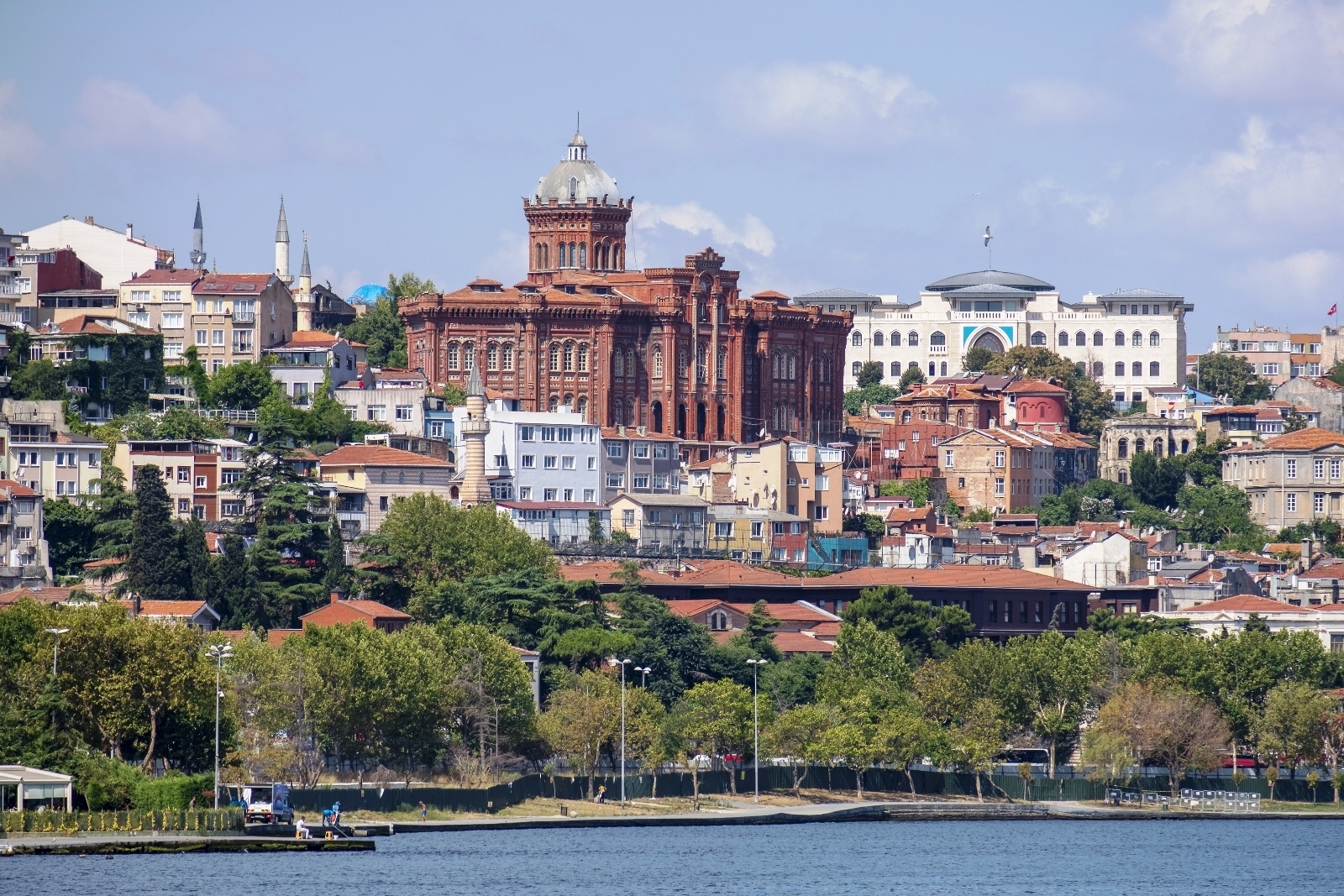
If you want to shift pace, head toward Balat Neighborhood. Colorful houses, local cafés, and everyday street life soften the weight of history and make a good pause point for coffee or lunch.
Finally, Mihrimah Sultan Mosque at Edirnekapı sits right by the walls. Designed by Mimar Sinan, it’s elegant, light-filled, and easy to include without changing your route.
How to Get There?
By bus
From Eminönü or Sultanahmet, buses 86V, 32, and 36 all run toward the city walls. Get off at Ayvansaray or Edirnekapı, then walk a few minutes uphill to the museum entrance.
From Taksim, take bus 87 in the direction of Edirnekapı. After getting off, it’s about a ten-minute walk through the neighborhood streets.
By metro and tram
Take the M2 metro line to Vezneciler. From there, a short taxi ride or a connecting bus will get you to Edirnekapı.
If you’re using the T1 tram, get off at Eminönü, then transfer to buses 36 or 87 heading toward Edirnekapı.
Public transport works well, though buses remain the most direct option. Metro and tram routes usually add one extra transfer, which is fine if you’re already nearby but less convenient if you want the simplest route.