
The churches in Istanbul don’t compete with its mosques. They coexist quietly, often just a few steps away, carrying stories that run parallel rather than opposite. Many visitors don’t expect this layer. They associate the city with minarets and domes, then stumble into a church courtyard and realize how much they’ve been missing.
Our guide to the most beautiful and historic churches in Istanbul exists for that moment.
From monumental Byzantine structures to neighborhood Orthodox churches, Catholic sanctuaries tucked behind busy streets, and Armenian churches that remain active centers of community life, these spaces reveal a different rhythm of the city. One shaped by continuity rather than spectacle.
Some of these churches are world-famous. Others are easy to miss unless you know where to look. Some function as museums. Others still hold daily services. What they share is a sense of lived history. These are not frozen monuments. They’re places where belief, art, and daily life have overlapped for centuries.
In this article, we bring together Istanbul’s most meaningful Byzantine, Orthodox, Catholic, and Armenian churches, along with a few hidden gems that reward curiosity.
We’ll help you understand why each one matters, what kind of experience it offers, and how it fits naturally into a walk through the city.
Byzantine Churches in Istanbul
Byzantine churches in Istanbul don’t announce themselves loudly. They hold space instead. Thick walls. Filtered light. Mosaics that reward patience. Walking into one often feels like stepping sideways in time rather than backward.
Hagia Irene – Sultanahmet

Hagia Irene feels unusually intact. Tucked inside the outer courtyard of Topkapi Palace, right next to Hagia Sophia, it’s one of the oldest surviving Byzantine churches in the city.
Originally built in the 4th century, it has been restored several times, but never overloaded with later additions. Unlike many historic churches, it’s no longer used for worship. Today, it functions as a concert and exhibition space, and that shift suits it well.
Mosaics and fresco fragments remain visible. The interior stays spare. Acoustics are exceptional, which explains why classical music performances work so well here.
No Regrets Booking Advice
Hagia Sophia (Museum Area)
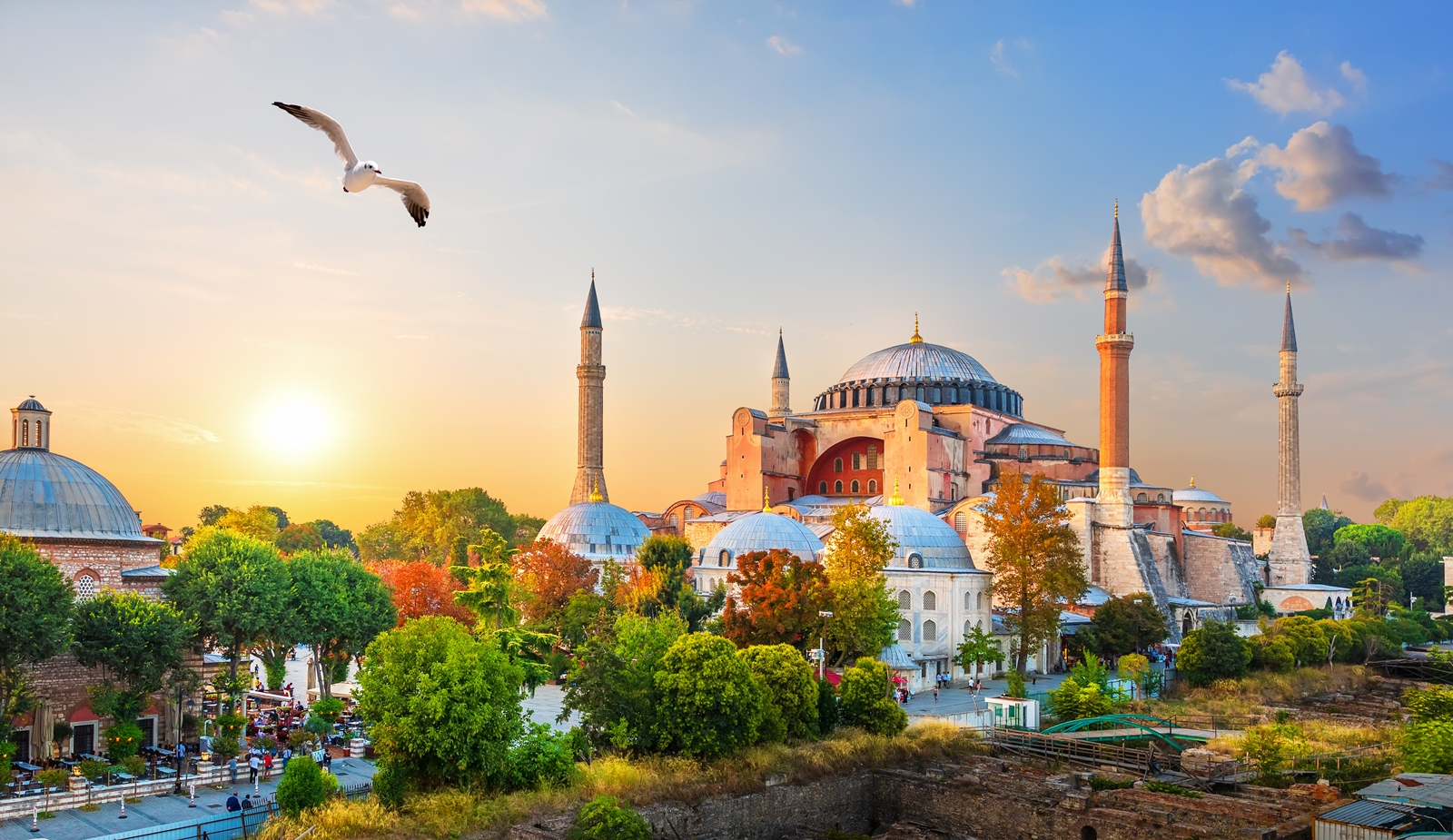
Few buildings carry as much layered meaning as Hagia Sophia. Built in 537 AD under Justinian I, it began as a church, became a mosque in 1453, later a museum, and now functions again as a mosque while remaining open to visitors.
Golden mosaics sit above massive arches. Islamic calligraphy coexists with Christian imagery. The dome still feels improbably suspended.
Crowds shape the experience. Early mornings or later evenings allow more breathing room. When the interior quiets, the scale and detail start to register.
Hagia Sophia isn’t just a monument. It’s a visual record of continuity and adaptation.
Chora (Kariye) – Edirnekapı

Chora, also known as Kariye, holds some of the most refined Byzantine mosaics and frescoes anywhere in the world. Dating back to the 5th century, its artistic peak came in the 14th century, with mosaics from the 1320s that still feel astonishingly vivid.
Scenes unfold in sequence. Faces carry expression. Movement feels intentional. Christian iconography reaches a level of narrative depth rarely matched.
Though it now operates as a mosque, it remains one of Istanbul’s most powerful art spaces.
Orthodox Churches in Istanbul
Orthodox churches reveal another side of the city. Living communities. Ongoing rituals. Spaces where history didn’t freeze.
St. George Church (Ecumenical Patriarchate) – Fener
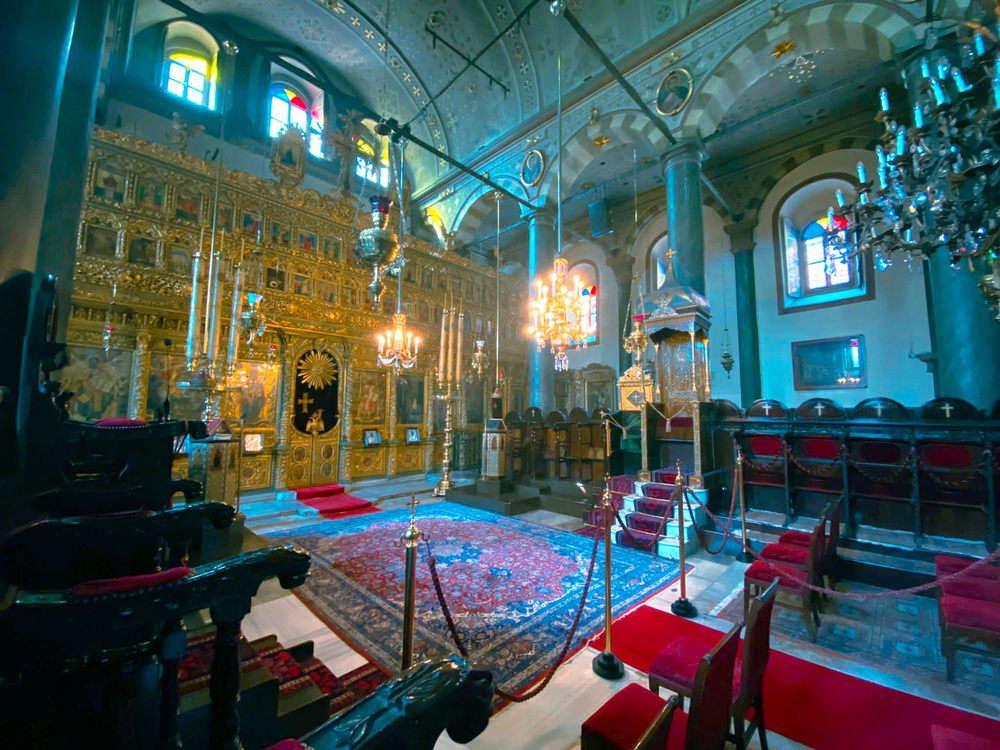
St. George Church serves as the seat of the Ecumenical Patriarchate of Constantinople. That alone gives it global spiritual weight.
In use at its current location since 1601, the church remains active, hosting major Orthodox ceremonies. Inside, icons, relics, and stonework create a layered, reverent atmosphere.
It fits naturally into a Fener–Balat walk and welcomes visitors freely.
Church of the Holy Trinity (Aya Triada) – Taksim
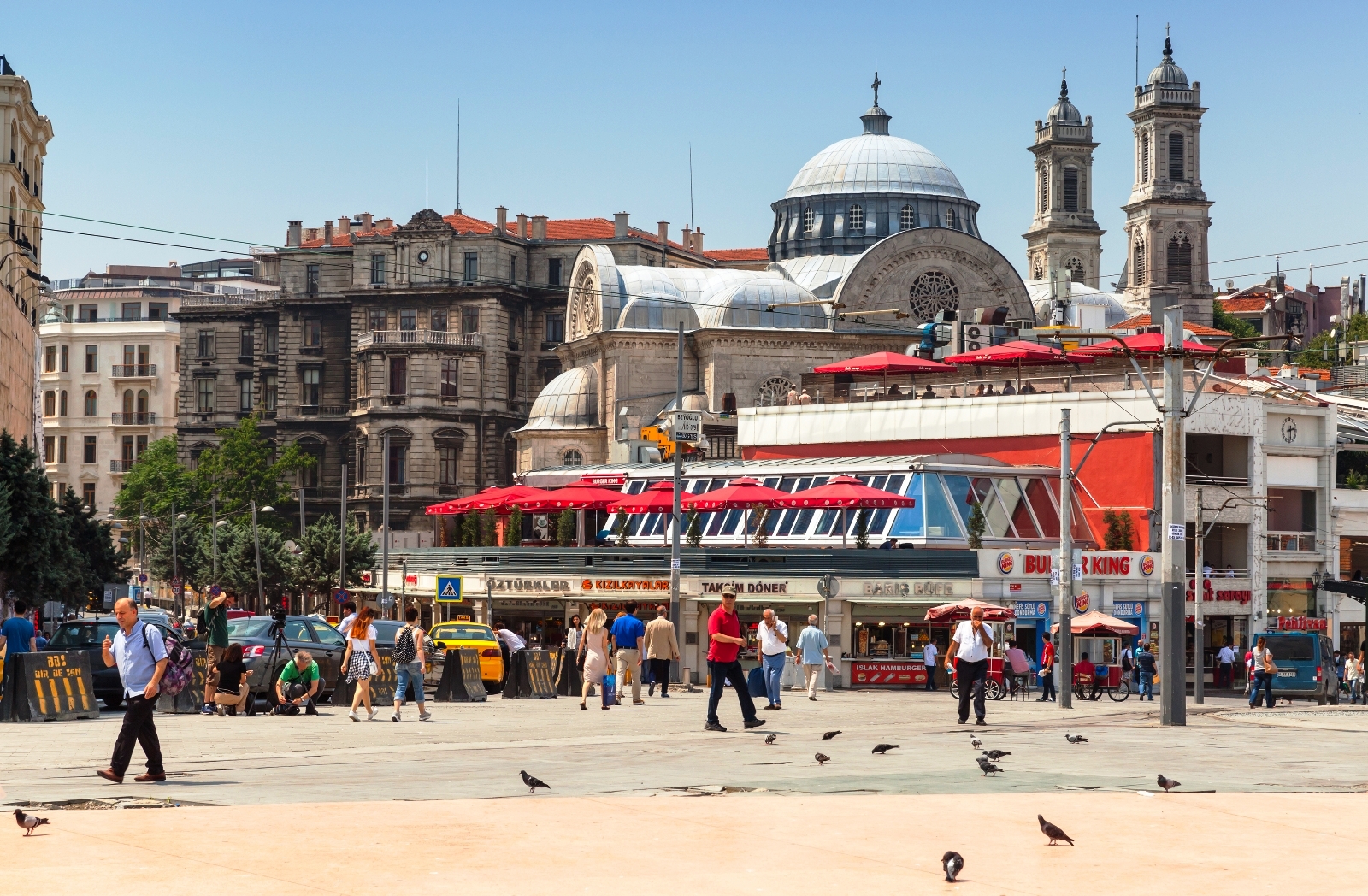
Near Taksim Square, Hagia Triada rises above the street with confidence. Built in 1880, it blends Neoclassical and Neo-Baroque elements, anchored by a tall dome and ornate iconostasis.
It’s still actively used, especially during major religious festivals. Photography is allowed, and the interior rewards it.
This is one of the most visible reminders that Istiklal and its surroundings remain culturally layered.
Aya Yorgi Monastery – Büyükada

Aya Yorgi (St. George) sits at the highest point of Büyükada. Reaching it requires effort. A long uphill walk. Quiet determination.
Built in 1751, the monastery becomes especially busy during pilgrimages on April 23 and September 24. On other days, the atmosphere stays reflective.
The reward comes at the top. Panoramic views over the Sea of Marmara and the city beyond.
Iron Church (Sveti Stefan Bulgarian Orthodox Church) – Balat
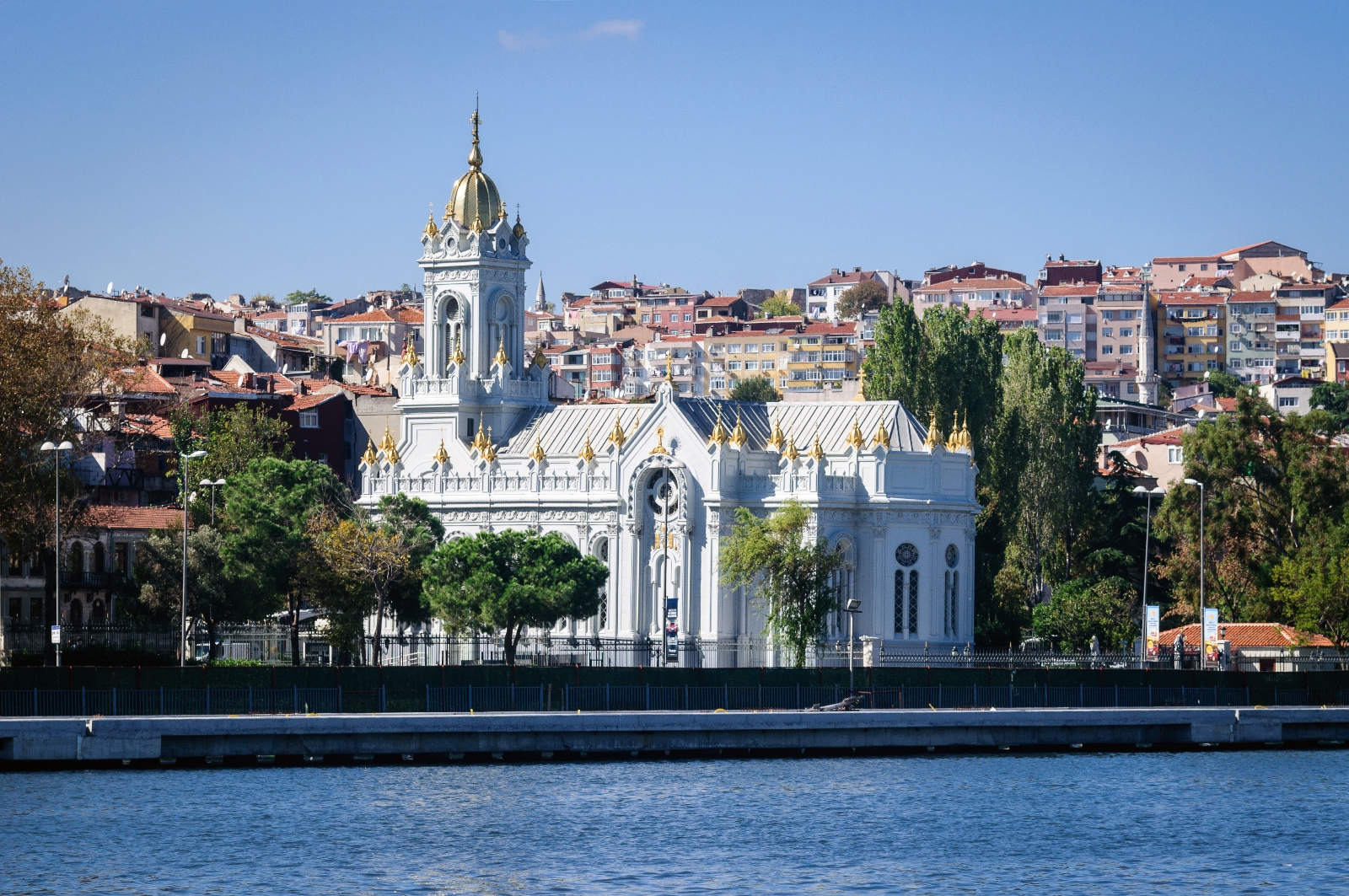
Often called the Iron Church, Sveti Stefan is impossible to confuse with anything else. Built in 1898 from prefabricated cast iron parts, it stands bright and precise along the Golden Horn.
Neo-Gothic lines. Intricate metal and woodwork. A structure assembled rather than carved.
After a long restoration, it reopened in 2018 and now serves both the Bulgarian Orthodox community and curious visitors.
Virgin Mary Bloody Church – Balat

Known locally as the Bloody Church, this site dates back to the late 13th century and holds a rare distinction. It was never converted into a mosque during the Ottoman period.
Small, active, and deeply atmospheric, the interior feels personal rather than monumental. Frescoes remain. Worship continues.
It’s easy to walk past if you don’t know what you’re looking for. That’s part of its power.
Catholic Churches in Istanbul
Catholic churches reveal another layer of Istanbul’s identity. European influence. Diplomatic history. Quiet interiors just steps from the city’s loudest streets. These churches aren’t relics. They’re active, personal, and often unexpectedly calm.
St. Anthony of Padua Church – Istiklal Street
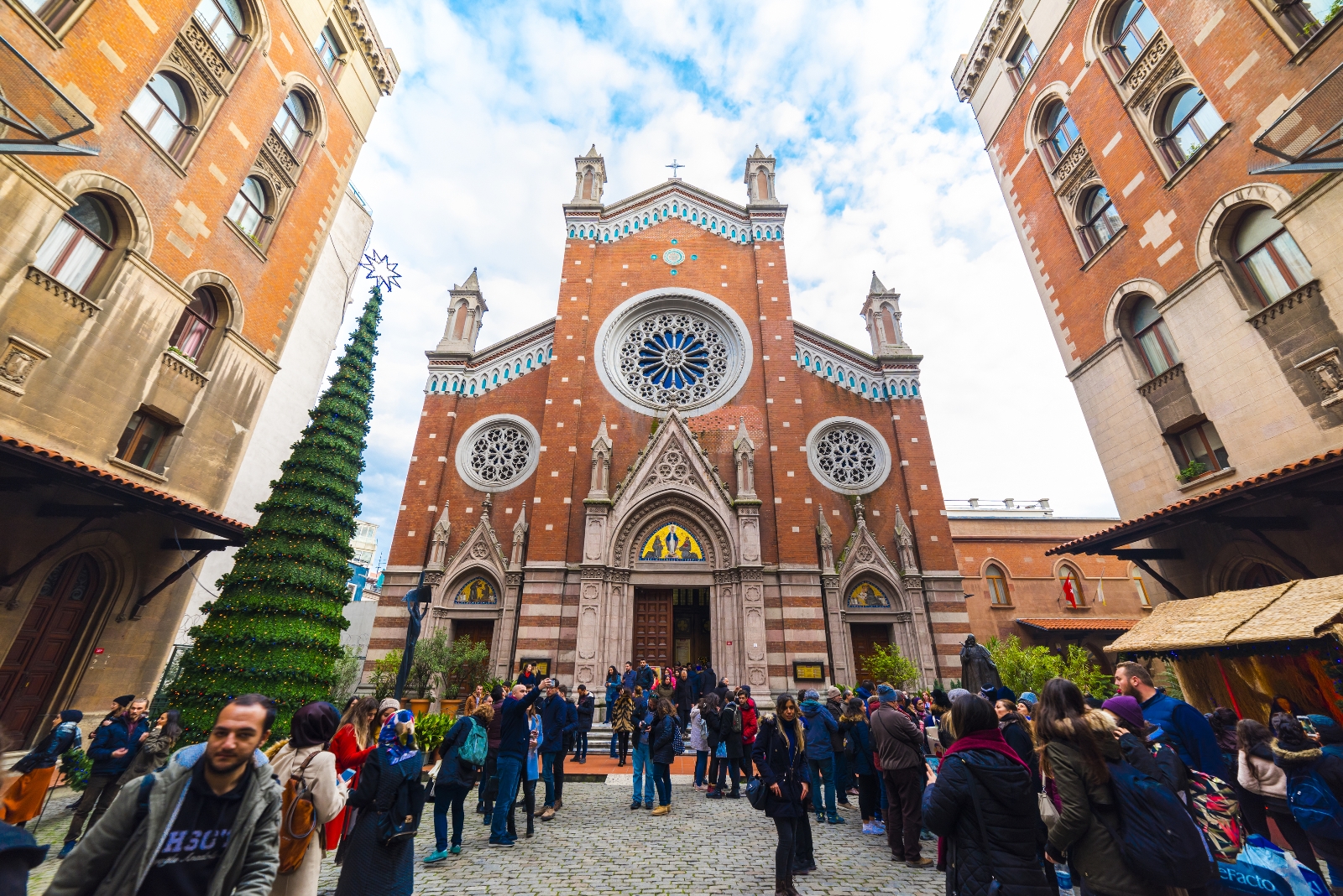
St. Anthony of Padua Church stands right on Istiklal Street, which already tells you something. This is one of the few places where you step directly from Istanbul’s busiest pedestrian artery into silence.
Built in 1906 in Neo-Gothic style, it remains one of the most visited Catholic churches in the city. High ceilings lift your gaze. Stained-glass windows soften the light. Pointed arches pull everything upward without feeling heavy.
Mass is held regularly, and Christmas and Easter services draw large crowds. Outside those times, the church stays open throughout the day, offering a rare pause just meters from constant motion.
St. Pierre Church – Karaköy

Near Galata Tower, St. Pierre Church feels understated in the best way. Built in 1841 as a new base for Dominican monks, it carries history without display.
The interior follows a basilica layout with a four-sided altar. What makes it special is what’s behind you. Parts of the old Genoese city walls form the rear structure, embedding layers of medieval Galata directly into the space.
Italian-language mass is held in the mornings. Outside service times, the church stays quiet and reflective. No crowds. No rush.
Saint Benoit Church – Galata
Saint Benoit is one of the oldest Catholic churches in Istanbul, founded in 1427 and reshaped many times since. Its long life shows.
The interior leans Baroque, with a detailed altar and warm woodwork. The church has always served both religious and educational roles, reinforced by its close connection to Saint Benoit High School next door.
Visiting hours are limited and often tied to mass schedules. Planning helps here. When open, the atmosphere feels grounded and lived-in rather than monumental.
Santa Maria Draperis Catholic Church – Beyoğlu
Just a few steps off Istiklal Street, Santa Maria Draperis offers something rare. Stillness.
Founded in 1584 and moved to its current location in the 18th century, the church stays small, refined, and focused. Modest stained glass. A restrained altar. Nothing competes for attention.
Visitors often stumble in by accident and stay longer than planned. Weekend masses and holiday services remain active, but outside those times, the space works as a quiet retreat in the middle of Beyoğlu.
Armenian Churches in Istanbul
Armenian churches reflect one of the city’s deepest continuities. These are not background landmarks. They’re centers of community, ritual, and memory that never stopped functioning.
Surp Krikor Lusavoriç Armenian Church – Karaköy
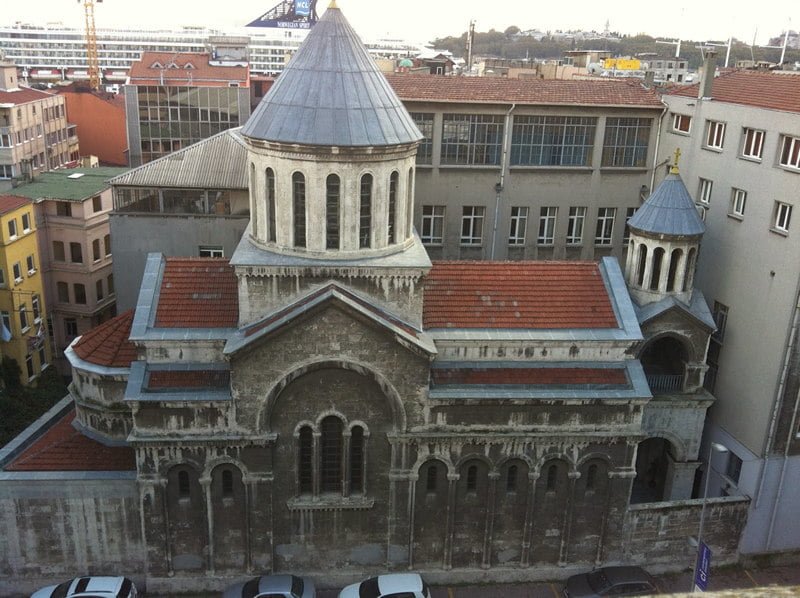
Built in 1431, Surp Krikor Lusavoriç stands as one of the most important Armenian churches in Istanbul and serves as the seat of the Armenian Patriarchate.
The interior follows classical Armenian Apostolic architectural language. Balanced proportions. Focused ornamentation. On mass days, traditional Armenian liturgical music fills the space and gives visitors a deeper sense of continuity.
This church matters not just historically, but spiritually.
Surp Vorvots Vorodman Church – Kumkapı
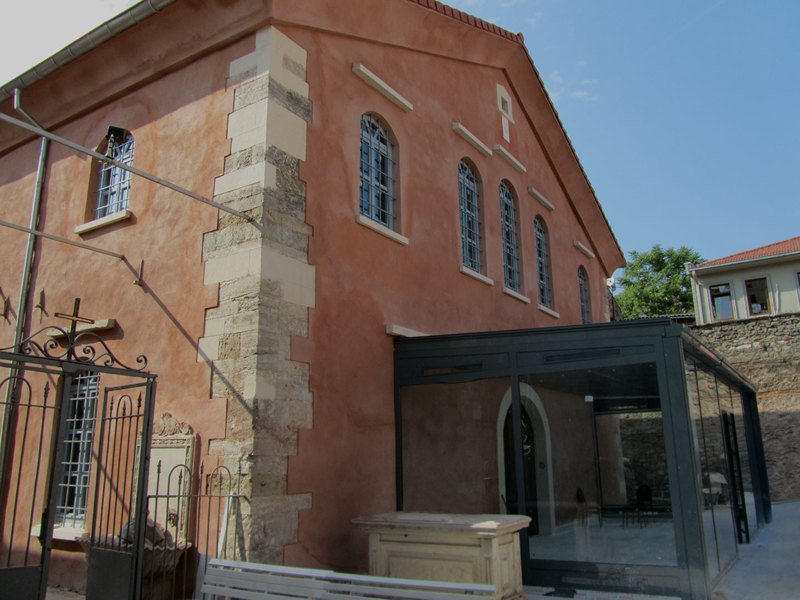
Surp Vorvots Vorodman carries a powerful story. Its name means “Children of the Thunder”, and its roots trace back to a former Byzantine church. After the Ottoman conquest, it was assigned to the Armenian community and later became the official church of the Armenian Patriarchate in 1641.
Located in Kumkapı, it remains active today, hosting both religious services and cultural events. The space feels layered. Byzantine origins. Armenian identity. Ongoing life.
This is one of the three most important Armenian churches in the city.
Surp Yerrortutyun Armenian Catholic Church – Beyoğlu
Surp Yerrortutyun represents the Armenian Catholic presence in Istanbul. Founded in 1807, it continues to serve an active congregation.
From the outside, it blends into the street. Inside, Baroque influences shape the altar and interior details. The mood stays gentle and focused. Despite its location near Istiklal Street, noise fades quickly once you enter.
Holiday services draw large attendance, especially at Christmas and Easter.
Hidden Gems
Not every meaningful church in Istanbul announces itself. Some sit behind plain doors, on residential streets, or just far enough from the usual routes to stay personal. These are the places you visit when curiosity replaces checklists.
Aya Andrea Church – Balat
Aya Andrea doesn’t stand out at first glance. That’s part of its character.
Tucked into the narrow streets of Balat, this small Greek Orthodox church dates back to the 1700s and feels deeply local. The exterior stays modest, almost anonymous. Inside, icons and traditional Orthodox details create a warm, intimate atmosphere that feels lived in rather than preserved.
Regular services continue, mostly attended by neighborhood residents. Mornings are the calmest time to visit, especially if you want to step inside quietly and observe without interruption.
Aya Panteleymon Church – Karagümrük
Aya Panteleymon sits in Karagümrük, away from most visitor routes. Built in 1831, it remains an active Greek Orthodox church and welcomes respectful visitors.
The interior surprises. A striking iconostasis anchors the space, surrounded by traditional ornamentation that hasn’t been polished into display. The surrounding neighborhood stays quiet, which carries inside. You notice small sounds. Light shifts. Time slows.
Photography is allowed when done discreetly, and visitors are usually met with calm curiosity rather than formality.
This is one of those places that feels open without feeling exposed.
Ayia Efimia Church – Kadıköy
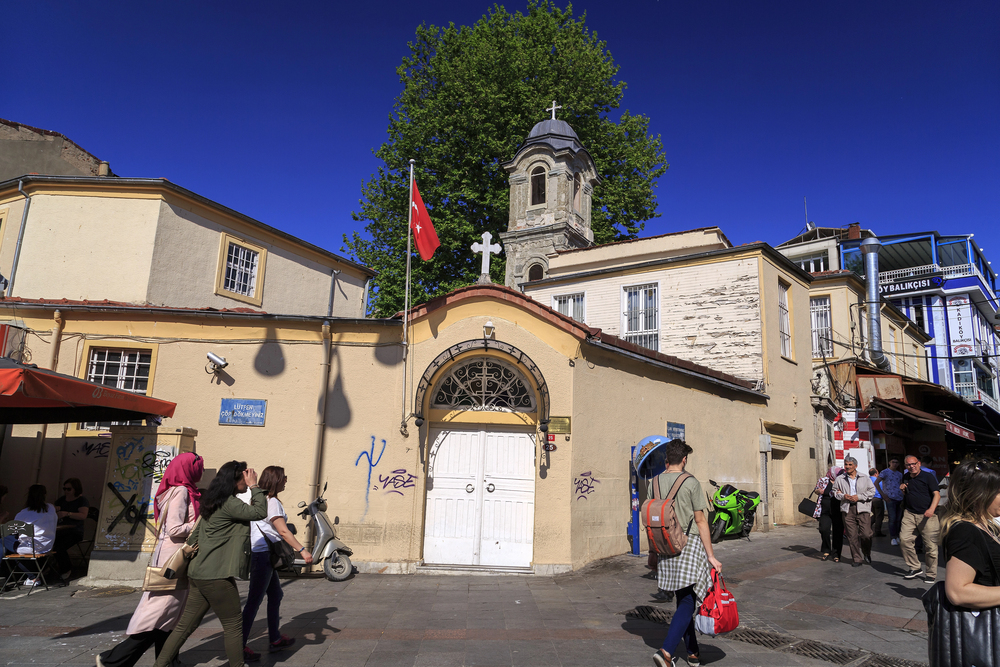
Just a few steps from Kadıköy Market, Ayia Efimia feels like a pause hidden in plain sight. Built in 1830, it’s one of the few historic Greek Orthodox churches on Istanbul’s Asian side.
The church is small, but the interior carries weight. Detailed icons, careful decoration, and a sense of continuity give it presence beyond its size. On regular days, it stays quiet. During religious celebrations, it comes alive with community gatherings and shared rituals.