
Most first-time visitors assume the Rumeli Fortress Museum is a quick photo stop in Istanbul. Stone walls. A view. Ten minutes, then on to the next thing. That assumption misses why this place matters.
The fortress wasn’t built to impress. It was built to control. In 1452, just one year before the conquest of Constantinople, Rumeli Fortress was raised on the narrowest point of the Bosphorus. From here, ships were watched, taxed, or stopped. Power wasn’t symbolic. It was practical.
What surprises people today is how physical the experience feels. You climb. You pause. You look down at the water and realize how tight this passage really is. According to visitor patterns on Tripadvisor, many travelers say this was the moment the conquest story finally made sense. Not through text. Through scale.
We’ve brought plenty of first-time Istanbul visitors here. The reaction is consistent. Silence at the viewpoint. Phones down. A longer pause than expected.
The Rumeli Hisarı Museum today is an open-air fortress museum. No long corridors. No glass cases everywhere. What you’re really visiting is geography shaped into architecture.
Our guide is for travelers who want clarity before arriving. Rumeli Fortress tickets, opening hours, how long to stay, and how to get there without guessing. We’ll also cover what you actually see on site, which viewpoints matter, and the common mistakes that make people leave underwhelmed.
Think of this visit less like a museum and more like stepping into a decision point in history. One that still looks out over the same water.
Fast Facts About Rumeli Fortress
This fortress wasn’t built slowly. And you feel that urgency in the stone.
The Rumeli Fortress Museum sits on the European side of Istanbul, right where the Bosphorus narrows. Stand on the walls and the reason becomes obvious. This is a choke point. Control the water, control the city.
It was built in 1452 under Sultan Mehmed II, just a year before the Ottoman conquest of Constantinople. The timeline alone explains the intensity. Construction took roughly four months, with around 3,000 workers pushing it forward at speed. No ornament. No hesitation.
Architecturally, the fortress is all muscle. Three massive towers, a dominant central tower, and four smaller towers are linked by thick fortified walls that climb and drop with the terrain. Nothing here is symmetrical for beauty’s sake. It follows the land.
No Regrets Booking Advice
The entire complex covers about 30,000 square meters, which makes it one of the largest medieval fortresses in Turkey. That size matters when you’re walking it. Distances feel longer than expected.
Over the centuries, the fortress adapted. It served as a customs checkpoint, a prison, and a military barracks. Power shifted. The walls stayed useful.
In 1960, the site was opened as a museum. Today, it functions as both a historic landmark and an occasional event venue.
Is the Rumeli Fortress Museum worth your limited Istanbul time?
Short answer. Yes. But only if you come for the right reason.
This isn’t a room-by-room museum with labels doing the heavy lifting. The Rumeli Fortress Museum is about position, scale, and perspective. If you want artifacts behind glass, you’ll feel underwhelmed. If you want to feel why this stretch of water mattered, it delivers.
Who this place is perfect for
Travelers who like open air sites. People who enjoy walking with a purpose. Anyone curious about how geography shapes history. We see couples, solo travelers, and photographers enjoy it most. Families can too, if kids are comfortable with stairs and uneven ground.
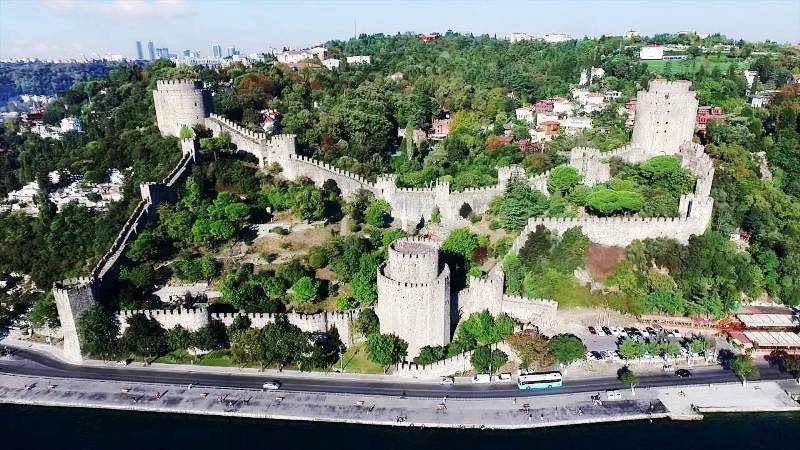
According to Tripadvisor reviews, visitors who expected a “viewpoint with context” left satisfied. Those expecting a classic indoor museum often didn’t.
Best time and light
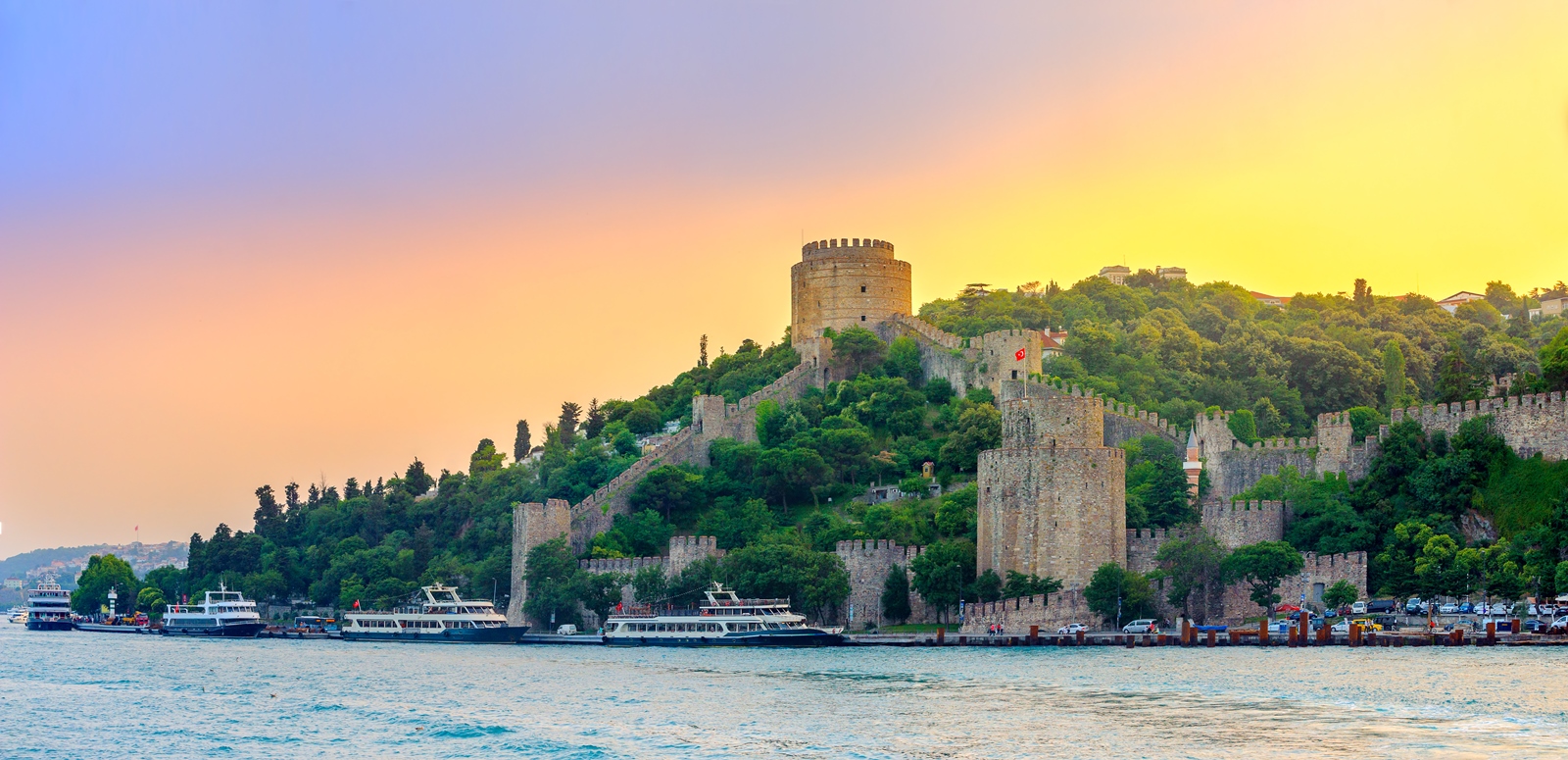
Morning light works well if you want calm and cooler temperatures. Late afternoon brings warmer tones across the Bosphorus and makes the walls glow. Sunset is popular, but it also compresses time. You’ll want to move with intent.
Wind is common. Comfortable shoes matter more than anything else.
How long most visitors actually stay
Most people spend 60 to 90 minutes inside the Rumeli Hisarı Museum. Two hours if you move slowly and pause at viewpoints. Less than that can feel rushed. More than that usually means repeating paths.
Istanbeautiful Team advice:
“Plan this as a focused stop, not a filler. One strong hour here beats squeezing it between bigger sights.”
If your Istanbul schedule is packed, this visit still fits. It asks for attention, not endurance. The reward is clarity. You finally see why this narrow channel changed history.
Tickets and opening hours
Opening hours and closed day
The Rumeli Fortress Museum opens at 09:00 and closes at 17:00. It is closed on Mondays. That Monday closure catches people off guard, especially travelers building a Bosphorus day around it.
Last entry isn’t always clearly posted, but arriving at least an hour before closing gives you enough margin to walk the walls without rushing. According to patterns shared on Tripadvisor, visitors who arrived late afternoon often felt pressed for time once they started climbing.
Ticket price and entry
The ticket price is 6€. One ticket gives full access to the fortress grounds, towers, and viewpoints. There are no separate sections or add-ons to plan around.
Lines are usually short. This isn’t a tour-bus-heavy site. Even on weekends, entry tends to move smoothly compared to central Sultanahmet museums.
Istanbeautiful Team note:
“This is not a ‘pop in for five minutes’ stop. If you’re paying the ticket, give it at least an hour to make sense.”
When to visit for the best experience
Morning visits feel cooler and quieter. The light is clean. You’ll hear the water more than the city.
Late afternoon brings better color across the Bosphorus, but also tighter timing. If you arrive after 16:00, move with purpose.
Wind is common at the top. Even on warm days, a light layer helps.
Common first-time mistakes
Most disappointment here doesn’t come from the fortress itself. It comes from mismatched expectations.
Treating it like a quick roadside stop
From the outside, the Rumeli Fortress Museum looks dramatic but compact. Many visitors assume ten minutes is enough. They snap a photo from below and leave.
That skips the point. The meaning of this place lives above street level. If you don’t climb, you don’t understand it.
According to patterns we see on Tripadvisor, visitors who stayed under 30 minutes were the ones most likely to say it felt “empty”.
Arriving at midday without shade in mind
This fortress is open-air. Stone absorbs heat. Midday visits in warmer months can feel heavier than expected.
The fix is simple. Go early. Or go later. And bring water. Shoes matter more here than at most museums.
Expecting artifact-heavy displays
This isn’t an indoor museum full of objects and labels. There are cannons and structural remnants, but the main exhibit is position.
Visitors expecting detailed panels everywhere often feel confused. Those who accept it as a spatial experience leave impressed.
Ignoring the viewpoints
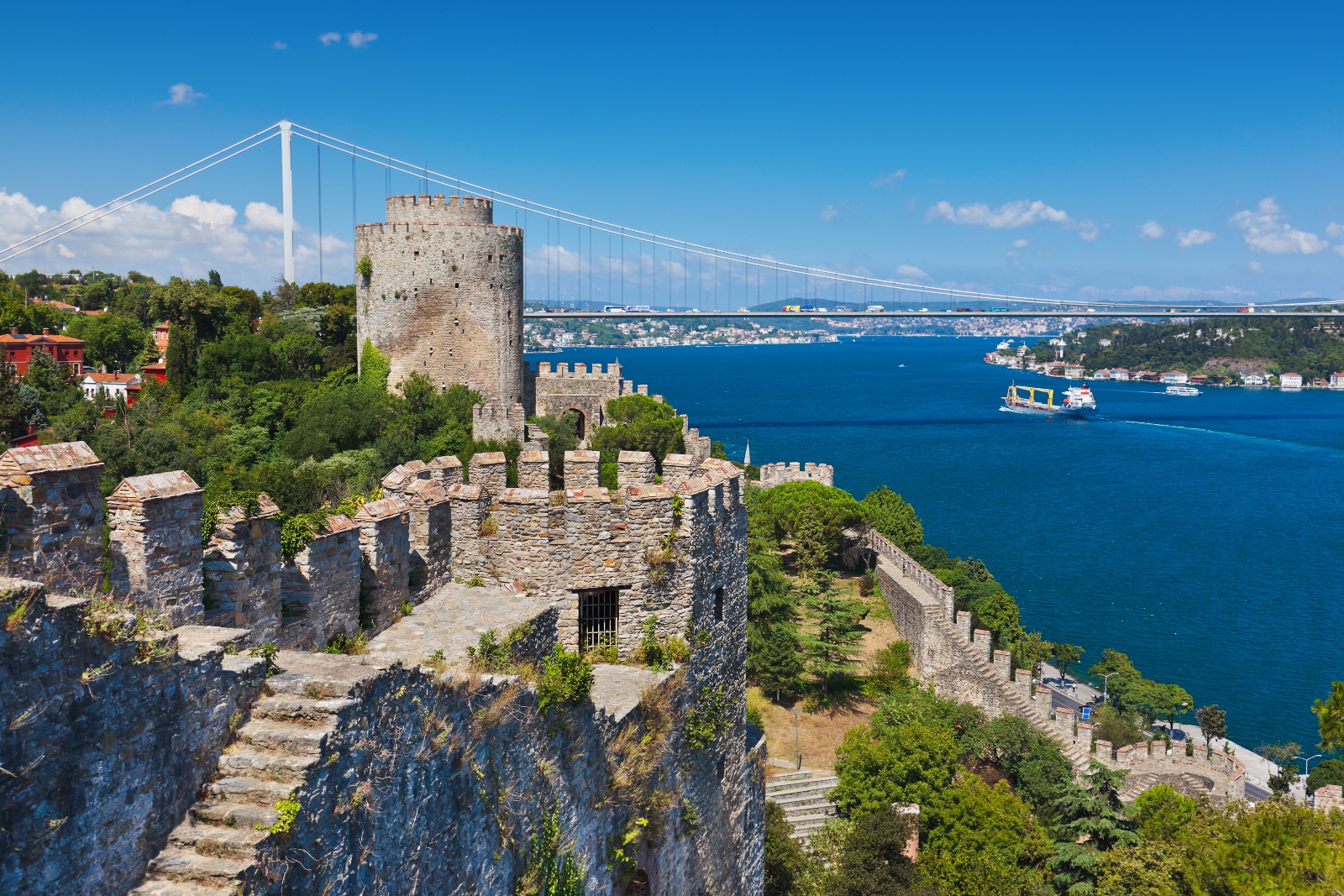
Some people stay in the lower courtyards and never climb high enough to see both sides of the Bosphorus at once. That’s the single biggest miss.
Not checking the Monday closure
The fortress is closed on Mondays. This catches travelers off guard more often than you’d expect.
Plan around that, give it at least an hour, and adjust expectations.
Nearby attractions
The Rumeli Fortress Museum sits on one of the most visually rewarding stretches of the Bosphorus. That location invites smart pairing. Not stacking. Flow.
Seeing the fortress from the water adds context fast. A Bosphorus Cruise shows why this position mattered so much. From the deck, the walls feel closer. More imposing. Many visitors say the story clicks only after seeing both angles.
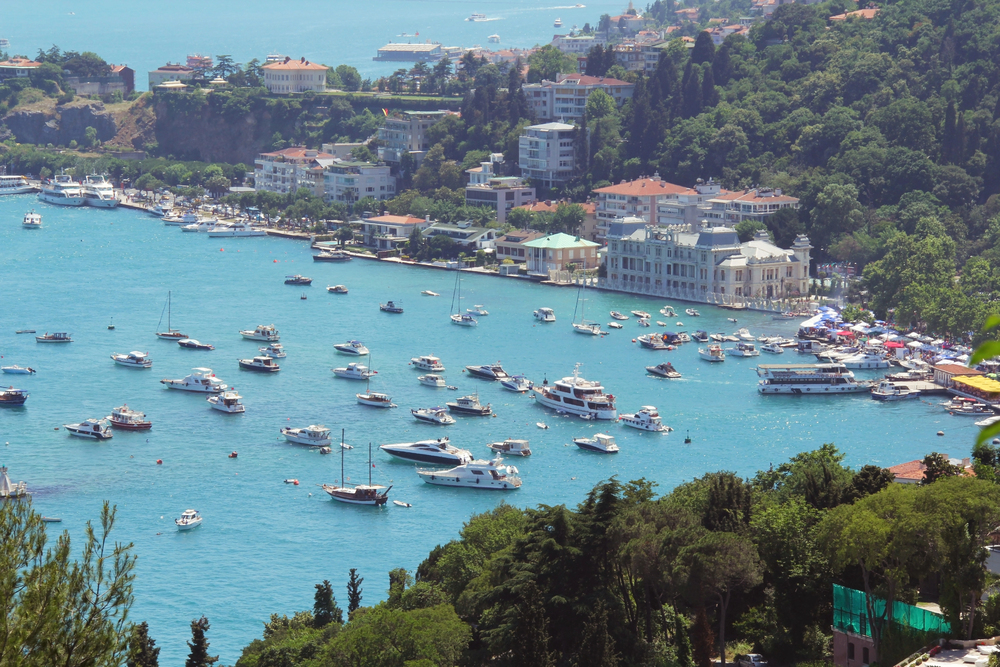
A short walk south brings you into Bebek. Cafés line the water. Locals linger. This is where most people decompress after the climb. Coffee here tastes better after stairs. That’s not accidental.
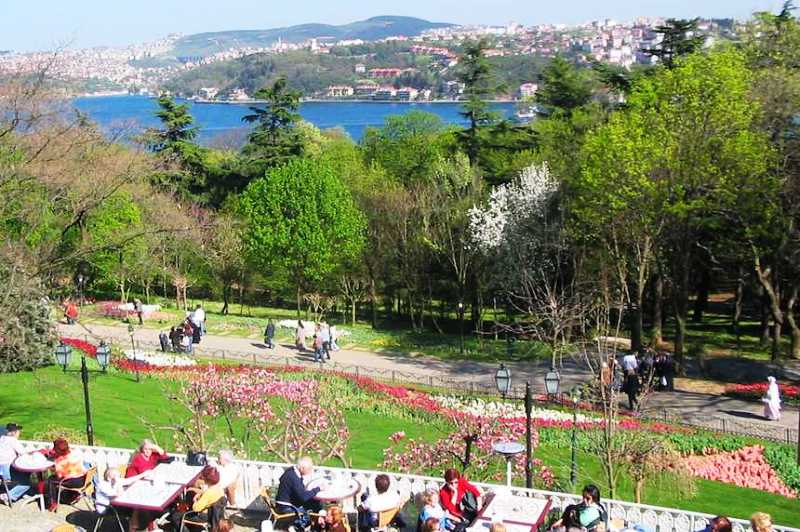
North of the fortress, Emirgan Park opens into wide green space. In spring, tulips take over. Outside that season, it’s still one of the easiest places to slow your pace and sit without an agenda.

Just a bit farther along the shore sits the Sakıp Sabancı Museum. It pairs well if you want an indoor contrast. Calligraphy, rotating exhibitions, and a calmer rhythm than central museums.
Look up from almost anywhere nearby and you’ll spot the Fatih Sultan Mehmet Bridge. From the fortress walls, it frames the modern city against medieval stone. That contrast lands without explanation.