
Markets tell you more about Istanbul than monuments ever will. You can stand in front of a palace and admire history from a distance. Step into a bazaar and you’re inside it. Voices overlap. Tea glasses clink. Shopkeepers argue, laugh, negotiate, repeat the same rituals their families have repeated for generations.
That’s why Istanbul’s historical bazaars matter. They’re not themed attractions. They’re working spaces. Places where locals still buy daily goods, craftsmen still earn a living, and traditions adapt without disappearing.
For first-time visitors, markets can feel overwhelming. Too many choices. Too much noise. Too much pressure to buy something. This guide is written to change that experience.
Instead of rushing you through a checklist, we focus on how each market actually feels, what it’s good for, and when it’s worth your time. Some are perfect for wandering. Others are better for eating. A few work best if you know exactly what you want.
You’ll see famous names like the Grand Bazaar and Spice Bazaar, but also quieter places locals rely on. Food markets. Book markets. Streets where trade still moves in bulk rather than souvenirs.
At a glance: Istanbul’s Historical Bazaars & Markets
If you’re short on time, a few choices make everything easier. The Grand Bazaar is the one market that shows Istanbul at full scale. It’s the best place to understand how trade, history, and daily life overlap. You don’t need to buy anything here for it to feel worth your time.
If food is what pulls you in, the Spice Bazaar and Kadınlar Pazarı do the most talking. One is loud and aromatic, the other grounded and local. Together, they explain how this city eats.
When you want something calmer, Arasta Bazaar works beautifully. It’s slower, easier, and feels more like a stroll than a mission. It suits first-time visitors who want quality without pressure.
For vintage lovers and collectors, Feriköy Flea & Antique Market stands apart. It only happens on Sundays, but it’s where Istanbul’s past shows up in objects rather than stories.
No Regrets Booking Advice
If you’re curious about street life after dark, the Beyoğlu Fish Market is where the city loosens up. It’s less about shopping and more about eating, standing, and watching Istanbul breathe.
The Antique Books Market (Sahaflar Çarşısı) is for quiet moments. Even ten minutes here changes the tone of your day.
If budget shopping is your goal, Mahmutpaşa Bazaar keeps things honest and practical. And if you want to see how trade really moves behind the scenes, the streets of Tahtakale show Istanbul working, not performing.
Most visitors do best by choosing one major market and one smaller one in a half day. A full market-focused day takes about six to seven hours at an unhurried pace.
Morning suits the Grand Bazaar and Spice Bazaar best. Food markets come alive around midday. Beyoğlu’s energy builds later in the afternoon.
Top 7 Historical Bazaars & Markets in Istanbul
Grand Bazaar (Kapali Carsi) in Beyazit

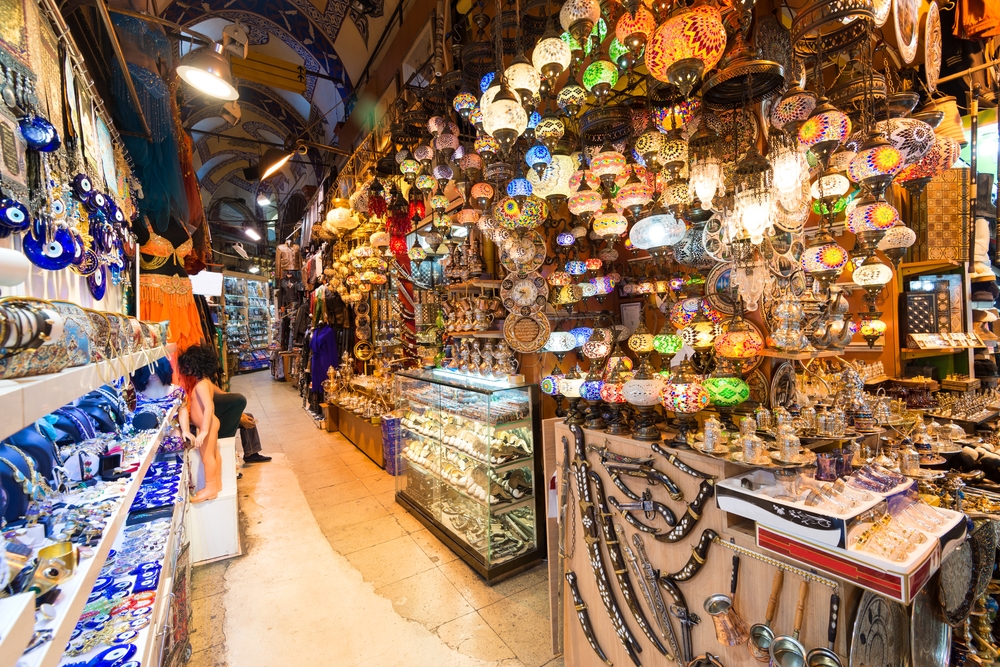
The Grand Bazaar isn’t just a place to shop. It’s a place you wander into and lose your sense of direction on purpose. It is also without a doubt is the most popular tourist spot for shopping in Istanbul.
Founded in the mid-15th century, it has grown into a dense web of covered streets with more than 4,000 shops. Gold glints under soft lights. Carpets hang from walls like tapestries. You hear bargaining in half a dozen languages before you realize you’ve been walking for an hour.

Yes, it’s busy. Yes, it’s touristic. And still, it works.
What surprises first-timers is how alive it feels. This isn’t a preserved museum space. It’s daily life. Shopkeepers drink tea. Locals buy wedding jewelry. Couriers push carts through narrow alleys like they’ve done it for decades.
Come for the scale. Stay for the details. Old domes overhead. Handwritten signs. Tiny workshops hidden behind storefronts.
What you’ll actually find: Gold and silver jewelry, handwoven carpets, ceramics, textiles, spices, leather goods.
Good to know: Go early if you want space to breathe. Prices are flexible. Bargaining is expected. Kalpakçılar Caddesi is worth a slow walk if you’re curious about traditional gold trading streets.
Egyptian Spice Bazaar (Misir Carsisi) in Eminonu
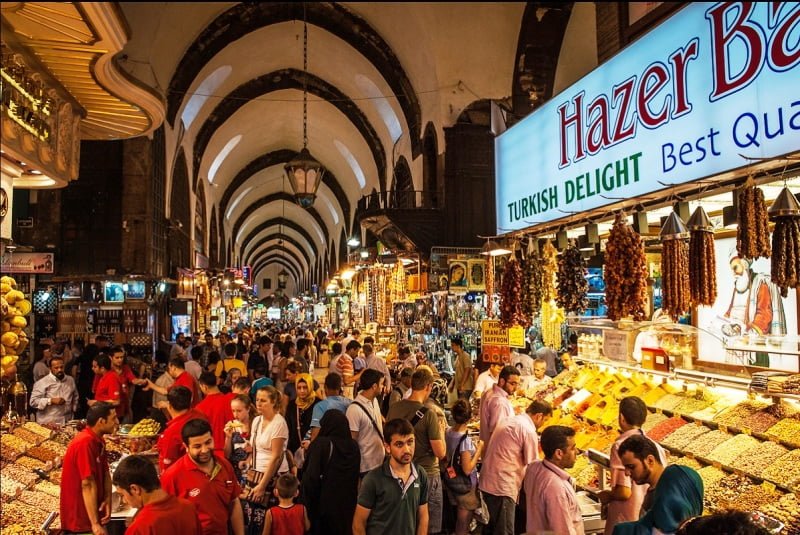
You smell the Spice Bazaar before you see it. Built in the 17th century as part of the New Mosque complex, this market is compact compared to the Grand Bazaar.
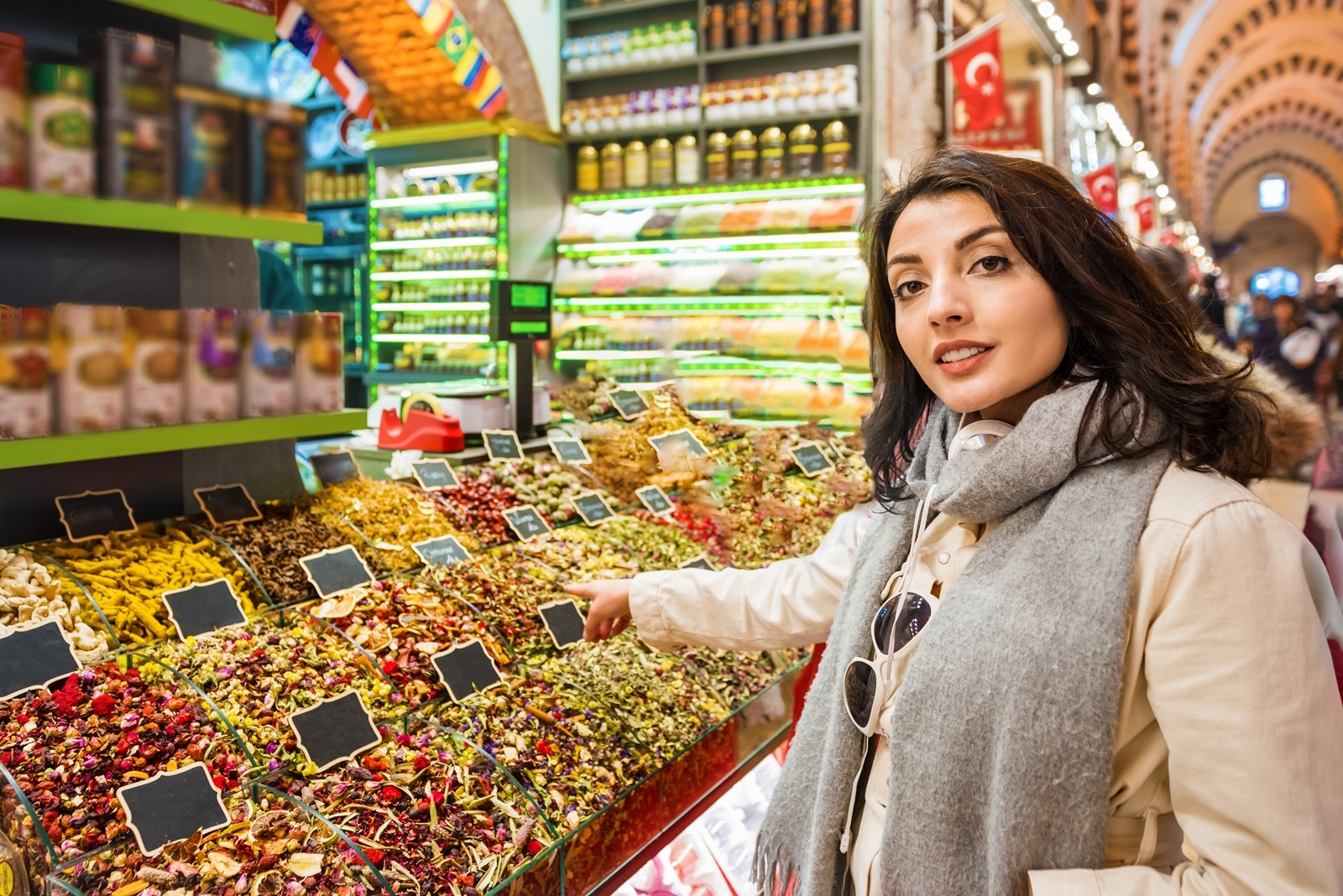
That’s part of the appeal. Two main corridors. Bright piles of spices. Vendors who know exactly how to pull you in without saying a word.
Historically, this was where goods arriving from Egypt and beyond entered the city. That legacy still lingers in the products and the pace.
It’s louder. More sensory. Less about wandering, more about tasting.
What you’ll actually find: Saffron, sumac, pul biber, herbal teas, dried fruits, nuts, Turkish delight.
Good to know: Mornings are calmer. Vendors are generous with samples. Don’t rush. Let the place work on you.
Arasta Bazaar in Sultanahmet
Arasta Bazaar feels like a pause button. Located behind the Blue Mosque in Sultanahmet, this small open-air market is the opposite of overwhelming. About a hundred shops. Clean lines. A slower rhythm. You can actually hear your footsteps here.
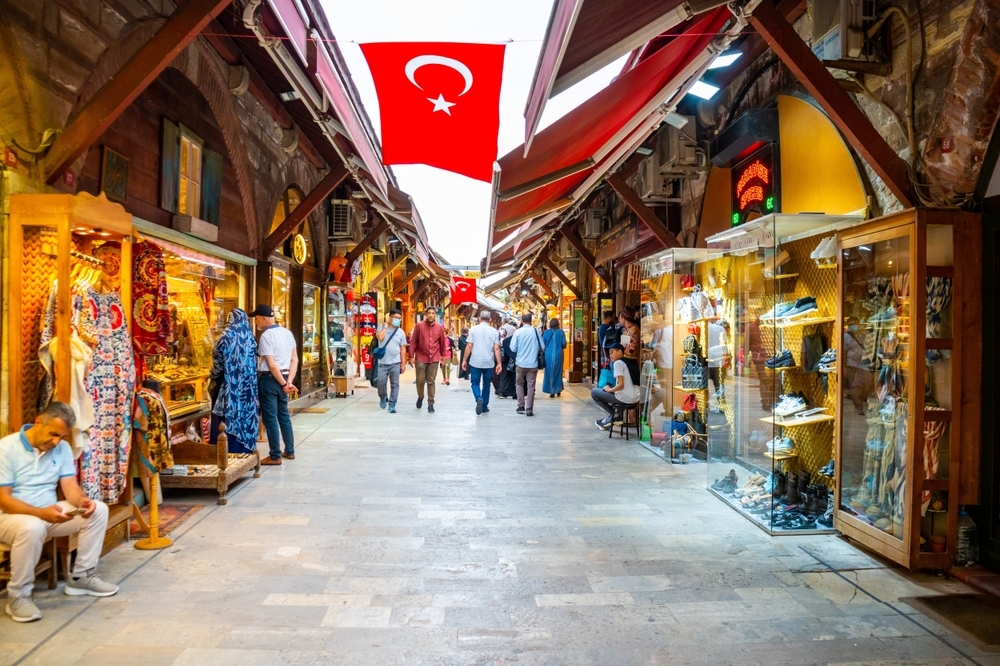
Historically, arastas were markets dedicated to specific crafts. Today, Arasta is more mixed, but the focus on quality remains. Shopkeepers explain where things come from. No shouting. No chasing.
It’s a good place to buy something without feeling pressured.
What you’ll actually find: Ceramics, tiles, kilims, scarves, jewelry, handmade accessories.
Good to know: Prices are higher than street markets, but quality is consistent. Ideal if you want a calm shopping break between sights.
Historic Copper-smiths Market in Beyazit
Step away from the main arteries near the Grand Bazaar and you’ll hear a different sound. Hammer on copper. Rhythmic. Steady.

The Historic Copper-smiths Market has been doing the same thing for generations. Some workshops here have passed through families for decades. You can still watch artisans shaping trays, pots, and decorative pieces by hand.
This place feels practical. Grounded. Less polished. More real.
What you’ll actually find: Copper pots, pans, trays, lamps, decorative wall pieces, traditional kitchenware.
Good to know: Ask before taking photos. Many craftsmen are happy to talk if you show interest. These pieces last a lifetime.
Antique Books Market in Beyazit
Right next to the noise of the Grand Bazaar sits one of the quietest corners in the area.

Sahaflar Çarşısı, the old booksellers’ market, has been a meeting point for scholars and readers since Byzantine times. Today, it’s small. Modest. And deeply atmospheric.
Stalls spill over with old books, prints, maps, and magazines. Some sellers know the history of every title they carry. Others let you browse in silence.
It’s not about buying something rare. It’s about slowing down.
What you’ll actually find: Second-hand books, antique manuscripts, historical maps, old prints, literature in multiple languages.
This market reflects Istanbul’s intellectual life just as much as its commercial one.
Beyoglu Fish Market in Istiklal Avenue, Taksim
You don’t plan a visit to the Beyoğlu Fish Market. You stumble into it. Tucked just off Istiklal Street, this short stretch packs more noise, smell, and appetite into a few meters than most places manage in blocks.
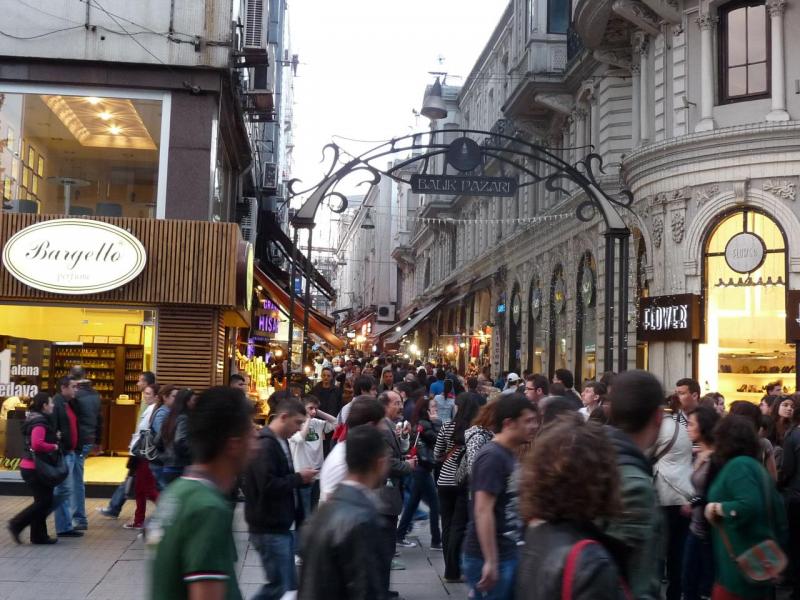
Fishmongers shout orders. Taverns spill onto the pavement. Grills fire up as the day turns into evening.
This market isn’t polished. That’s the point.
Seafood counters sit next to street food stands. Locals stop for a quick bite. Visitors slow down, unsure where to look first. It feels raw in the best way.
What you’ll actually find: Fresh fish and shellfish, balık ekmek sandwiches, kokoreç sizzling on grills, small meyhanes pouring rakı and serving simple plates.
You don’t shop here quietly. You eat. You stand. You watch. It’s one of the easiest places to feel Istanbul’s appetite without committing to a full restaurant.
Feriköy Flea & Antique Market
Feriköy feels like a city attic emptied onto the street. Every Sunday, this market fills with people who enjoy hunting rather than buying fast. Tables overflow with mismatched objects. Some valuable. Some strange. Some only interesting because they exist at all.
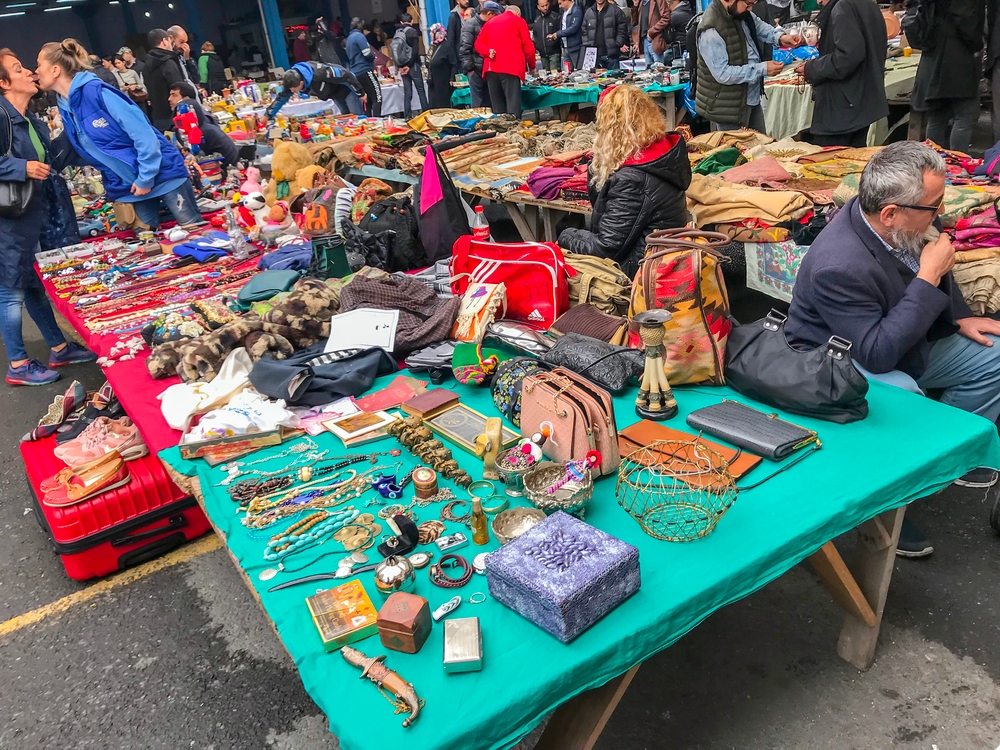
You’ll see collectors scanning quietly, designers digging for inspiration, and neighbors just wandering with coffee in hand.
What you’ll actually find: Antique furniture, old photographs, records, books, jewelry, retro décor, odd pieces with unclear histories.
Good to know: Arrive early for serious finds. Later hours are better for browsing. Prices vary wildly. Asking questions often gets you a story.
Women’s Bazaar (Kadınlar Pazarı) in Unkapanı, Fatih
Kadınlar Pazarı doesn’t perform for visitors. It feeds the city. This market focuses on food from southeastern Anatolia. Strong flavors. Heavy dishes. Ingredients you won’t see in tourist areas. Locals come with lists. Shopkeepers know their regulars.
It smells like spice, meat, and fresh bread. The energy is practical, not decorative.
What you’ll actually find: Sujuk, pastırma, dried meats, regional spices, dried fruits, fresh pitas baked on site, ingredients for dishes like beyran and mantı.
This is where Istanbul’s regional food culture shows itself without translation. If you care about how people actually eat, this place explains a lot.
Tahtakale Streets
Tahtakale is not a browsing market. It’s a working one. Just downhill from the Spice Bazaar, these streets run on volume. Shopfronts are stacked floor to ceiling. Sellers talk fast. Buyers know exactly what they want.
It feels chaotic until you realize everyone here has a purpose.
What you’ll actually find: Household goods, kitchenware, small electronics, textiles, packaging supplies, bulk items.
Good to know: This area makes sense if you’re buying in quantity or curious about Istanbul’s wholesale backbone. It’s busy. It’s loud. And it’s very local.
Mahmutpasa Bazaar
Mahmutpaşa runs downhill, literally and financially. This open-air bazaar connects the Grand Bazaar area to Eminönü and focuses on affordability. Shops sell everyday clothing, fabrics, and accessories. Locals shop here for household needs, not souvenirs.
It’s crowded. It moves fast. And prices reflect that.
What you’ll actually find: Affordable clothing, scarves, handbags, fabrics, home textiles, small accessories.
If you want to see how Istanbul shops for daily life and bargains, Mahmutpaşa delivers without ceremony.