
Most first-time visitors don’t realize this until they’re already on the water, camera halfway up. The Bosphorus is not one long postcard. It’s a moving timeline. Palaces, fortresses, mosques, bridges, wooden mansions. All layered. All passing in sequence. And if you don’t know what you’re looking at, it can blur together fast.
That’s why a guide to historical landmarks along the Bosphorus matters more than people expect.
From the deck of a ferry or cruise boat, you’ll see some of Istanbul’s most important sites in under two hours. Dolmabahçe Palace, Ortaköy Mosque, Rumeli Fortress, Beylerbeyi Palace, the Bosphorus Bridge, even glimpses of the Maiden’s Tower depending on route.
According to TripAdvisor reviews, many travelers say the Bosphorus cruise was their favorite experience, but also admit they didn’t fully understand what they were seeing until afterward.
We hear this a lot.
The Bosphorus Strait has always been about control. Military control. Trade control. Symbolic power. The Ottoman palaces, the twin fortresses at the narrowest point, the waterfront yalı mansions, they weren’t placed randomly. Each one tells you something about how Istanbul worked, and who it worked for, at that moment in history.
Our guide is built to help you read the shoreline as it moves.
We’ll show you which Bosphorus landmarks are best seen from the water, which are worth visiting on land, how the shoreline changes from south to north, and how to spot key sites even on a short cruise.
Istanbeautiful Team note:
“Once people know what they’re seeing, the Bosphorus stops feeling busy and starts making sense.”
Spot the best Bosphorus landmarks in one cruise

Most travelers don’t need a long explanation. They need orientation. If you know how much time you have on the water, you can predict almost exactly which Bosphorus landmarks you’ll see and how clearly they’ll register.
If you have about 90 minutes
Short cruises focus on the Lower Bosphorus, closest to the historic core. This stretch delivers fast impact.
No Regrets Booking Advice
You’ll pass Dolmabahçe Palace, the long ceremonial waterfront of the late Ottoman era, then slide toward Ortaköy Mosque, framed neatly by the Bosphorus Bridge.
Depending on the route, you may catch a distant angle of the Maiden’s Tower near Üsküdar.
According to TripAdvisor reviews, this option works well for first-timers who want context without committing half a day.
If you have 2 to 2.5 hours
This is the sweet spot for most visitors. Cruises in this range reach the Middle Bosphorus, where history becomes easier to read.
You’ll see Rumeli Fortress and Anadolu Fortress facing each other at the narrowest point of the strait, built to control passage before the conquest of Constantinople.
Waterfront yalı mansions start to appear more frequently here, especially around Arnavutköy and Bebek.
If you choose a sunset cruise
The route doesn’t change much. The perception does. Palaces glow. Mosques soften. Bridges turn into lines of light.
A Bosphorus sunset cruise compresses visual drama into a shorter window, which is why many travelers remember it more vividly.
How the Bosphorus reads as you sail
Seeing historical landmarks along the Bosphorus makes more sense once you know how the shoreline changes as you move. The Bosphorus is not uniform. It shifts in tone, purpose, and scale as you head north.
Lower Bosphorus
Closest to the old imperial center, the Lower Bosphorus is about display. This is where the Ottoman court wanted to be seen. Dolmabahçe Palace dominates the shoreline with confidence. Its scale alone tells you it belonged to a late empire signaling power to Europe.

A few minutes later, Ortaköy Mosque appears, smaller but perfectly placed, almost theatrical beneath the Bosphorus Bridge.
According to many TripAdvisor reviews, this stretch delivers the most recognizable images in the shortest time.
Middle Bosphorus
As you move north, the mood tightens. The strait narrows. Green replaces stone. This is where strategy mattered.
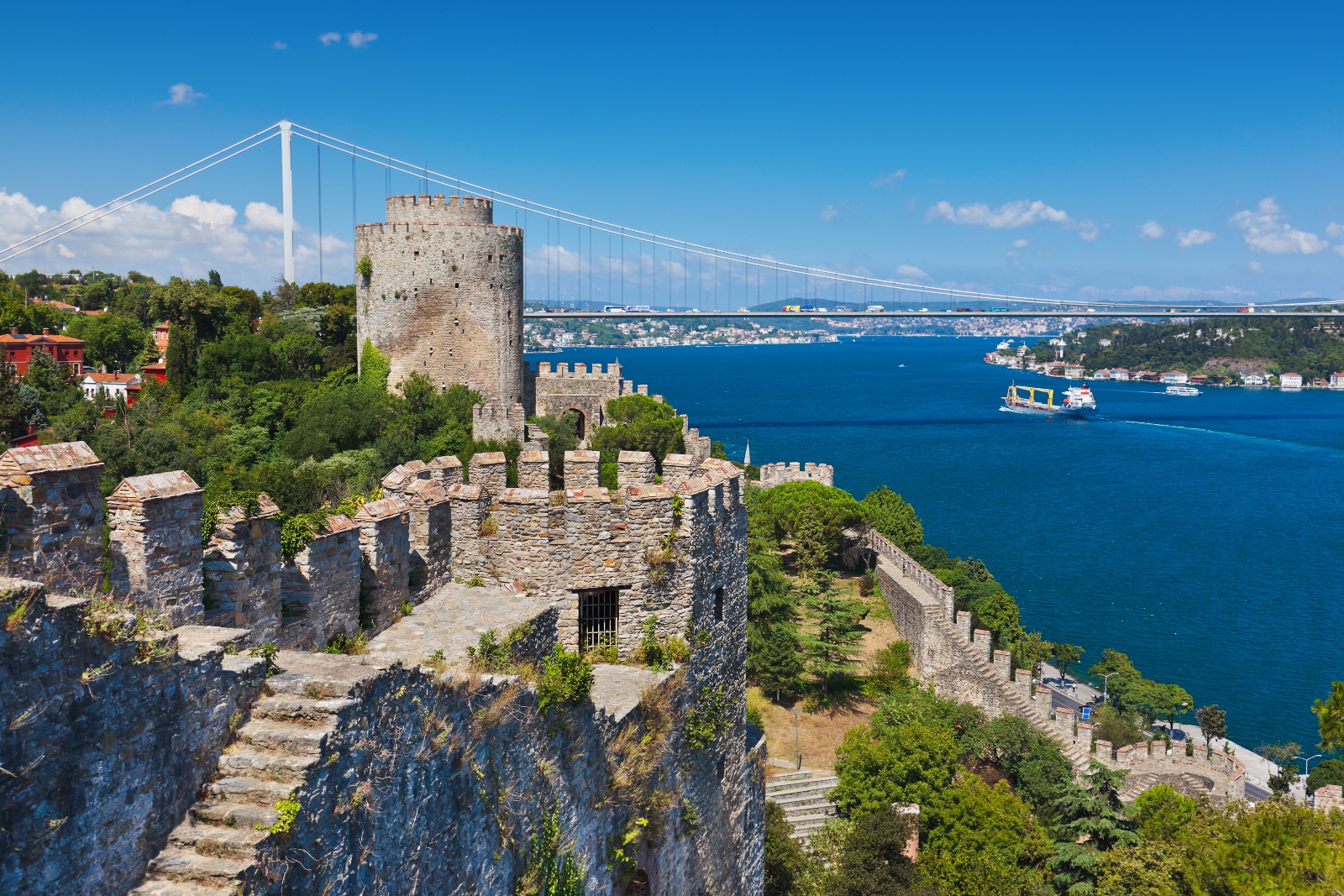
Rumeli Fortress and Anadolu Fortress face each other across the water, built to command passage before 1453. From the boat, their placement becomes obvious in a way maps never quite explain.
Around them, historic yalı mansions line the shore, especially near Arnavutköy and Bebek, reminders that prestige later replaced military urgency.
Upper Bosphorus
Fewer short cruises reach this far. When they do, the Bosphorus starts to breathe. Traffic thins. The city softens.
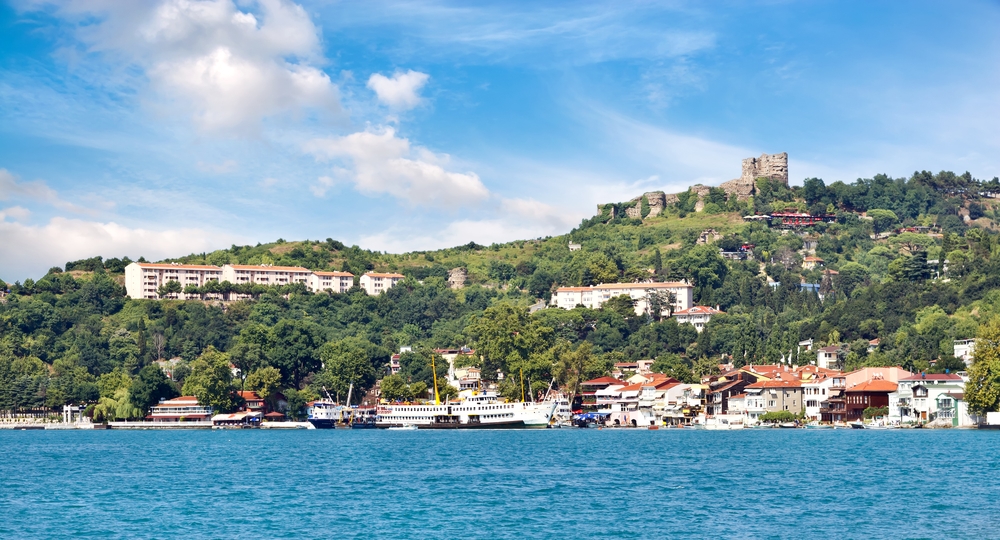
This zone mattered less for control and more for escape. Pavilions, greenery, and quiet waterfront villages take over.
Istanbeautiful Team insight:
“The Bosphorus tells its story in order. If you know the chapters, every bend starts to speak.”
Landmark by landmark: what you’re seeing
Once you know the flow, individual Bosphorus landmarks start to stand out with purpose instead of blending together. Here’s how to read the most important ones as they appear from the water.
Galata Tower

You won’t pass directly in front of Galata Tower, but it often appears in the background as the cruise departs or returns near the Golden Horn. From the water, it acts like a compass. It anchors the historic skyline and helps you understand where old Genoese Galata once stood in relation to the imperial shoreline.
Maiden’s Tower (Kız Kulesi)

Maiden’s Tower is one of the few landmarks that feels different from the water than from land. Sitting alone near Üsküdar, it reads as symbolic rather than defensive. From a cruise, its isolation makes sense. According to many traveler reviews, this is one of the most emotionally memorable Bosphorus moments.
Dolmabahçe Palace
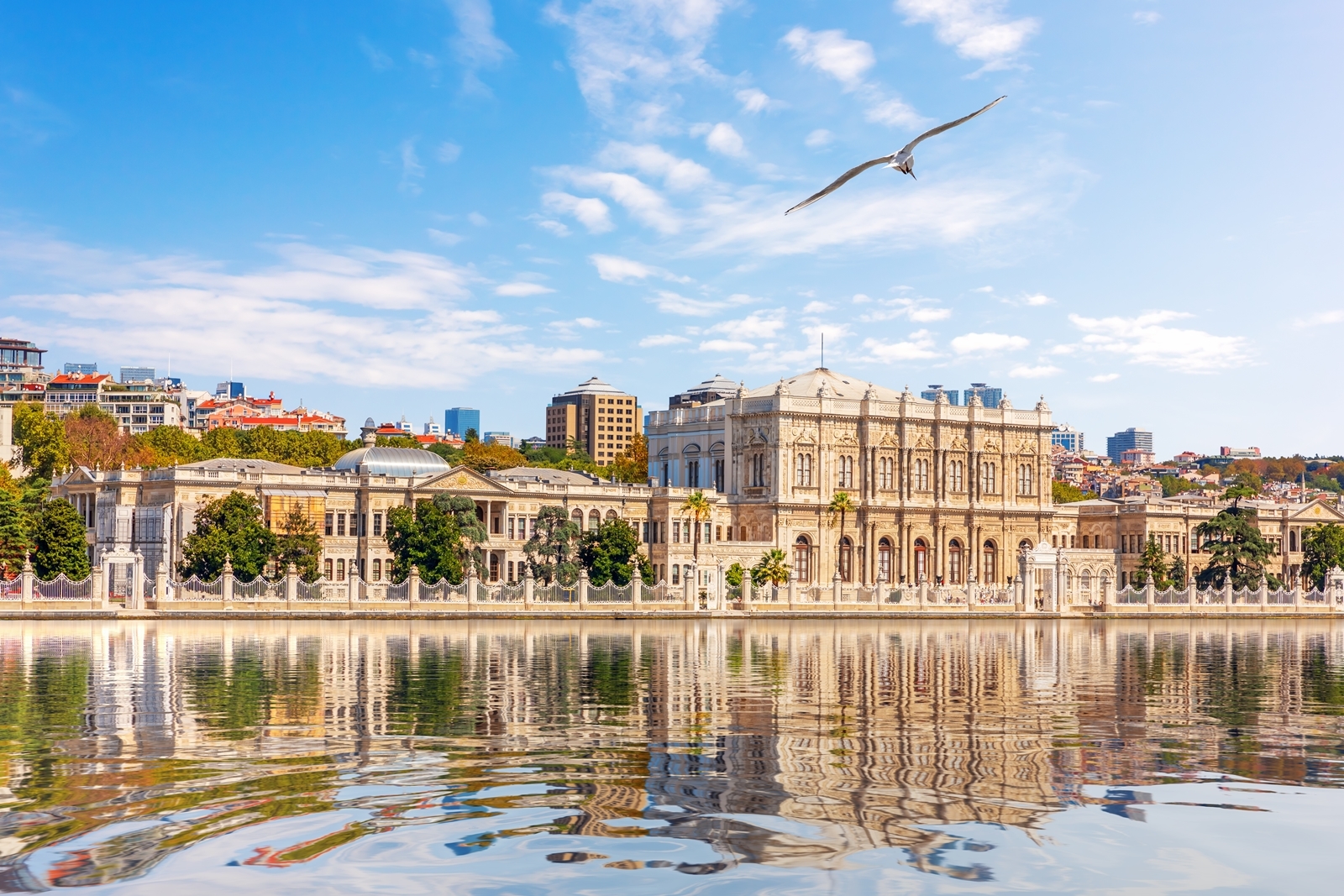
This is usually the first major landmark to command attention. Dolmabahçe Palace was the Ottoman Empire’s final statement of power, built to face Europe directly. From the water, its length matters more than detail. It stretches. It performs.
If you plan to visit one palace on land, this is often the most accessible, but even seen only from a boat, its intent is clear.
Çırağan Palace
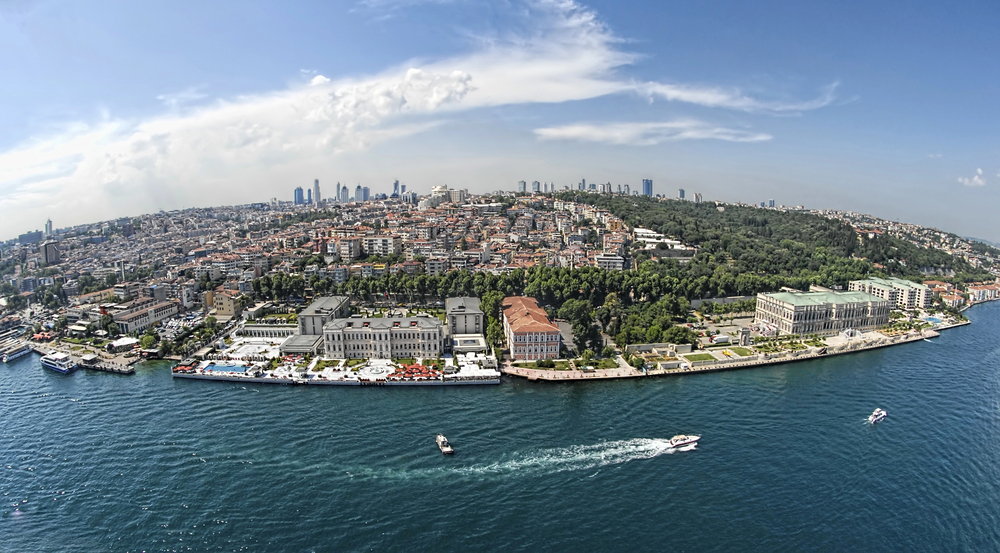
A few minutes later comes Çırağan Palace, now a luxury hotel. From the Bosphorus, it reads as quieter prestige. Less ceremonial, more residential. It tells you how the elite lived when the palace era softened.
Ortaköy Mosque

Ortaköy Mosque works because of placement, not size. Sitting right under the Bosphorus Bridge, it creates one of Istanbul’s most photographed frames. From the water, this alignment finally makes sense.
According to TripAdvisor comments, many travelers say this moment is when the Bosphorus “clicks” visually.
Bosphorus Bridge (15 July Martyrs Bridge)
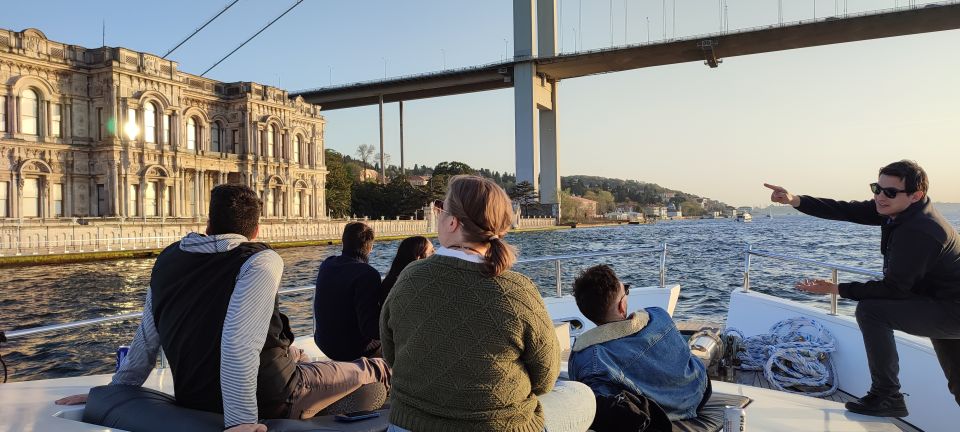
The first Bosphorus Bridge is less about architecture and more about transition. Passing under it marks the psychological shift from ceremonial shoreline to strategic Bosphorus. At sunset or night, the bridge lighting becomes the visual spine of the cruise.
Beylerbeyi Palace
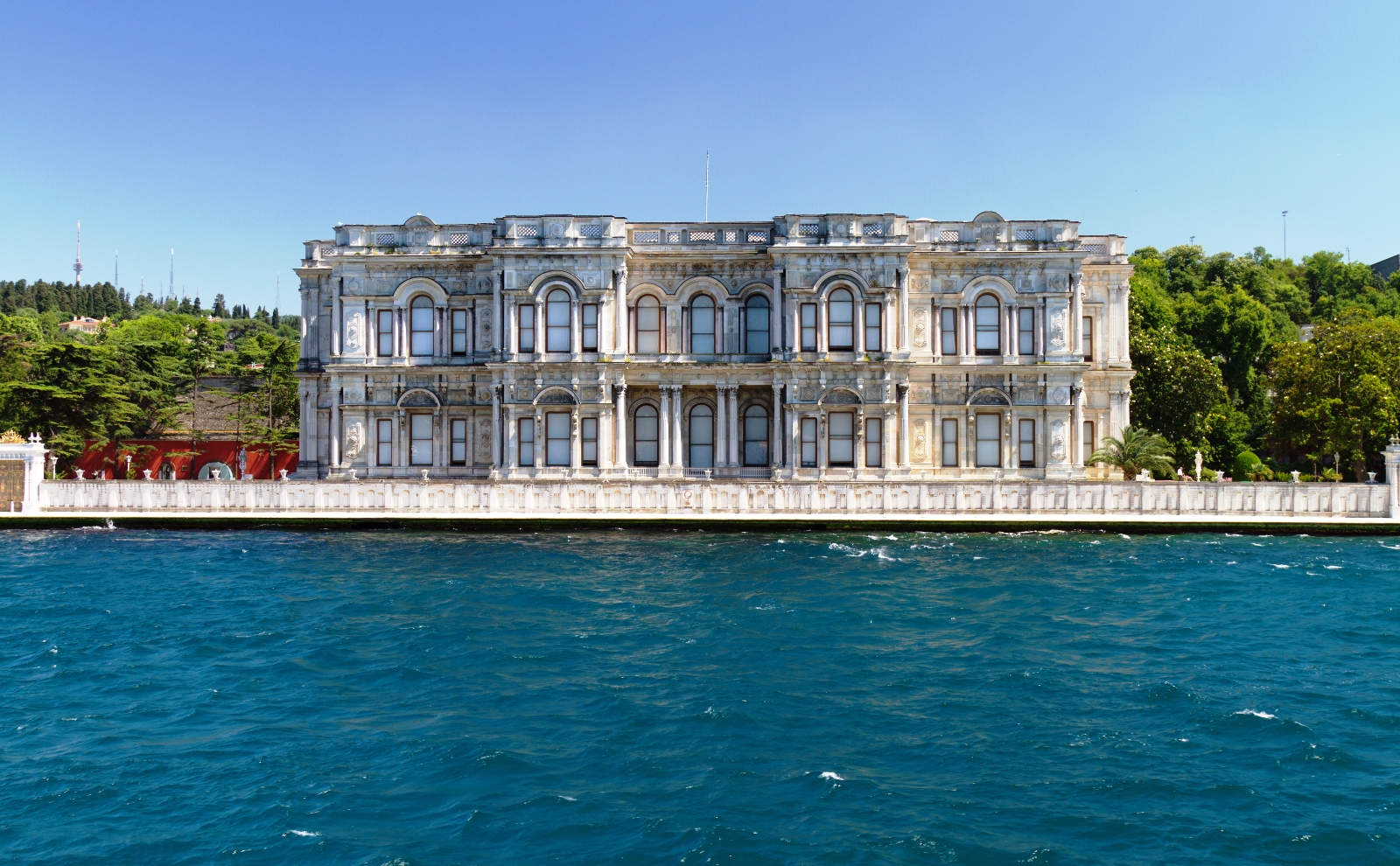
On the Asian side, Beylerbeyi Palace appears elegant but restrained. It served as a summer residence and guest palace. From the water, it reads as refinement rather than authority.
Rumeli Fortress and Anadolu Fortress
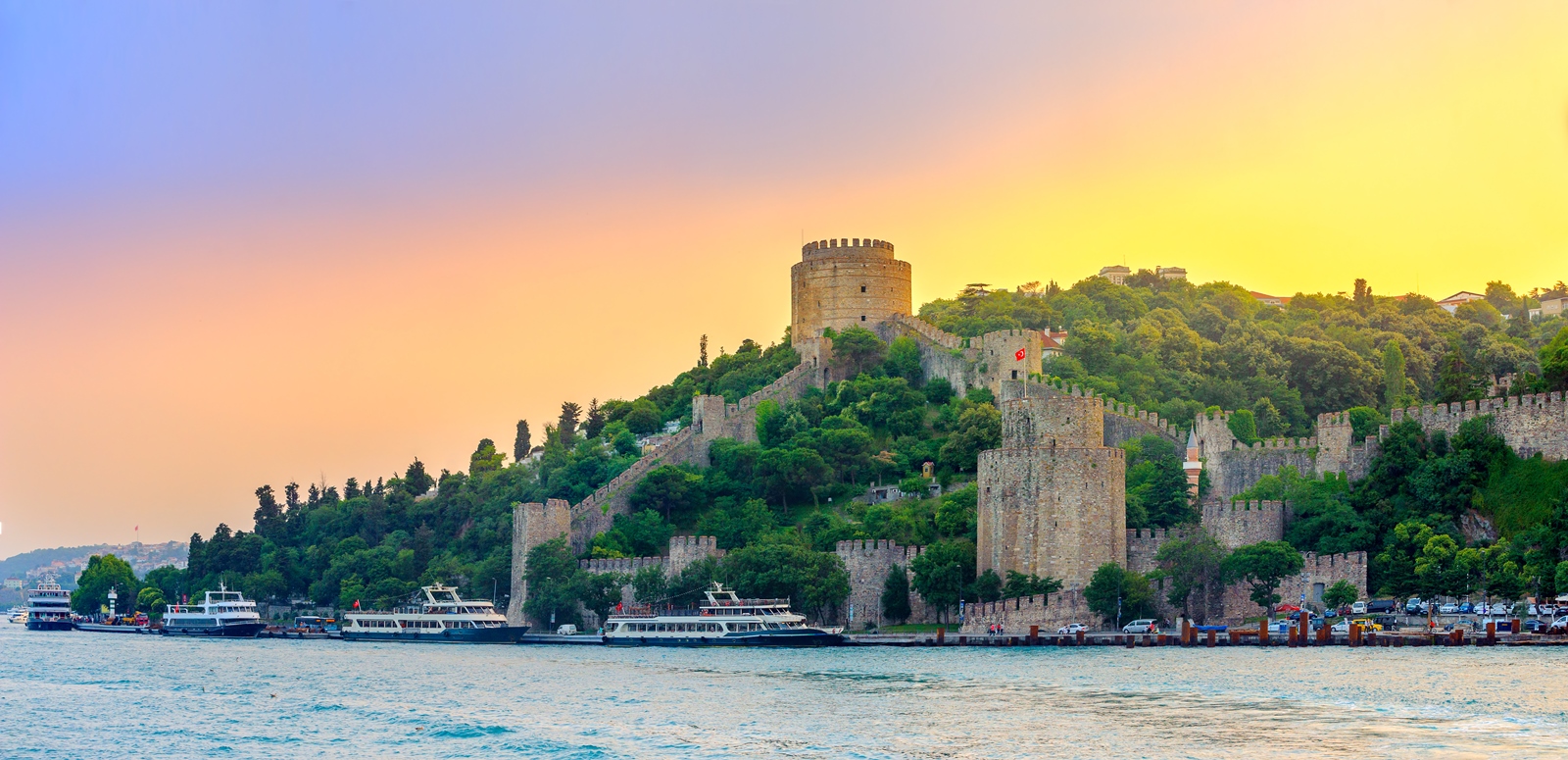
These two are the strategic heart of the Bosphorus. Rumeli Fortress on the European side and Anadolu Fortress opposite were built to control the narrowest point of the strait.
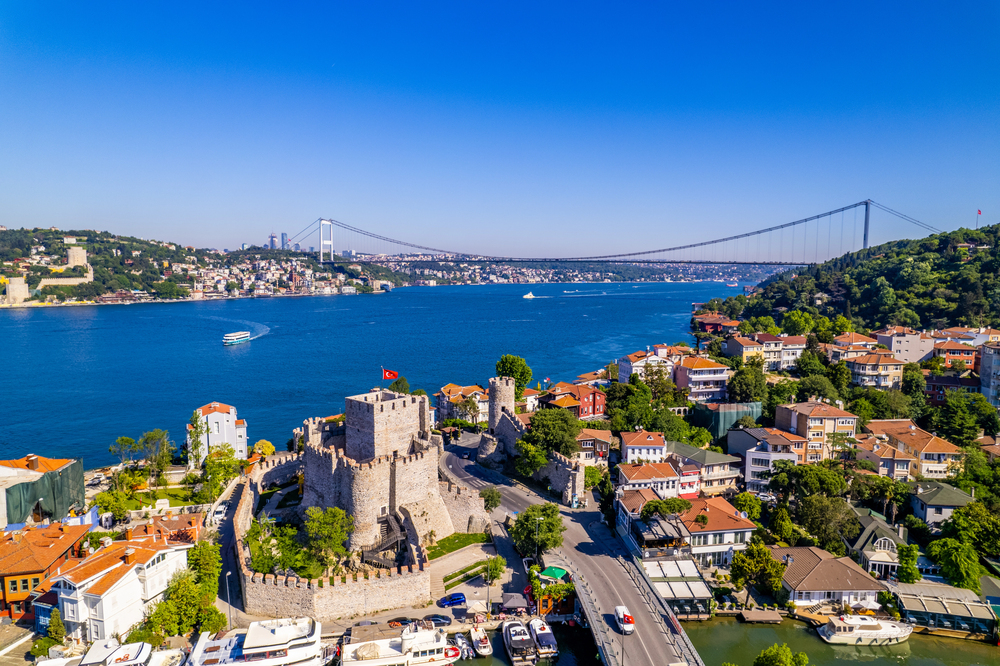
Seeing them face each other from the water explains their function instantly. This is history you feel spatially.
Küçüksu Pavilion (Küçüksu Kasrı)
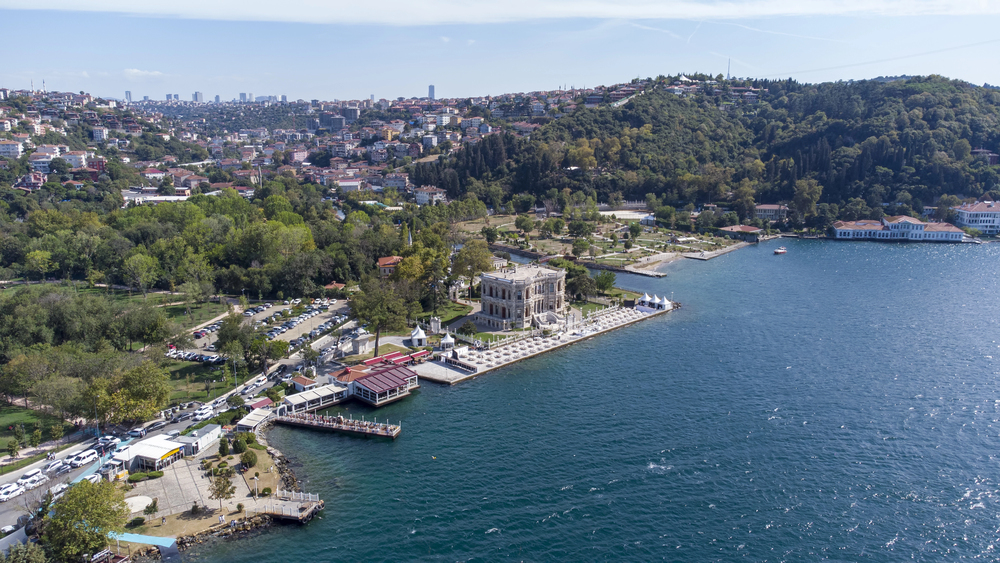
Often missed on short routes, Küçüksu Pavilion sits quietly on the Asian side. Built as a leisure retreat, it represents a softer, more personal side of Ottoman life. From the water, its modest scale contrasts clearly with the grandeur of Dolmabahçe and Beylerbeyi.
Kuleli Military High School
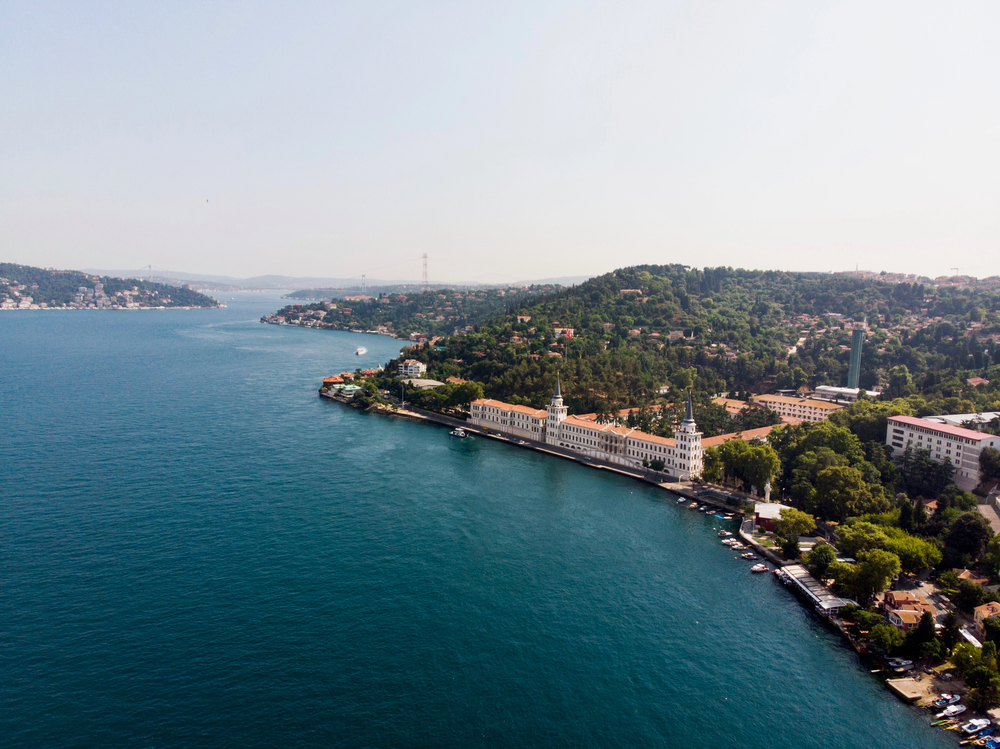
The long white facade of Kuleli Military High School stretches along the Asian shore. From the Bosphorus, its linear form signals discipline and continuity. It’s one of those landmarks people remember visually, even if they don’t know the name at first.
Mansions along the Bosphorus (Yalı)
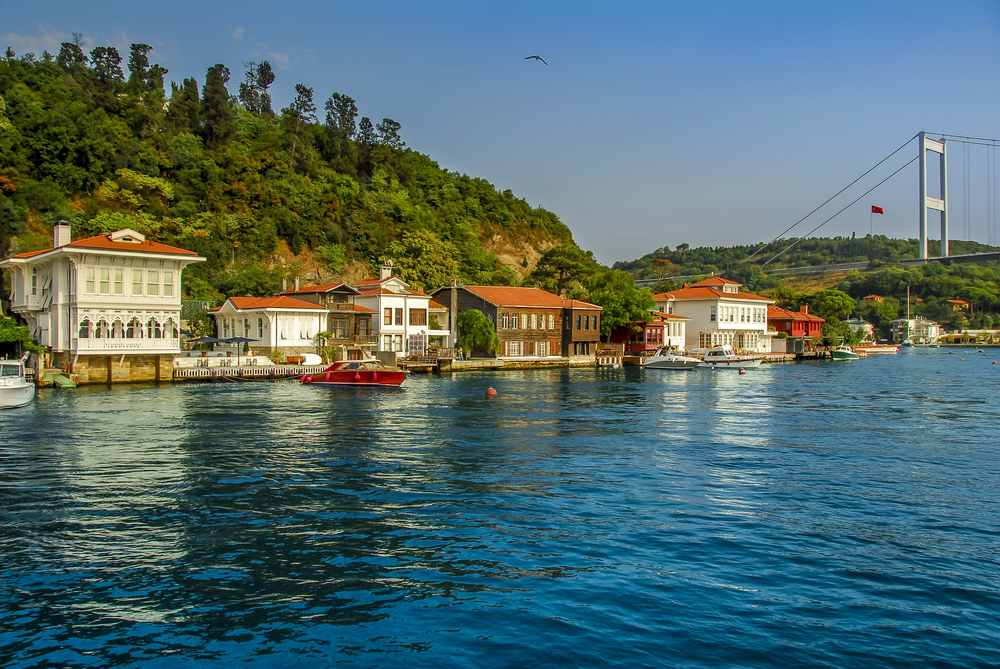
The historic yalı mansions are best understood from the water. Timber houses, pastel colors, irregular spacing. They tell the story of private life along the Bosphorus, where prestige meant proximity to water, not height or isolation.
Yoros Castle
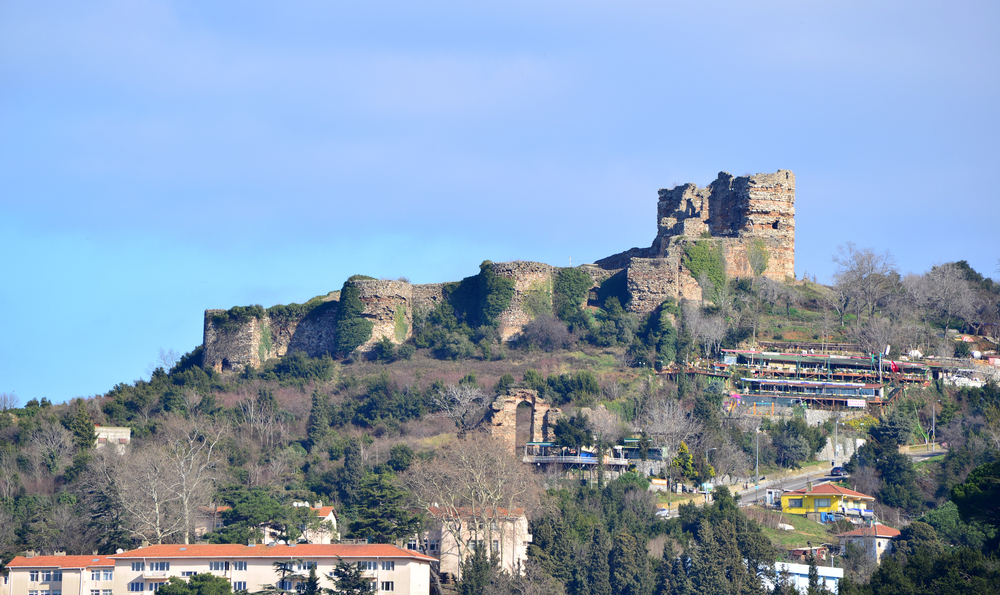
Visible only on longer routes toward the Black Sea, Yoros Castle marks the Bosphorus’ northern threshold. From a cruise, it feels like an ending rather than a highlight. A reminder that this strait once guarded not just Istanbul, but access to entire seas.
Istanbeautiful Team note:
“From the Bosphorus, landmarks stop being monuments and start behaving like clues.”
The Bosphorus neighborhoods
Landmarks don’t float in isolation. Along the Bosphorus, neighborhoods explain why those palaces, mosques, and fortresses ended up where they did. When you connect place with sight, the shoreline clicks.
Beşiktaş and the Dolmabahçe zone
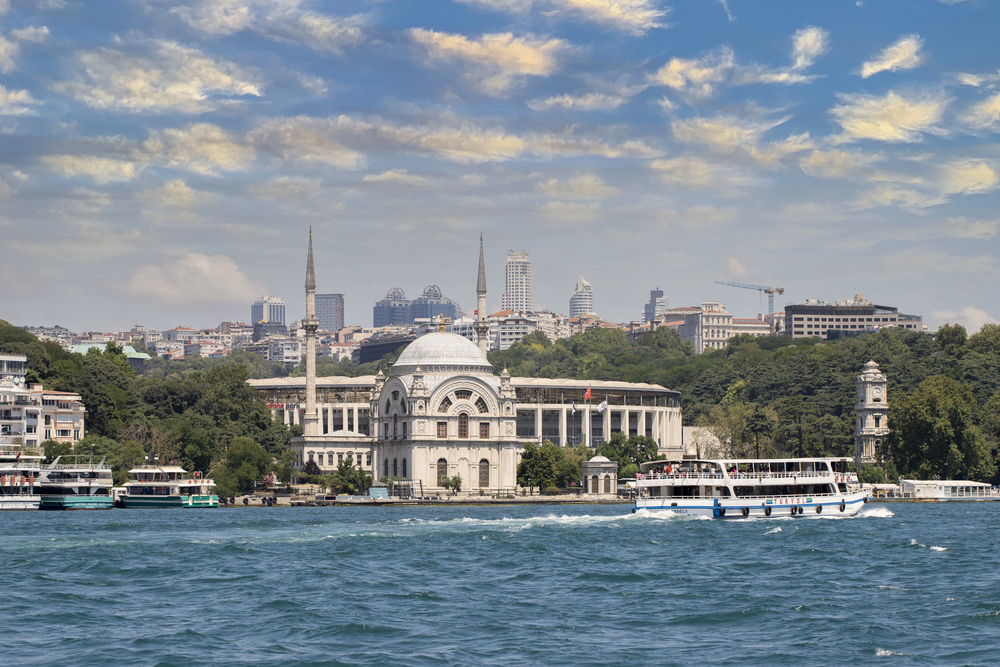
This area anchors the Lower Bosphorus. Beşiktaş was practical, busy, close to power. Dolmabahçe Palace sits here because the court wanted speed and visibility. From the water, you feel that urgency.
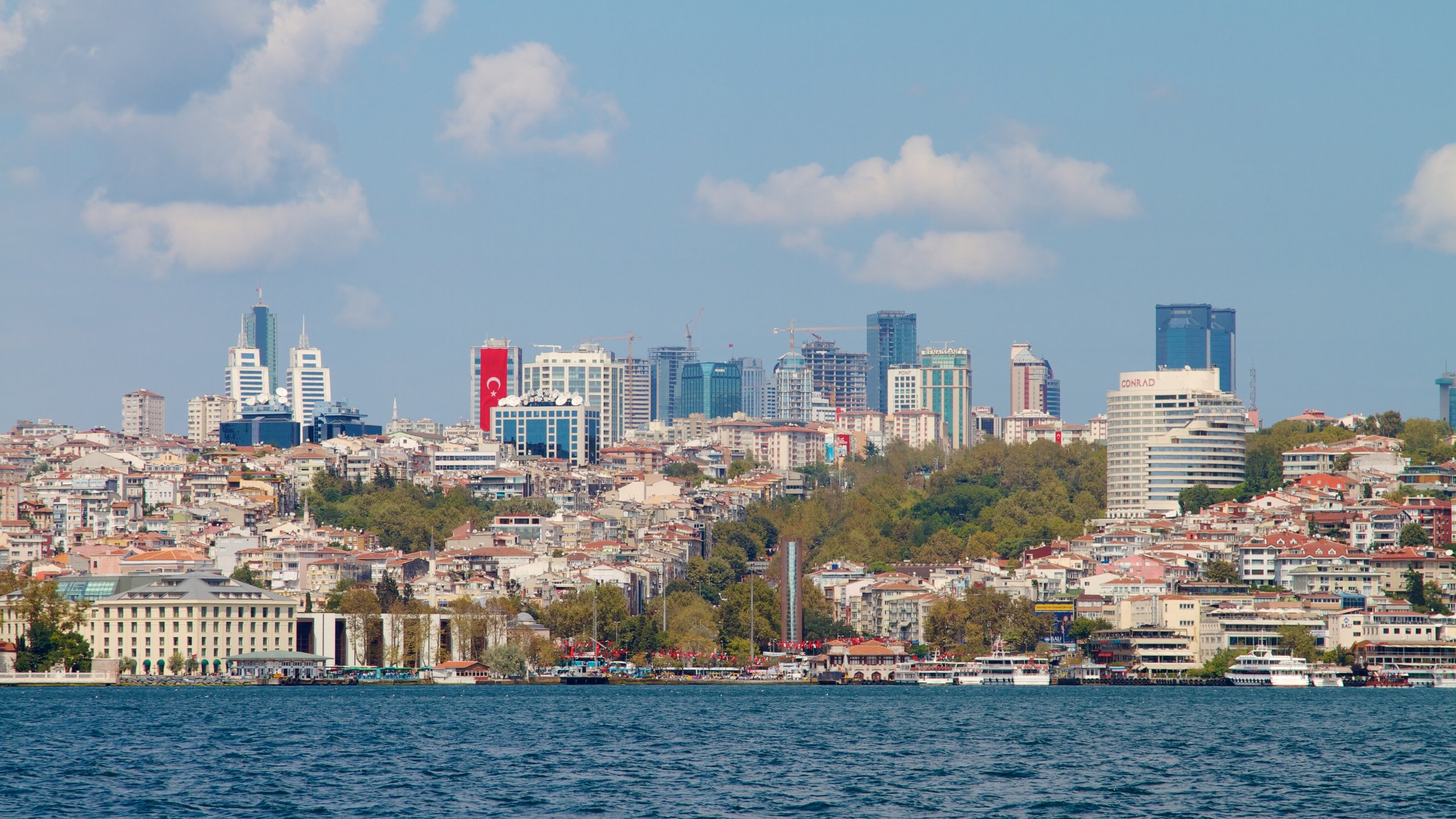
On land, Beşiktaş still moves fast. Cafés spill out. Ferries come and go. It’s a good base if you want to pair a cruise with real city life.
Ortaköy to Arnavutköy

Between Ortaköy Mosque and Arnavutköy, the Bosphorus shifts tone. Ortaköy is theatrical, all framing and photos.

Arnavutköy is residential, lined with historic yalı mansions that read best from the deck of a boat. According to TripAdvisor notes, travelers often remember this stretch as calmer, even though it’s close to the city’s core.
Bebek and Rumeli Hisarı
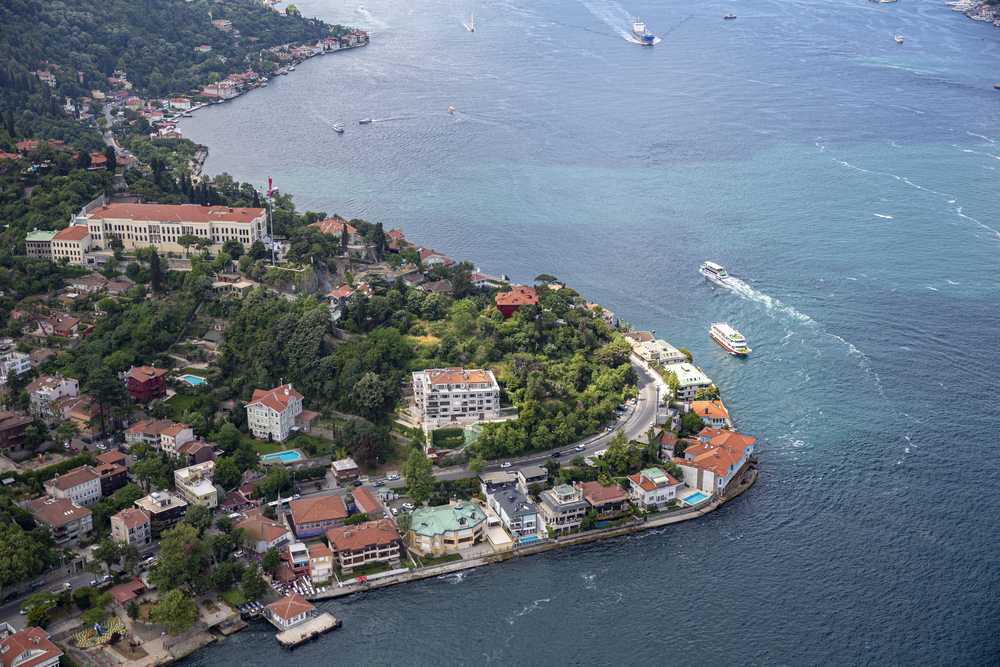
Bebek feels polished and open. Then suddenly, Rumeli Fortress interrupts the scene with mass and purpose. That contrast matters. It shows how defense once overrode beauty at the narrowest point of the strait. From the water, the logic is obvious. On land, it’s easier to miss.
Emirgan and the Asian shore opposite
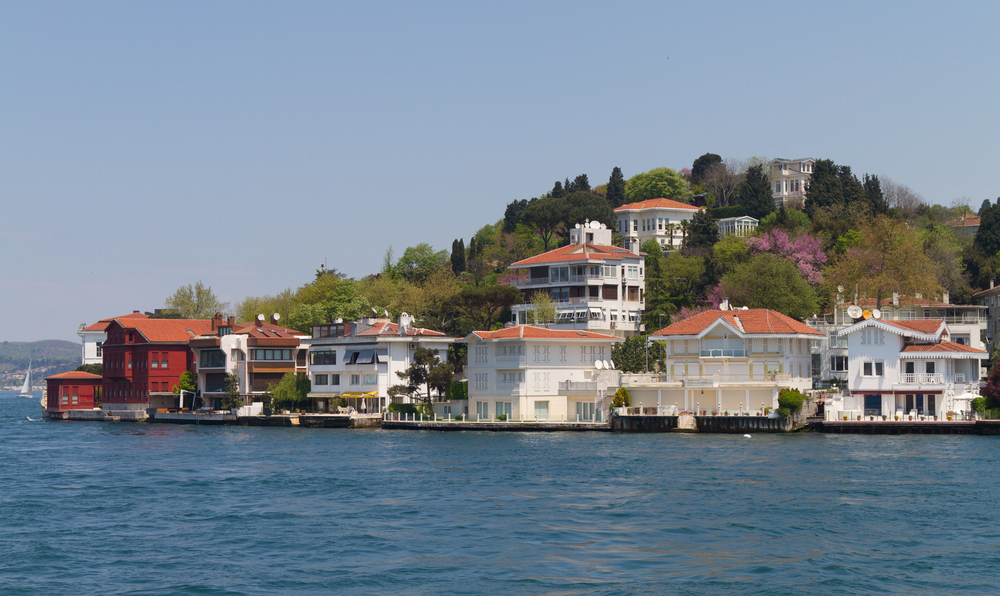
Farther north, Emirgan softens everything. Parks, pavilions, and the nearby Beylerbeyi Palace across the water speak to retreat rather than rule.
İstinye and Yeniköy

As you move north, İstinye and Yeniköy feel quieter and more residential. From the water, they read as late-Ottoman calm. Large wooden mansions, tree-lined shores, fewer monumental buildings. This is where the Bosphorus starts shifting from ceremony to retreat.
Sarıyer

Sarıyer marks the Bosphorus opening up. The shoreline widens, greenery increases, and the city thins. From a cruise, Sarıyer feels like a transition zone between imperial Istanbul and the Black Sea corridor.
On the return: Asian-side neighborhoods
Beykoz

On the Asian shore, Beykoz appears lush and spacious. Historically known for hunting grounds and glassworks, it reflects a softer, more rural Bosphorus character when seen from the water.
Anadolu Hisarı
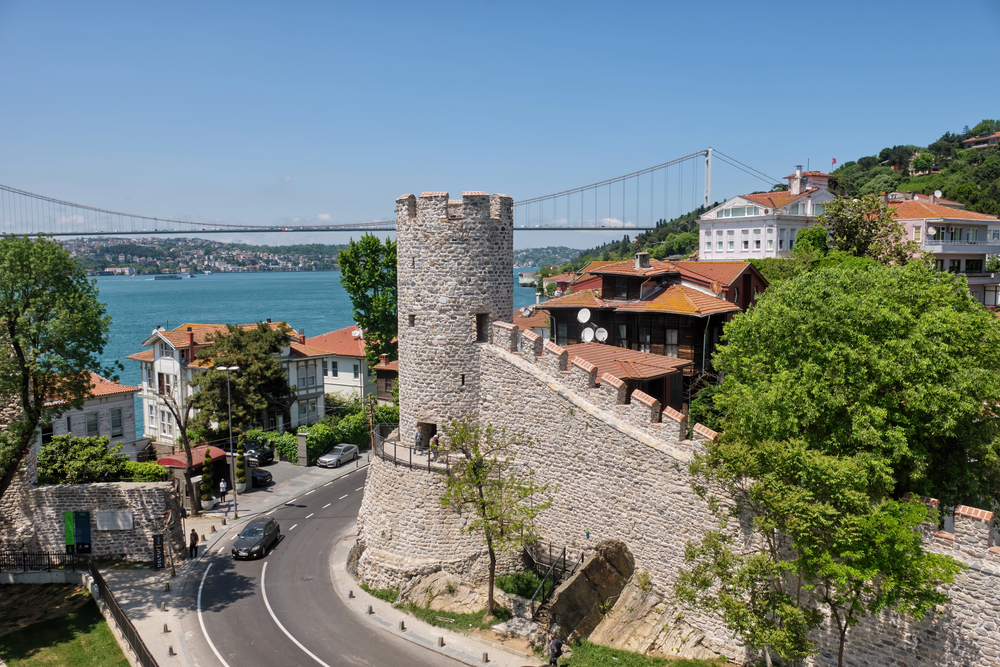
Anadolu Hisarı sits opposite Rumeli Fortress and reads best from the Bosphorus itself. The neighborhood grew around defense, not display, which explains its compact feel and strategic placement.
Kanlıca
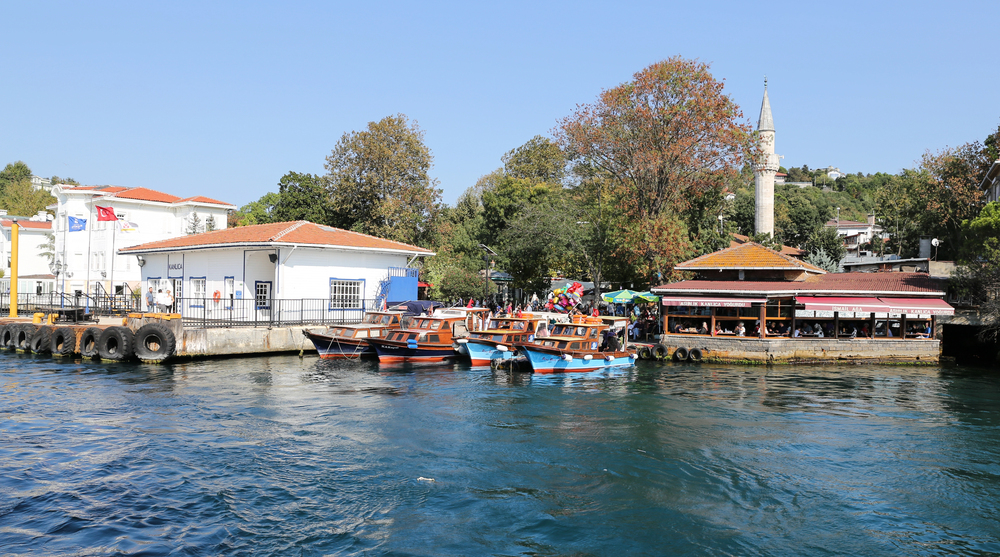
Kanlıca is small but distinctive. From the water, it feels like a pause. A village shoreline rather than a district. Many cruises stop briefly here, reinforcing the sense of having crossed into a different rhythm.
Çengelköy
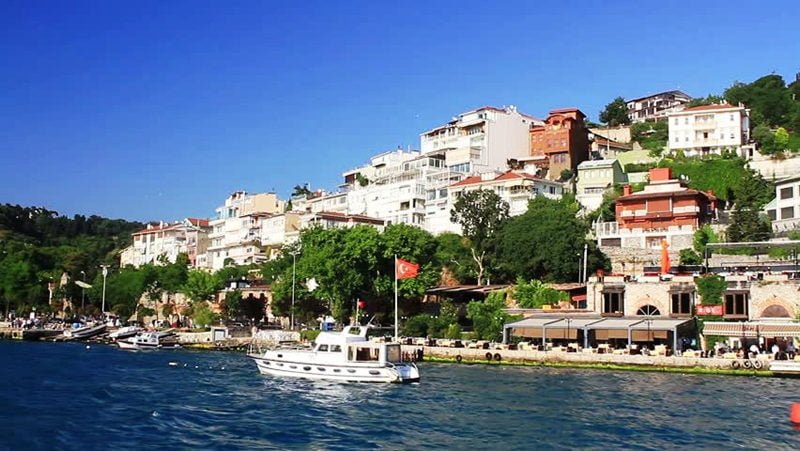
Çengelköy feels lived-in. Teahouses, waterfront homes, daily routines. From the boat, it shows how residential life continued along the Bosphorus long after palaces faded.
Kuzguncuk

Colorful and human-scaled, Kuzguncuk is one of the Asian side’s most character-driven neighborhoods. From the water, it looks intimate rather than impressive, which is exactly its appeal.
Üsküdar

Üsküdar closes the loop. Mosques, ferry movement, the distant presence of Maiden’s Tower. It feels grounded and functional. A reminder that the Bosphorus has always been about connection, not spectacle.
Istanbeautiful Team advice:
“If you remember the neighborhoods, you’ll remember the landmarks. They explain each other.”
Photo tips
Taking photos of historical landmarks along the Bosphorus sounds simple until you’re on the water and everything moves at once. Light shifts. Boats pass. Landmarks appear, then disappear. A few small choices make a big difference.
Which side of the boat matters
On most routes heading north, the European side delivers the densest lineup early. Dolmabahçe Palace, Ortaköy Mosque, and Rumeli Fortress sit there. Positioning yourself on that side gives you cleaner angles and fewer backlit shots in daytime.
On the return, the Asian side opens up, with Beylerbeyi Palace and wider views toward Üsküdar.
If you’re on a smaller boat, move early. If you’re on a ferry, choose a seat before departure.
Daylight versus sunset photos
Daytime emphasizes detail. Facades, textures, shoreline life. Sunset emphasizes mood. Reflections, silhouettes, bridges lighting up. A Bosphorus sunset cruise compresses drama into a short window, which is why photos feel richer even if you see fewer details.
TripAdvisor reviewers often mention that sunset photos feel more “Istanbul,” while daytime shots feel more documentary. Neither is better. They just tell different stories.
What to shoot and what to skip
Don’t try to capture everything. Pick anchors. One palace. One mosque. One fortress. One bridge moment. Let the rest pass. The Bosphorus moves quickly. Chasing every landmark leads to rushed framing.
How to Book Bosphorus Cruise Online?
Booking a Bosphorus Cruise is quite simple. You can reserve your spot online through various tour websites, or directly purchase tickets at the Eminönü or Kabatas Piers. We recommend you buy tickets online from the trusted providers for a hassle-free experience, especially during peak tourist seasons.
Check out our recommended tours below!
If you buy online you also will have skip-the-lines, and have chance to cancel and have a refund very easily.