
Turkish delight is easy to find in Istanbul. Authentic Turkish delight is not. Walk a few minutes through the city and you’ll see lokum everywhere. Bright boxes. Free samples. Big promises. The problem is that not all of it reflects the soft, balanced sweet that made Turkish delight famous in the first place. Some versions are too firm. Others are overly sweet. A few rely more on packaging than quality.
That’s why knowing where to buy authentic Turkish delight in Istanbul matters. The best lokum isn’t hidden, but it does reward a bit of context. It comes from shops that care about ingredients, texture, and tradition more than volume.
Istanbul has been the heart of lokum for centuries. Some of the city’s most respected producers still use recipes that haven’t shifted much over generations. Others reinterpret classic flavors with a lighter, modern touch. Both can be excellent if you know what you’re tasting.
Istanbeautiful Team note:
The best lokum experience starts when you slow down and sample without rushing.
Our guide helps you do exactly that. You’ll find trusted shops, realistic price ranges, tips for spotting quality, and a few modern flavors worth trying. No hype. Just honest direction so you can buy Turkish delight that tastes as good as it looks.
Where can I buy authentic Turkish delight in Istanbul?
You can buy authentic Turkish delight in Istanbul from renowned shops such as Hafiz Mustafa, Ali Muhiddin Hacı Bekir, and Koska. These stores offer a wide range of traditional and modern flavors, from rose and pistachio to unique options like pomegranate and saffron. Located in areas like Sirkeci, Eminönü, and Istiklal Street, these shops are known for their high-quality, handcrafted Turkish delight and beautiful gift packaging.
The History of Turkish Delight (Lokum)
Lokum didn’t start as a souvenir. It started as a solution.
In the late 18th century, Ali Muhiddin Hacı Bekir was looking for a gentler sweet for the Ottoman court. Hard candies were rough on the teeth. He experimented with sugar, starch, and rosewater, and landed on something softer, fragrant, and quietly addictive. That texture changed everything.
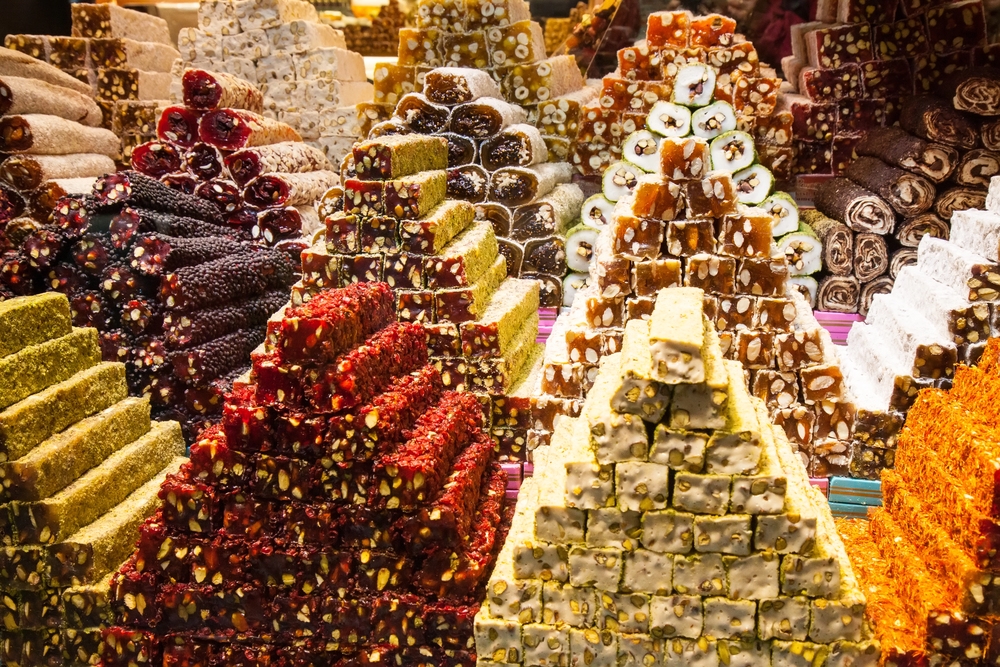
From palace kitchens, lokum moved into daily life. Nuts were added. Pistachio first, then hazelnut. Floral notes expanded. Saffron, mastic, citrus. Each region leaned into what it did best.
Lokum became more than dessert. It became a gesture. Served with Turkish coffee. Wrapped as a gift. Offered to guests without ceremony.
That tradition still holds. Walk into an old lokum shop in Istanbul and you’ll notice something. The pace is slower. Samples are encouraged. Nobody rushes you. According to long-standing custom, lokum is meant to be chosen calmly, not grabbed.
Istanbeautiful Team note:
The best lokum shops still treat it as hospitality first, product second.
No Regrets Booking Advice
Istanbul remains the center of that culture. Many shops still use recipes that haven’t shifted much in generations. The difference today is choice. Knowing where tradition is preserved, and where it’s been modernized.
Best Shops to Buy Turkish Delight in Istanbul
Hafiz Mustafa (Since 1864)
Hafız Mustafa feels grand without trying too hard. The flagship in Sirkeci is the anchor, but you’ll find branches in Taksim, Istiklal, Pera, and Beyazıt. Their classics are reliable. Rose, pistachio, lemon. If you want something slightly different, pomegranate and coffee varieties stand out.
Packaging here is part of the appeal. This is where people come when lokum is a gift, not just a snack.
Istanbeautiful Team note:
If you’re buying for someone back home, Hafız Mustafa is the safest choice.
Ali Muhiddin Hacı Bekir (Since 1777)
Ali Muhiddin Hacı Bekir is where lokum began. The Eminönü shop still holds that weight. Simple interior. No distractions. The focus stays on rose, pistachio, and hazelnut made with natural ingredients.
They also have branches in Beyoğlu, Bakırköy, and Kadıköy, but the original location carries the atmosphere. Buying here feels closer to ritual than retail.
If you want the most traditional expression of lokum, this is it.
Koska (Since 1907)
Koska is familiar to locals for a reason. Consistent quality. Wide selection. Easy locations, including Istiklal Street. Alongside classic lokum flavors, they offer sugar-free and vegan options, which helps travelers with dietary needs.
This is the practical stop. Less ceremony. More choice. Reliable results.
One quiet tip before you buy. Ask to taste. Good shops expect it. And if the lokum feels too firm or overly sweet, keep walking. In Istanbul, there’s always another tray waiting.
Turkish Delight Prices in Istanbul
The price of Turkish delight in Istanbul depends mainly on the shop, the ingredients used, and whether you’re buying loose or packaged sweets.
For traditional flavors like rose, lemon, or plain pistachio, smaller local shops and market stalls usually sell lokum for around 100 to 200 Turkish Lira per kilogram, which comes to roughly $3 to $7 USD. This is everyday lokum that locals buy for home consumption. It’s simple, fresh, and not designed for gifting.
At well-known historic shops such as Hafız Mustafa or Ali Muhiddin Hacı Bekir, prices are higher due to quality control, branding, and consistency.
Classic varieties at these shops typically cost between 1 000 and 1 500 Turkish Lira per kilogram, or about $30 to $50 USD. Nut-rich or mixed selections often reach 1 500 to 1 750 Turkish Lira per kilogram, which is approximately $50 to $60 USD.
Premium flavors made with ingredients like saffron, double pistachio, pomegranate, or floral infusions usually cost more. These varieties often range from 1 800 to 2 500 Turkish Lira per kilogram, translating to around $60 to $80 USD. Most people buy these in smaller quantities rather than by the kilo.
When it comes to gift boxes, packaging significantly affects the price. Smaller decorative boxes weighing 200 to 400 grams usually cost between 600 and 1 200 Turkish Lira, or roughly $20 to $40 USD. Larger and more elaborate gift sets can reach 1 500 to 3 000 Turkish Lira, which is about $50 to $100 USD, depending on design and contents.
Sugar-free or vegan Turkish delight is generally priced higher because production is limited and ingredients cost more. These options usually start from around 1 800 Turkish Lira per kilogram, which is approximately $60 USD or more.
Istanbeautiful Team note:
Price gives a clue, but texture and balance tell the real story. Always taste before buying.
What makes a high-quality Turkish delight
Good lokum shows itself quickly once you know what to look for. The first clue is the ingredient list. High-quality Turkish delight relies on natural flavorings such as real rose petals, citrus, nuts, and sometimes honey.
Artificial colors and strong synthetic aromas usually signal mass production rather than craftsmanship.
Texture matters just as much as flavor. A well-made Turkish delight feels firm when you pick it up, but soft when you bite into it. It should not stick aggressively to your fingers, nor should it collapse into mush. The best pieces slowly dissolve in the mouth instead of breaking apart or chewing like rubber.
Freshness is often overlooked, especially by first-time buyers. Turkish delight is at its best when it is made regularly and stored properly.
Shops that produce lokum in small batches tend to have better texture and cleaner flavor. Asking when it was made or requesting a small sample is normal practice in Istanbul.
Istanbeautiful Team note:
A single bite tells you more than any label. If the texture feels wrong, don’t overthink it.
Unique and Modern Flavors to Try
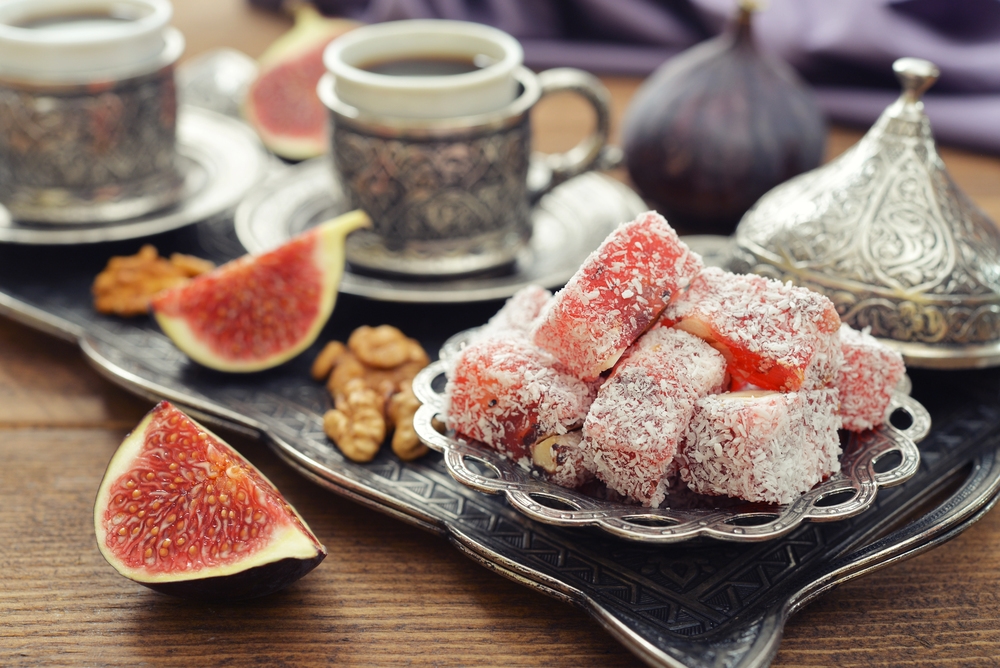
Classic rose and pistachio are still the benchmark, but Istanbul’s lokum scene hasn’t stood still. Many shops now experiment with flavors that feel contemporary without losing balance.
Pomegranate with pistachio is one of the most popular modern combinations. The tartness of the fruit cuts through the sweetness and keeps the flavor light. Lavender offers a gentle floral note that pairs especially well with Turkish tea, though it’s best in small amounts. Saffron adds depth rather than sweetness, giving lokum a richer, more rounded finish.
These newer flavors work best when they complement the base, not dominate it. If a flavor smells overpowering, it usually tastes that way too.
Packaging and Souvenirs
Presentation plays a big role in Turkish delight culture. Many established shops offer decorative boxes inspired by Ottoman patterns, making lokum an easy and elegant gift.
Shops like Hafız Mustafa and Koska are known for packaging that travels well and looks thoughtful without extra effort.
Some shops allow you to build your own box by selecting multiple flavors, which is ideal if you’re buying for more than one person or want variety in a single gift.
Whether you choose a simple box or a custom set, good Turkish delight should look inviting but never distract from what matters most. The taste always comes first.