
Most people don’t realize this at the start. They think they’re comparing clinics. In reality, they’re comparing systems. You search for a surgeon-led clinic vs hair mill in Turkey and everything looks similar. Same before and after photos. Same hair transplant Turkey packages. Same promises.
Then one clinic is $2,000. Another is $5,000. That’s when the doubt kicks in. What’s the actual difference? And more importantly, does it matter?
According to the International Society of Hair Restoration Surgery (ISHRS), one of the biggest risks in medical tourism is not knowing who performs the procedure. In some cases, patients assume a doctor is involved, only to later discover most of the surgery was done by technicians.
That’s the gap. Not Turkey vs another country. But doctor-led clinic vs technician-led clinic.
“Patients don’t lose trust because of the result. They lose trust when they realize they didn’t understand the process.”
— Istanbeautiful Team
And this is where things shift. Because once you understand the difference between a hair mill Turkey model and a surgeon-led hair transplant Turkey approach, most decisions become clearer.
In this guide, we’ll break it down in a way that actually helps you decide:
- What a hair mill in Turkey really is
- What “surgeon-led” actually means in practice
- The red flags most patients miss
- And the exact questions you should ask before booking
Let’s start with the simplest question.
What is the real difference between these two models?
At a glance: Surgeon-led clinic vs hair mill in Turkey
- Core difference: A surgeon-led clinic vs hair mill in Turkey comes down to responsibility. Doctor-led clinics define it. Hair mills distribute it
- Hair mill model: High-volume hair mill Turkey clinics treat multiple patients daily with standardized processes and often limited direct doctor involvement
- Surgeon-led model: A surgeon-led hair transplant Turkey clinic focuses on planning, doctor oversight, and controlled execution with fewer patients per day
- Who performs the procedure: In technician-led clinic Turkey setups, technicians may perform most steps. In surgeon-led clinics, the doctor plans and supervises key stages
- Graft planning: Hair mills often use fixed or high graft numbers. Surgeon-led clinics tailor graft count based on your case and donor limits
- Channel opening: This critical step is often doctor-controlled in surgeon-led clinics. It directly affects natural appearance
- Daily patient volume: Hair mills rely on scale. Surgeon-led clinics limit volume to increase time per patient
- Price difference: Lower hair transplant Turkey price usually reflects higher volume and less time per case, not necessarily lower quality in every case
- Red flags: “Unlimited grafts”, no named doctor, vague roles, pressure to pay quickly, and unclear aftercare
- Verification step: Check registration with Health Türkiye and compliance with the Republic of Türkiye Ministry of Health
What is the difference between a surgeon-led clinic and a hair mill?
A surgeon-led clinic vs hair mill in Turkey comes down to one thing. Who is responsible.
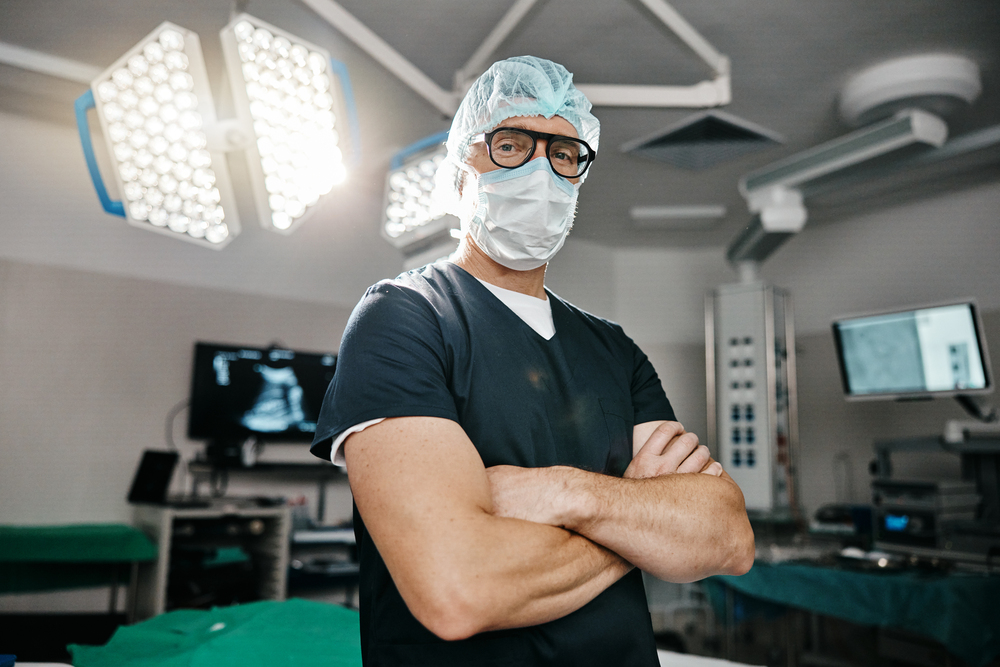
In a surgeon-led hair transplant Turkey model, the doctor evaluates your case, designs your hairline, plans graft distribution, and oversees the procedure closely.
In a hair mill Turkey model, the clinic handles high patient volume, and much of the procedure is performed by technicians, often with limited direct doctor involvement.
That’s the core difference.
Why the difference matters for results
At first, both models can produce good-looking results. That’s what makes this confusing. But here’s where it starts to matter.
Hairline design. Graft placement angle. Donor area management. These are not mechanical steps.
According to clinical insights from National Center for Biotechnology Information, precision in graft handling and placement directly affects natural appearance and long-term success.
That level of precision depends on planning and supervision.
Not just tools.
What patients should check first
Before comparing price or packages, check this:
Who evaluates your hair loss?
Who designs your hairline?
Who performs each step?
If those answers are clear, you’re in a strong position. If they’re vague, that’s where risk begins.
What is a hair mill in Turkey?
This term gets used a lot. Sometimes too loosely. So let’s ground it in reality. A hair mill in Turkey is not just a cheap clinic. It’s a high-volume, process-driven model where speed and scale shape how procedures are done.
High-volume, assembly-line care
Think about how the day is structured. Multiple patients. Back-to-back procedures. Teams moving quickly between rooms. It’s efficient. It’s organized. But it’s also standardized.
That’s the core of the hair transplant hair mill Turkey model.
According to guidance from the ISHRS, one of the risks in high-volume settings is limited direct physician involvement in each stage of the procedure.
That’s where outcomes can start to vary.
Limited doctor involvement
This is the defining feature. In many technician-led clinic Turkey setups, the doctor may:
- Review photos briefly
- Approve a general plan
- Be present for part of the procedure
But not consistently involved in every critical step. Extraction. Channel opening. Implantation. Those may be handled by technicians. Now, to be clear. Technicians are not the problem. Lack of clear medical responsibility is.
“It’s not about whether technicians are involved. It’s about whether the doctor is accountable for the outcome.”
— Dr. Güncel Öztürk
Why low prices can hide risk
The cheap hair transplant Turkey risks conversation usually starts here. High volume allows lower pricing. More patients per day means lower cost per patient. That’s the business model.
But it also means:
- Less time for planning
- Less time for precision
- Less flexibility during the procedure
And those trade-offs are rarely visible in a quote.
Why “not every affordable clinic is a hair mill”
This is important. Lower price does not automatically mean hair mill Turkey. Some clinics operate efficiently without compromising planning or supervision. That’s why the label alone isn’t enough.
You need to understand how the clinic works.
When you step back, the pattern is simple. Hair mills prioritize volume. Surgeon-led clinics prioritize control.
What does surgeon-led hair transplant clinic actually mean?
You’ll see many clinics describe themselves as surgeon-led hair transplant Turkey providers. It sounds reassuring. It sounds like the doctor is fully involved.
But what does that actually mean in practice?
Doctor-led diagnosis and planning
This is the foundation. In a true doctor-led hair transplant Turkey model, the surgeon evaluates your hair loss pattern, donor capacity, and long-term expectations.
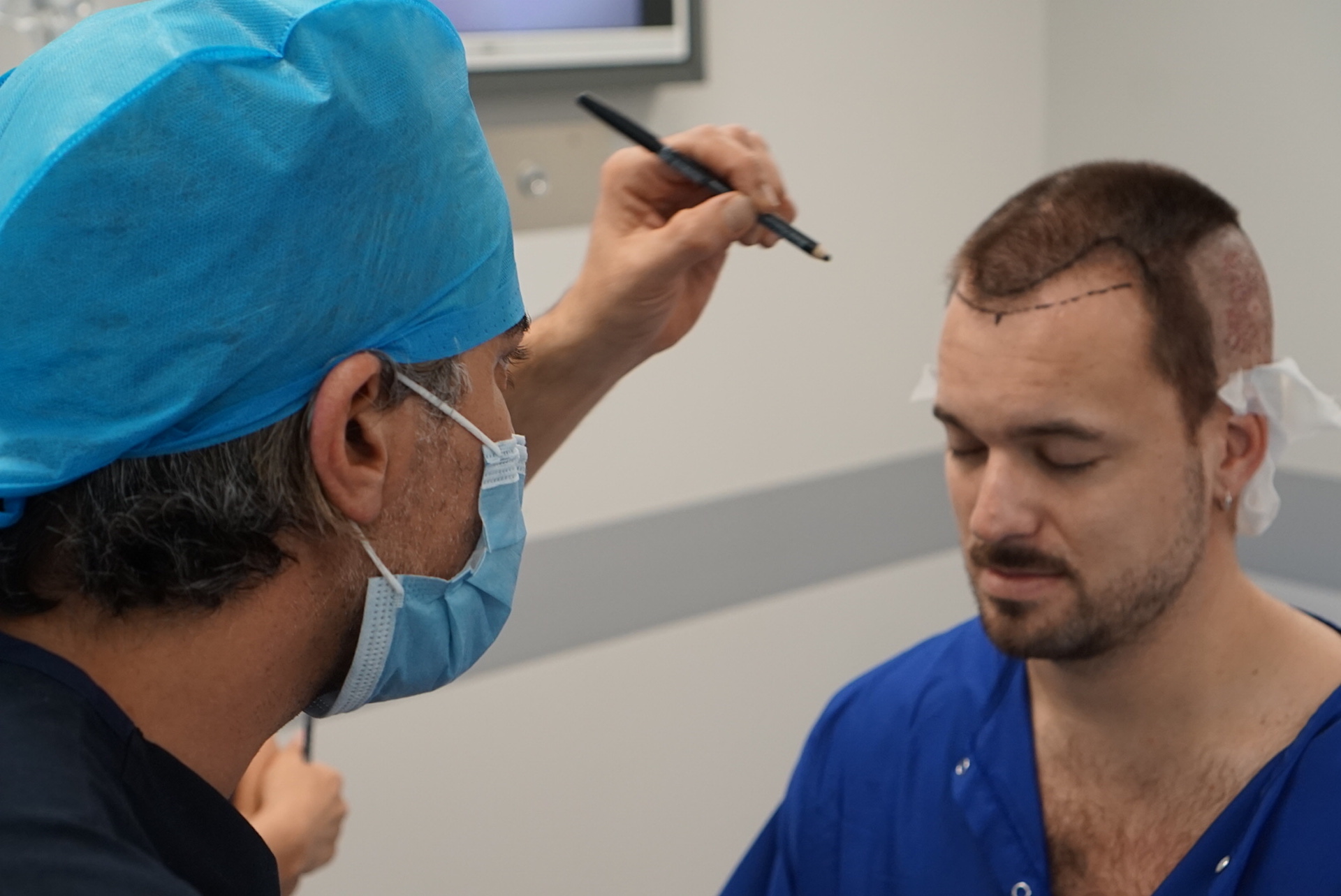
Not just from photos. From a proper consultation.
This is where decisions are made:
- Hairline shape
- Density strategy
- Graft allocation
According to the ISHRS, patient evaluation and surgical planning are critical steps that directly affect long-term results.
If this step is rushed, everything after it reflects that.
Hairline design and donor-area strategy
This is where surgeon involvement becomes visible. Hairline design is not just drawing a line. It’s about age, facial proportions, and future hair loss. Donor strategy is about preservation.
How many grafts now?
How many later?
According to clinical insights from National Center for Biotechnology Information, overharvesting can limit future procedures and affect overall appearance.
That’s why planning matters more than speed.
Technician support under medical supervision
Here’s the nuance many pages miss. Technicians can be part of a strong team. They can assist with extraction and implantation.
But in a proper surgeon-led clinic vs hair mill in Turkey comparison, the difference is supervision and accountability.
The doctor is present. The doctor is involved. The doctor is responsible.
That’s what changes everything.
Why surgeon-led does not always mean doctor-only
Some patients assume surgeon-led means the doctor performs every step. That’s not always the case. Even in high-quality clinics, trained technicians may support parts of the process. The key is clarity.
Who does what?
Who supervises?
Who makes decisions during the procedure?
When you step back, the difference becomes clear. Hair mills distribute responsibility. Surgeon-led clinics define it.
Surgeon-led clinic vs hair mill: side-by-side comparison
You’ve seen the definitions. Now let’s put surgeon-led clinic vs hair mill in Turkey side by side in a way that actually helps you decide.
Consultation quality
In a surgeon-led hair transplant Turkey model, the consultation is detailed. Your hair loss pattern is evaluated. Your donor area is assessed. A long-term plan is discussed.
In a hair mill Turkey, the consultation is often shorter. Sometimes handled by a coordinator or sales team.
You still get a plan. But it may feel more standardized.
Graft planning
In a doctor-led setup, graft count is tailored. It’s based on your case. Your future hair loss. Your donor limits.
In a hair transplant hair mill Turkey model, you may see fixed numbers. 3,500 grafts. 4,000 grafts. Sometimes the same number across different patients.
That’s a sign the plan is driven by packaging, not personalization.
Who performs extraction
In many technician-led clinic Turkey setups, extraction is done primarily by technicians.
In a surgeon-led clinic, extraction may be performed or closely supervised by the doctor.
That difference affects graft handling and survival.
Who opens channels
This is one of the most critical steps. Channel opening determines angle, direction, and density.
According to clinical insights from National Center for Biotechnology Information, this stage directly impacts how natural the result looks.
In many hair mill Turkey clinics, this step may be delegated.
In surgeon-led clinics, it is usually performed or controlled by the doctor.
“Channel creation is where design becomes reality. That step should never be rushed.”
— Dr. Güncel Öztürk
Daily patient volume
Hair mills operate at scale. Multiple patients per day. Tight schedules. Surgeon-led clinics usually limit volume. Fewer patients. More time per case.
This affects focus and flexibility during the procedure.
Aftercare and accountability
Both models offer aftercare. But the difference is consistency.
In a doctor-led hair transplant Turkey model, follow-up tends to be more structured.
In a high-volume setting, support can feel more reactive.
According to guidance from the Centers for Disease Control and Prevention, continuity of care is essential after medical travel.
Long-term donor preservation
This is where the difference becomes long-term. Surgeon-led clinics tend to plan conservatively. Hair mills may prioritize immediate coverage.
And once donor area is overused, options become limited.
“The real result is not what you see at 6 months. It’s what remains possible at 5 years.”
— Dr. Güncel Öztürk
The biggest red flags that suggest a clinic may be a hair mill
You’re no longer asking “which clinic looks good”. You’re asking “what should make me pause?” Because once you know the red flags, many hair transplant Turkey packages start to look very different.
“Unlimited grafts” or maximum graft promises
You’ll see this everywhere. 4,500 grafts. 5,000 grafts. Sometimes “unlimited”. It sounds like value. But your donor area has limits. Always. Overharvesting can damage the donor zone and reduce future options.
So when a hair mill Turkey offers the same high number to everyone, that’s a signal.
Same graft number for every patient
Two different patients. Different patterns. Same quote. Same graft count. That usually means the plan is pre-set.
In a surgeon-led clinic vs hair mill in Turkey comparison, personalization is one of the clearest differences.
Sales consultant answers medical questions
You ask about density or donor limits. A coordinator answers. Confidently. But medical decisions should come from a doctor.
According to the ISHRS, patients should clearly know who evaluates and plans their treatment.
“If the person answering your medical questions is not responsible for your result, that’s a problem.”
— Istanbeautiful Team
Deposit pressure before a treatment plan
Limited-time offers. Discounts if you book today. It creates urgency. But without a clear plan, you’re committing before understanding your case.
That’s a risk.
No named doctor
You see the clinic. You see results. But no doctor is clearly attached to your case. That’s one of the strongest warning signs.
Responsibility should be visible.
Vague aftercare
Every clinic mentions aftercare. But what does it actually mean? If it’s unclear, expect inconsistency.
According to the Centers for Disease Control and Prevention, follow-up care is a critical part of medical travel outcomes.
Unauthorized or unregistered clinics
This is one of the most important and most overlooked red flags. Not every clinic operating in Turkey is officially registered for international medical services.
Before booking, check whether the clinic is recognized by Health Türkiye and regulated under the Republic of Türkiye Ministry of Health.
Why this matters:
- Registered clinics follow national medical standards
- They are subject to inspection and licensing rules
- They are authorized to treat international patients
Unregistered clinics may still operate, but oversight is limited.
That increases risk.
No written role breakdown
Who does extraction?
Who opens channels?
Who implants?
If the clinic cannot answer clearly in writing, that’s a signal.
The questions patients should ask before paying a deposit
You’ve seen the difference between a surgeon-led clinic vs hair mill in Turkey. You know the red flags. Now it’s about what you actually send to a clinic before you commit.
Because the quality of their answers tells you more than any website.
Who evaluates my hair loss?
Start here. Is your case reviewed by a doctor or a coordinator? A proper doctor-led hair transplant Turkey process begins with evaluation. Not just photos, but reasoning.
Patient assessment is a key step in achieving natural and long-term results. If this step feels rushed, everything after it reflects that.
Who designs my hairline?
Hairline design is not decoration. It’s structure. Proportion. Long-term planning.
Ask directly: Will the doctor design it? Or is it pre-drawn?
Who performs extraction and implantation?
This is where many patients hesitate to ask. But it matters.
Is the doctor involved?
Are technicians performing most steps?
How is supervision handled?
Clarity here separates a technician-led clinic Turkey from a controlled, surgeon-led process.
Who opens the channels?
This is one of the most critical steps. Channel direction determines how natural your hair will look. Placement angle and direction directly affect aesthetic outcomes.
So ask clearly.
How many patients are treated per day?
High-volume clinics can run efficiently. But they rely on speed. Lower-volume clinics focus on time per patient.
Now ask yourself. Do you want efficiency or attention?
What happens after I return home?
This is where many conversations end too early. What support do you have once you leave Turkey?
Follow-up care is a key part of safe medical travel. And yet, it’s often unclear.
Can you confirm your registration and licensing?
This is where you protect yourself. Ask if the clinic is registered under Health Türkiye and compliant with the Republic of Türkiye Ministry of Health.
You can verify this through on healthturkiye.gov.tr or shgmturizmdb.saglik.gov.tr. This confirms that the clinic is authorized to treat international patients and follows regulated standards.

Can you provide similar patient cases?
Not just best cases. Cases similar to your pattern. Your stage of hair loss.
Consistency matters more than perfection.
“Good clinics answer clearly. Great clinics answer before you even think to ask.”
— Istanbeautiful Team
And that’s usually when the right choice becomes obvious.
Why technician involvement is not automatically bad
This is where a lot of advice online gets too black and white.
You’ll often hear:
“Only choose a doctor”
“Avoid technicians completely”
It sounds simple. It’s not. Because in reality, many surgeon-led hair transplant Turkey clinics still involve technicians.
And that’s not the problem.
What trained technicians can safely support
In a well-structured doctor-led hair transplant Turkey setup, technicians can assist with:
- Graft extraction
- Graft preparation
- Implantation under supervision
These are technical steps. When done under proper medical oversight, they can be consistent and effective.
According to guidance referenced by the ISHRS, the key issue is not technician involvement itself, but whether the physician maintains control over diagnosis, planning, and critical surgical decisions.
That’s the distinction.
Where medical responsibility must stay clear
Some steps should not be ambiguous. Hairline design. Donor strategy. Channel opening.
These decisions shape the final result.
If those are unclear or delegated without supervision, that’s when a hair mill Turkey model becomes a risk.
“Support roles are normal. Undefined responsibility is not.”
— Dr. Güncel Öztürk
Why supervision and accountability matter more than job titles
This is where many comparisons go wrong. People focus on titles. Doctor vs technician.
But what actually matters is:
- Who makes decisions
- Who supervises each step
- Who is accountable for the outcome
In a proper surgeon-led clinic vs hair mill in Turkey comparison, accountability is the real difference.
Think of it like a surgical team. The surgeon leads. The team supports. If that structure is clear, the system works. If it’s not, you’re guessing.
Technicians are part of modern hair transplantation. The risk is not their presence. The risk is when they replace medical decision-making instead of supporting it.
Cost comparison: why hair mills look cheaper at first
You compare two clinics. Same city. Same photos. Same promises. But one hair transplant Turkey price is half the other. That’s when it feels like an easy win.
It rarely is.
Lower price vs lower accountability
A hair mill Turkey model runs on volume. More patients per day means lower cost per patient. That’s how prices stay low.
But here’s what changes behind that number:
Less time for consultation.
Less time for planning.
Less flexibility during the procedure.
In a surgeon-led clinic vs hair mill in Turkey comparison, the price difference often reflects how much time and control is built into the process.
Not just the procedure itself.
What you’re actually paying for
At a higher level, you’re not paying for more grafts.
You’re paying for:
- Time spent planning your case
- Doctor involvement during key steps
- Lower patient volume
- More controlled execution
Those things don’t show up in a hair transplant package Turkey checklist.
But they shape the outcome.
Revision surgery and donor damage risk
This is the part most people don’t factor in. If the initial result is not as expected, you may need a second procedure. And those are rarely simple.
According to the ISHRS, corrective procedures are more complex and require careful donor management.
That means:
- Higher cost
- More limited options
- More careful planning
Why the cheapest clinic can become the most expensive
We’ve seen this pattern often.
Lower upfront cost.
Faster decision.
Then uncertainty.
And sometimes correction. Price is not just a number. It’s a signal.
- Very low → high volume, standardized process
- Mid-range → balanced approach
- Higher → more controlled, often doctor-led
Not always. But often enough to matter.
How to verify a surgeon-led clinic before booking
You’ve compared options. You understand the difference between a surgeon-led clinic vs hair mill in Turkey. Now you need proof. Not promises. Not branding. Proof.
Check the doctor’s identity and role
Start with something simple. Is there a clearly named doctor attached to your case?
Not just on the website. In your actual consultation.
Ask:
- Will this doctor evaluate me?
- Will they design my hairline?
- Will they be present during the procedure?
According to the ISHRS, patients should know exactly who is responsible for diagnosis, planning, and surgical steps.
If that’s unclear, stop there.
Ask for similar patient cases
Not just the best results. Ask for cases that match your pattern. Your level of hair loss. Look for consistency. Multiple cases. Similar outcomes. Different angles.
That tells you more than one perfect photo ever will.
Request your graft plan and donor strategy
This is where many clinics stay vague.
Ask:
- How many grafts do I need and why?
- How will my donor area be managed?
- What is the long-term plan?
If the answer is generic, that’s a signal.
Confirm licensing and registration
This is not optional. Ask if the clinic is registered under Health Türkiye and compliant with the Republic of Türkiye Ministry of Health.
This confirms:
- Legal operation
- Medical oversight
- Authorization to treat international patients
Look beyond package details
A strong hair transplant Turkey package can look impressive. Hotel. Transfers. Extras. But those are not proof of quality.
Focus on:
- Who makes decisions
- Who performs key steps
- How clearly everything is explained
Practical checklist: safe clinic or hair mill?
At this point, you don’t need more theory. You need a filter. Something simple you can apply when you’re staring at three tabs, three quotes, and three very similar hair transplant Turkey packages.
Here’s how we break it down.
Green signs you’re likely dealing with a surgeon-led clinic
You don’t need perfection. You need consistency.
Look for:
- A clearly named doctor attached to your case
- Direct answers about who performs each step
- A personalized graft plan, not a fixed number
- Fewer patients per day, or at least a clear explanation of workflow
- Structured follow-up after you return home
If those answers are clear, that’s a strong signal.
Warning signs that point to a hair mill Turkey model
These don’t always show up immediately. But when they do, they tend to cluster.
- Same graft number offered to every patient
- No clear doctor involvement during consultation
- Sales pressure before a detailed plan
- Heavy focus on price and package extras
- No written explanation of roles
Individually, they might seem small. Together, they tell a story.
Grey-area signs that need more questions
This is where most clinics sit. Not clearly high-risk. Not clearly high-control.
For example:
- Technician involvement is mentioned, but supervision is unclear
- The doctor is introduced, but not directly involved in consultation
- Aftercare is offered, but not defined
These are not red flags. They’re question marks. And that’s your cue to dig deeper.
Common Patient Questions
What is a hair mill in Turkey?
A hair mill Turkey is a high-volume clinic model where multiple patients are treated daily, often with limited direct doctor involvement. Much of the procedure may be handled by technicians. The focus is efficiency and scale. That doesn’t automatically mean poor results, but it does mean less individualized planning and less consistent oversight.
What is a surgeon-led hair transplant clinic?
A surgeon-led hair transplant Turkey clinic is structured around doctor responsibility. The doctor evaluates your case, designs your hairline, plans graft distribution, and supervises or performs key steps. Technicians may assist, but the doctor leads decisions and remains accountable for the outcome.
Are all cheap clinics in Turkey hair mills?
No. Lower price does not automatically mean hair transplant hair mill Turkey. Some clinics operate efficiently and still maintain strong planning and supervision. The key is not price, but clarity. Who is responsible? Who performs each step? That’s what matters.
Can technicians perform parts of a hair transplant?
Yes. In many doctor-led hair transplant Turkey setups, trained technicians assist with extraction and implantation. The issue is not technician involvement, but whether the physician leads and supervises the process.
Is a doctor-only clinic always better?
Not necessarily. A clinic where the doctor performs every step can offer strong control. But a well-structured team with clear supervision can also deliver excellent results. The key is defined roles and accountability, not just titles.
How many patients per day is too many?
There is no fixed number. But in a surgeon-led clinic vs hair mill in Turkey comparison, higher daily volume usually means less time per patient. Lower-volume clinics often provide more attention and flexibility during the procedure. It depends on how the clinic is structured.
What does “doctor supervision” really mean?
This is where many misunderstand. Doctor supervision should mean active involvement in planning, key surgical steps, and decision-making during the procedure. If supervision is only nominal or unclear, that’s a concern.
How can I verify a clinic is not a hair mill?
Ask direct questions. Who evaluates you? Who designs your hairline? Who performs each step? Also confirm registration with Health Türkiye and compliance with the Republic of Türkiye Ministry of Health. Clear answers are a strong sign.
Why do hair mills still get good reviews?
This is a fair question. Many patients have positive experiences, especially in the short term. Results can look good initially. But consistency and long-term planning are where differences become more visible.
Will choosing a surgeon-led clinic guarantee better results?
No clinic can guarantee outcomes. But a surgeon-led hair transplant Turkey approach increases consistency by focusing on planning, supervision, and accountability.