
Most cities explain themselves at street level. Istanbul explains itself from above. Climb a tower here, and the city suddenly makes sense. Water becomes a strategy. Hills become decisions. Neighborhoods stop feeling random. Fortresses do the same thing, just with heavier walls and sharper intent.
Our guide to towers and fortresses in Istanbul is built for travelers who want orientation, not just views. Some of these structures were built to watch for fire. Others to control the Bosphorus. A few were meant to send a message long before anyone thought about postcards or observation decks.
What connects these towers and fortresses isn’t age or style. It’s position. Every one of them sits exactly where it needs to be. On a hill. On a narrow strait. At the edge of open water. You don’t need to know military history to feel why they matter. You just have to look.
In our article, we’ve gathered seven of Istanbul’s most striking towers and fortresses, mixing iconic landmarks with places that feel more exploratory. We’ll explain what each one offers, how they differ, and when they fit best into your day, whether you want a quick viewpoint or a half-day escape.
Towers of Istanbul
Towers in Istanbul weren’t built to decorate the skyline. They watched. Warned. Guided. Some guarded the city. Others became symbols over time. Today, they offer something simpler and more human. Perspective.
Galata Tower in Galata
Galata Tower is one of those landmarks you don’t need to search for. It finds you. Built in the 14th century by the Genoese, the tower rises above Galata with its unmistakable cone-shaped roof. From street level, it feels solid and medieval. From the top, everything opens.

The observation deck delivers a 360-degree view that actually earns the phrase. The Golden Horn curves below. The Bosphorus stretches outward. On clear days, the Princes’ Islands appear quietly in the distance. Elevators take you most of the way up, with a short final climb that adds just enough anticipation.
Istanbeautiful Team insight:
Visit Galata Tower early in the morning or close to sunset. Midday crowds flatten the experience.
This is one of the best places to understand how Istanbul fits together geographically.
Maiden’s Tower on the Bosphorus, Uskudar
The Maiden’s Tower doesn’t sit on land. That’s why it stays in your mind.

No Regrets Booking Advice
Rising from a small islet off the Üsküdar coast, this tower has watched the Bosphorus for centuries. Known also as Leandros, it has served as a defense point, lighthouse, and quarantine station. Legends cling to it, especially the story of a princess, a prophecy, and a snake hidden in a basket of fruit.
Today, the tower feels less tragic and more cinematic. Boats bring visitors across. Inside, exhibitions and viewing points frame the city from an angle you can’t get elsewhere.
Evening visits matter here. City lights. Water movement. Silence between waves.
Istanbeautiful Team note:
Few places capture Istanbul’s romance without trying. Maiden’s Tower does.
Camlica Tower – Üsküdar
Çamlıca Tower changes the scale of things.
At 369 meters, it’s the tallest structure in Turkey and unapologetically modern. Built on one of Istanbul’s highest hills, the tower offers uninterrupted views across both continents. You don’t just see landmarks. You see distance.

The experience is structured. Observation decks. Dining options for breakfast, lunch, or dinner. Large windows that make the city feel quiet rather than busy. Although it sits on the Asian side, access is straightforward, and private transfers are common.
This isn’t about history. It’s about seeing how vast Istanbul really is.
Beyazıt Tower – Beyazıt
Beyazıt Tower doesn’t shout. It stands.
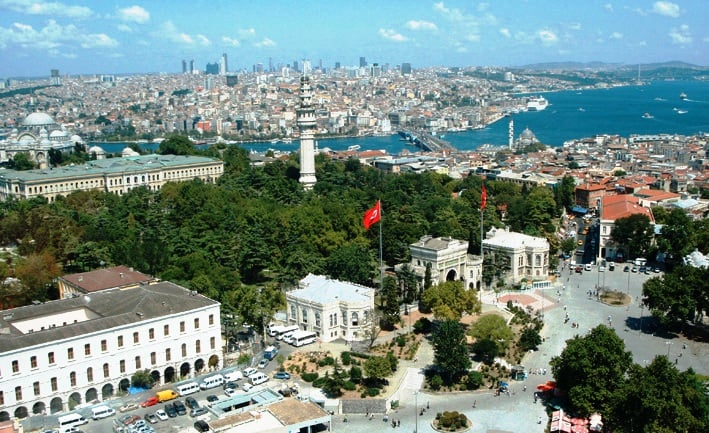
Built from white marble and rising above Beyazıt Square, the tower once served as a fire watchtower, scanning the city for danger. That original purpose still shapes how it feels. Alert. Observant. Calm.
From certain angles, you catch glimpses of it between buildings, especially from the Golden Horn and Galata areas. It blends history and restraint, which is rare for a skyline structure.
You don’t always go inside Beyazıt Tower. Sometimes, noticing it is enough.
Fortresses along the Bosphorus
Istanbul’s fortresses weren’t built to be admired from afar. They were tools. Pressure points. Answers to very specific threats. What’s left today is less about warfare and more about position. Where you stand. What you can see. Why this spot mattered.
Rumeli Fortress in Rumelihisari, Sariyer
Rumeli Fortress feels deliberate. Because it was. Commissioned by Mehmed the Conqueror just before the conquest of Constantinople, the fortress rose in an astonishing four months.
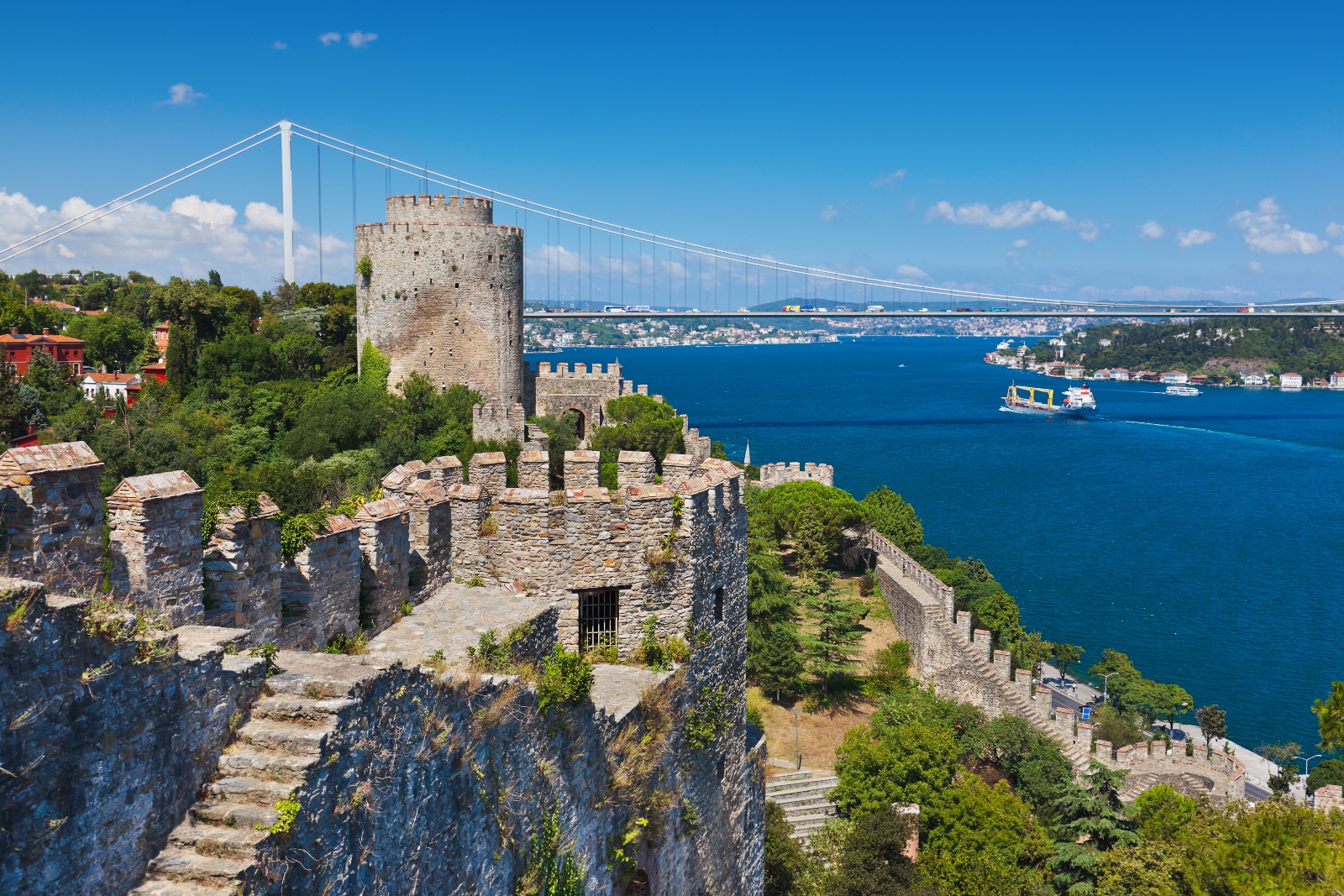
Built on the European shore between Bebek and Emirgan, it occupies roughly 30 acres and narrows the Bosphorus to a controlled passage.
From the walls, the water below feels close. Narrow. Manageable. That was the point.
Today, the fortress offers sweeping views of the Bosphorus and a clear sense of strategy. You don’t need military knowledge to understand it. You just need to look down.
Istanbeautiful Team insight:
Rumeli Fortress makes sense the moment you realize how tight the strait is right here.
Anadolu Fortress in Anadoluhisari, Beykoz
Directly across the water, Anadolu Fortress answers Rumeli without copying it. Commissioned earlier by Bayezid I, it sits on the Asian shore at one of the Bosphorus’s narrowest points. Smaller in scale, it still carries weight through placement rather than size.

Standing here, you understand how the two fortresses worked together. Crossfire. Control. No room for ships to slip through unnoticed.
The surrounding neighborhood has grown around it gently, making the fortress feel absorbed into daily life rather than isolated from it.
Yoros Castle in Anadolu Kavagi, Beykoz
Yoros Castle feels like the end of the city. And in some ways, it is. Perched near the Black Sea exit of the Bosphorus, this fortress once worked alongside Imros Castle to monitor the gateway between open sea and strait.
The view explains everything. The water widens. The air shifts. The city loosens its grip.
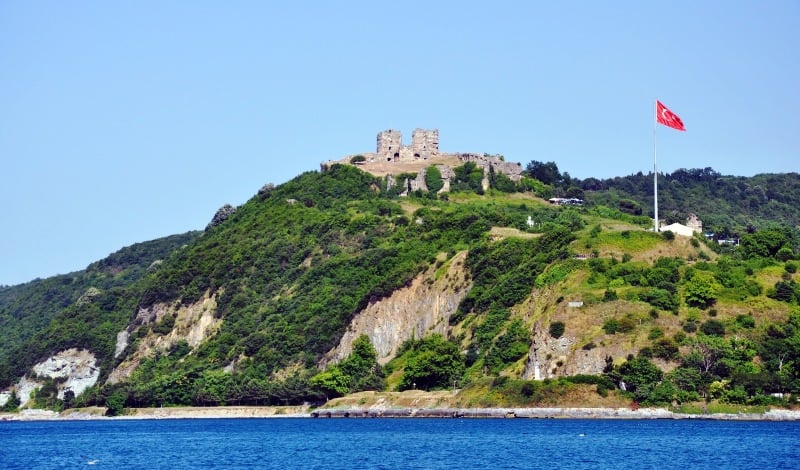
Today, Yoros Castle has become a favorite weekend stop. Locals come for breakfast or a long lunch at the café near the ruins. Visitors climb for the view. Both stay longer than planned.
You can see the Bosphorus stretching behind you and the Black Sea opening ahead. Few places show Istanbul’s geography so clearly.